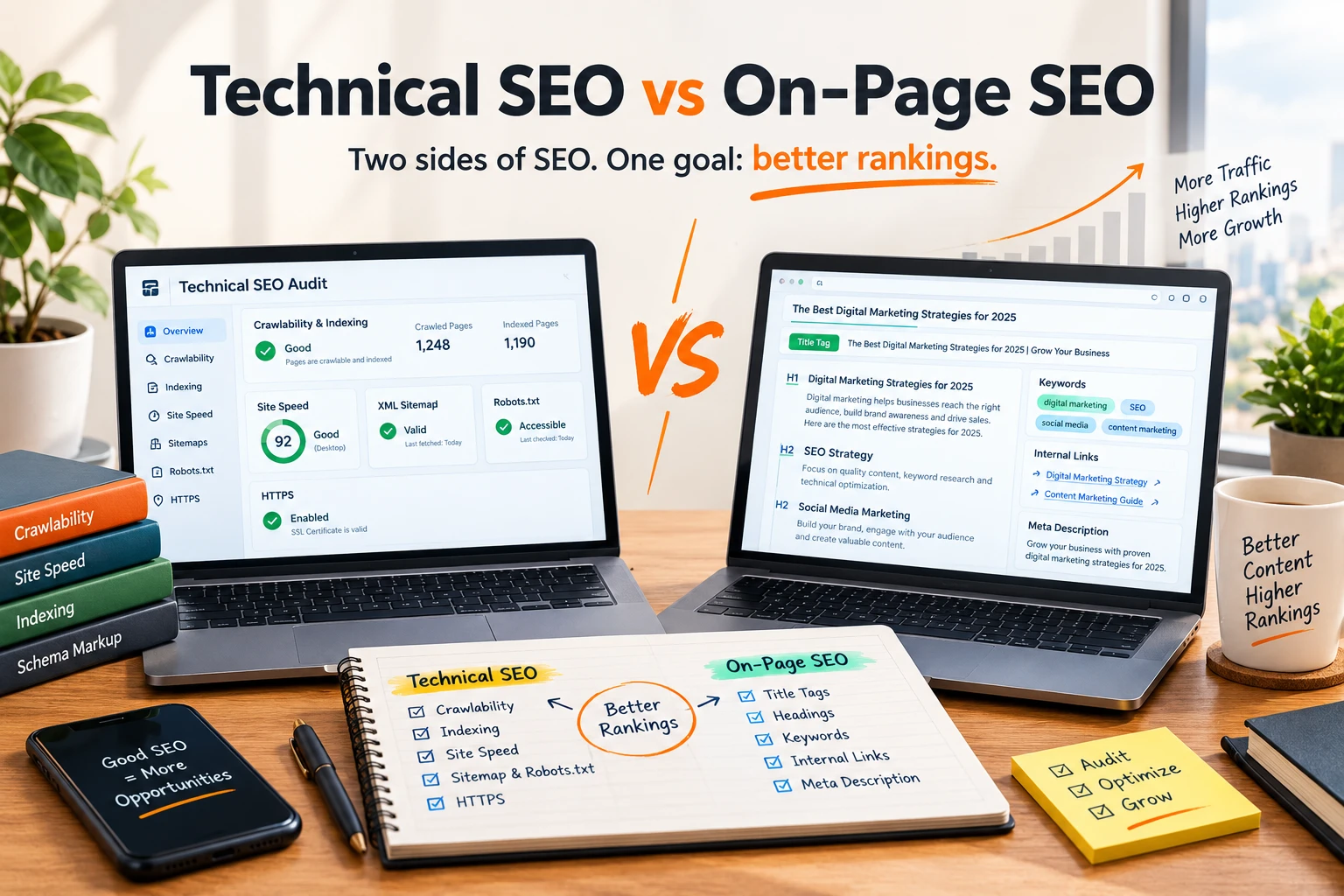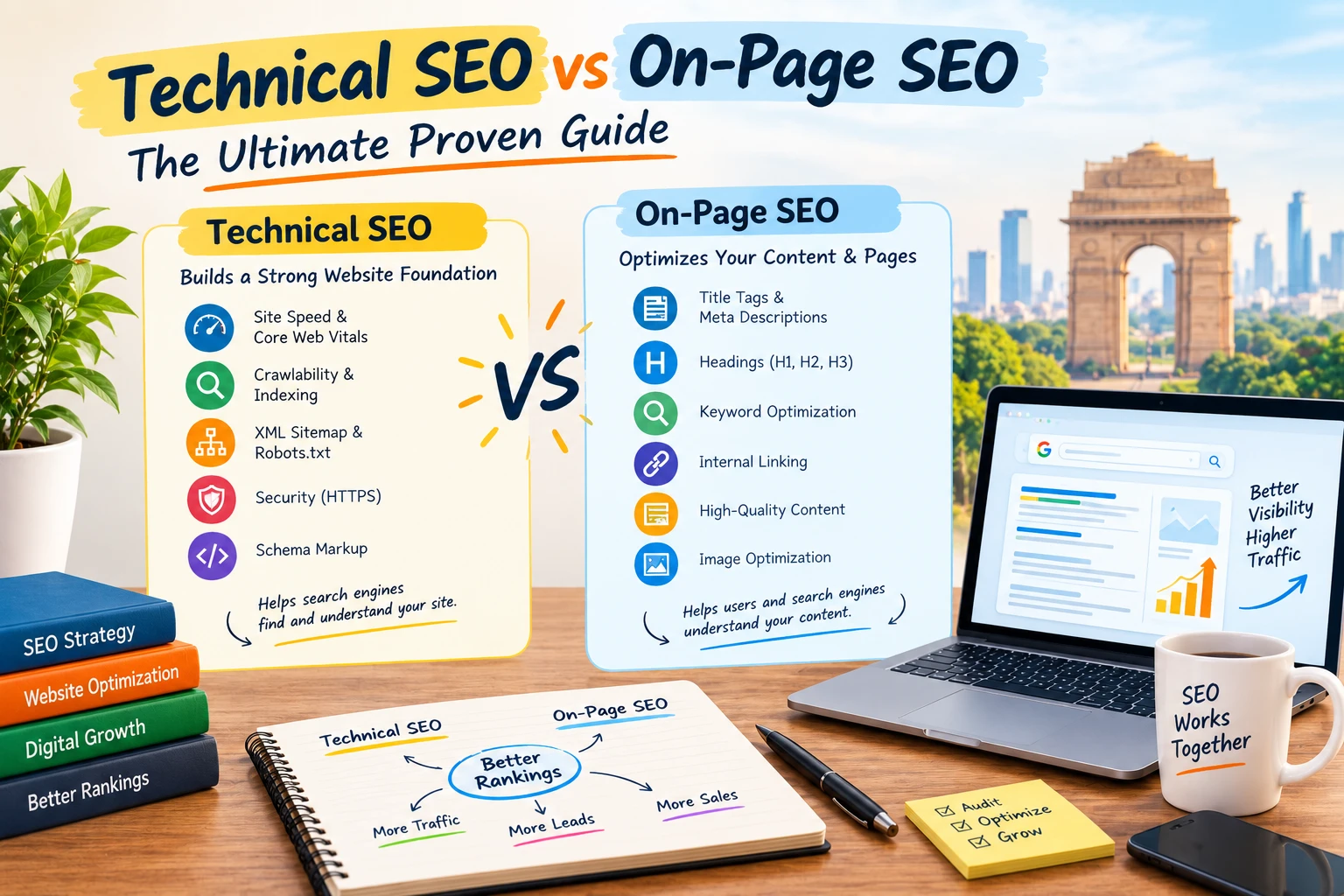


Understanding which functions are most important in website is the starting point for every business that wants to grow online in 2026.
A website is not just a digital brochure: it is the central system through which businesses attract new customers, build trust, generate enquiries, and convert visitors into buyers. GoDaddy’s website functionality checklist for 2026 defines website functionality as the complete set of features a website offers and its ability to function properly, covering everything from design and user experience to speed, reliability, security, and technical performance. When any of these functions fail or underperform, visitors leave, search rankings drop, and revenue suffers.
Clarity Ventures’ website functionality guide identifies the direct commercial consequences of poor website functions: site visitors who become frustrated with poor functionality will leave and never return, while a well-functioning website generates more leads and can turn visitors into brand advocates who recommend it to others.
Net clues Technologies’ marketing function analysis makes the stakes precise: in a market with hundreds of competitors in every niche, having all the must-have website functions is not optional but essential to building trust, staying competitive, and maintaining growth. This guide covers every function that actually matters, backed by verified data and practical examples from three authoritative sources.
Table of Contents
ToggleWhy Website Functions Directly Impact Google Rankings and Business Growth
The most important website functions are not simply nice-to-have features:
they are directly tied to how Google evaluates and ranks a website in April 2026. GoDaddy’s website functionality guide identifies four primary reasons why website functionality matters critically for any business.
First, user experience: if a website is slow or difficult to navigate, people bounce, which increases the bounce rate and signals poor quality to Google’s algorithm.
Second, SEO: Google’s search engine algorithm evaluates page speed, mobile-friendliness, and other technical performance factors when ranking pages, meaning poor functionality directly suppresses search visibility.
Third, credibility: a website that functions properly gives users confidence, building the trust that is essential for converting visitors into customers.
Fourth, increased sales: when visitors can easily find what they are looking for and complete transactions without friction, conversion rates and revenue both increase.
This direct connection between website functions and Google’s ranking algorithm is the reason the question of which functions are most important in a website is not merely a technical one: it is a business growth question. Netclues’ analysis identifies a specific threshold: according to Google, if a landing page takes longer than three seconds to load, the probability of bounce rate triples from the average of 40 to 50 percent. Clarity Ventures’ functionality guide confirms that improving site functionality leads to increased user engagement, longer visit durations, more efficient search engine crawling, higher chances of conversions, and ultimately higher search engine rankings and more organic traffic.
EEAT Note:
This guide applies to all four Google EEAT signals:
Experience: Practical checklists and real-world tool recommendations drawn from hands-on implementation guidance. Expertise: Citing Clarity Ventures, Net clues Technologies, and GoDaddy, all verified domain-specific authorities. Authoritativeness: Named tools (Google Lighthouse, Page speed Insights, Search Console), specific statistics (3-second load threshold, bounce rate data), and Core Web Vitals data. Trustworthiness: SSL/HTTPS recommendations, security trust element guidance, and verified source attribution.
The 10 Most Important Functions in a Website: Expert Analysis
Drawing from Clarity Ventures’ ten functional website elements, Net clues’ ten marketing functions, and GoDaddy’s complete functionality checklist, here is the definitive ranked list of which functions are most important in website in 2026, with the evidence and practical guidance that makes each one actionable.
01. Intuitive Navigation
Navigation is the single most foundational function that determines whether visitors can use your website or will immediately leave it. Clarity Ventures identifies intuitive navigation as the core of user experience, noting that a straightforward, logical web structure with an easy, prominent navigation bar will keep customers coming back.
Netclues’ marketing analysis adds the SEO dimension: poor navigation directly causes high bounce rates, low session duration, decreased keyword rankings, and loss of potential customers. The right navigation structure includes a clear menu with important categories, internal linking between all pages, a functional search bar, a logical hierarchical URL structure, breadcrumbs, and prominently placed CTA buttons. GoDaddy confirms that navigation encompasses not just the main menu but every button, link, search field, and CTA throughout the site.
02. Mobile Responsiveness
Mobile responsiveness is one of the most commercially critical functions that determines which functions are most important in website for modern business. Netclues reports that more than 60 percent of total consumers use mobile devices only, and 95 percent of internet users own smartphones. GoDaddy confirms that Google prioritizes mobile-optimized websites because they provide a better user experience, directly connecting mobile responsiveness to search rankings. A mobile-responsive website automatically adapts its layout, navigation, images, and content to fit different screen sizes without requiring a separate mobile site. Best practices include designing adaptive layouts, compressing media files, using readable font sizes, avoiding pop-ups, and testing the site regularly on multiple device types.
03. Page Load Speed
Page load speed is one of the most measurable and highest-impact functions determining which functions are most important in website for SEO performance. Netclues cites Google’s confirmed data: if a landing page takes longer than three seconds to load, the bounce rate probability triples to 40 to 50 percent or higher.
Google measures page speed through three Core Web Vitals: Largest Contentful Paint (LCP) measures time for primary content to appear and should be 2.5 seconds or less, First Input Delay (FID) measures interactivity and should be 100 milliseconds or less, and Cumulative Layout Shift (CLS) measures visual stability or should score 0.1 or less. Tools to measure and improve page speed include Google Pagespeed Insights, Google Search Console, Lighthouse, GTmetrix, and Pingdom. Practical improvements include compressing images, reducing redirects, using a CDN, minimising CSS and JavaScript file size, and removing unnecessary plugins.
04. SEO-Friendly Structure and Sitemap
A well-structured website with proper SEO architecture is one of the functions most directly responsible for whether a website appears in Google search results at all. Clarity Ventures notes that creating a site map, a structured list of every page in hierarchical format, helps search engines crawl and index all pages efficiently.
Netclues adds that a flat and short URL structure incorporating target keywords helps create better impressions and improve SEO ranking without additional on-page or off-page SEO practices. GoDaddy confirms that an HTML sitemap should be regularly updated and submitted to Google Search Console and Bing so that new pages get crawled and indexed quickly. Internal linking spreads domain authority throughout the site, and a well-structured architecture ensures search engine spiders can find and index all pages effectively.
05. High-Quality Content and Compelling Copy
Content is one of the most important functions in a website because it is what search engines index and what visitors use to evaluate whether a business can solve their problem. Netclues identifies compelling content creation as covering SEO content, UX/UI writing, testimonials, infographics, product information, headings, CTA buttons, images, videos, and blogs.
Content should attract visitors, show them useful information, and convince them to act. GoDaddy confirms that good website content must be informative, relevant, and engaging for users while including keywords that search engines look for Practical content best practices include writing in the second person to build connection, using short sentences and scannable subheadings, updating content regularly with current statistics, and optimizing every piece for its specific target keyword.
06. Clear and Strategically Placed CTAs
Call-to-action (CTA) placement is the function that directly bridges the gap between a website visit and a business outcome. Netclues identifies CTA as essential for achieving marketing goals, whether generating leads, increasing sales, growing traffic, or building an email list, noting that every web page should be designed with a clear objective and a CTA that enables the visitor to take the desired action.
Best practices for CTA placement include positioning the primary CTA at the top of the page below the header, using secondary CTAs in the middle of the page for users not yet ready to convert, repeating primary CTAs at the bottom of the page, and using footer CTAs for retention. Clarity Ventures confirms that CTAs are among the seven most essential features of any business website.
07. Security, HTTPS, and Trust Elements
Security and trust elements are among the most important functions in a website because they determine whether visitors feel safe enough to share their information or make a purchase. GoDaddy identifies SSL certificates as an essential functional element that encrypts data and protects the website from malicious attacks. Google’s search algorithm also uses HTTPS as a ranking signal, meaning websites without SSL certificates are both penalized in search rankings and visually flagged as unsafe in browsers.
Netclues identifies nine trust elements that the most successful websites use: HTTPS security, high-quality images and videos, original concise content, real customer reviews and testimonials in text and video, certifications and awards, additional business information and statistics, and easy contact access. Trust elements should be placed at the top, middle, and bottom of key pages, especially in the checkout and payment process.
08. Social Media Integration and Sharing Tools
Social media integration is a website function that connects the website’s content and credibility signals to the platforms where customers spend their attention. Netclues reports that the average person spends 151 minutes per day on social media, making it the most accessible channel for connecting with potential customers. Integrating social media accounts with the website enables visitors to share content on their networks, extending organic reach without additional advertising spend. It also provides an additional customer service and community engagement channel that builds trust between the brand and its audience. GoDaddy confirms that social sharing tools are a standard functional element that enables visitors to easily share website content across their social media channels, increasing reach and engagement.
09. Analytics, Data Tracking, and Performance Monitoring
Analytics is the website function that transforms every other function from guesswork into measurable performance. Net clues reports that 94 percent of website owners find data essential for business growth and quality improvement, yet only 30 percent actively use data analytics. Google Analytics, used by over 28 million websites, provides tracking of total pageviews, unique users, bounce rate, traffic sources, session duration, device types, and demographic data. GoDaddy recommends integrating Google Search Console alongside analytics tools to identify broken links, indexing issues, and mobile usability problems.
The function of analytics is not just to measure performance but to inform strategy changes: understanding which pages generate enquiries, which content attracts the most qualified traffic, and which CTAs convert at the highest rate.
10. Cross-Platform Compatibility and Accessibility
Cross-platform compatibility ensures that the website functions correctly across all major browsers including Chrome, Firefox, Safari, Edge, and Opera, and across all device types. Clarity Ventures identifies cross-platform capabilities as a core functional requirement because websites are not automatically compatible with all browsers by default. GoDaddy recommends testing websites on all major browsers both before and after any updates or changes to confirm compatibility is maintained. Beyond cross-platform compatibility, Clarity Ventures adds accessibility as a bonus but important function: designing websites that are compatible with screen readers and assistive technology, ensuring sufficient colour contrast, and enabling keyboard navigation expands the total accessible audience and signals to Google that the site is designed for all users.
Quick Reference: Most Important Website Functions at a Glance
Use this table to audit your own website against the 10 functions identified by Clarity Ventures, Netclues, and GoDaddy as the most important in a website in 2026.
| Function | Why It Matters | Key Actions | Tools to Measure |
|---|---|---|---|
| Intuitive Navigation | Keeps visitors on site, reduces bounce rate, supports SEO crawling | Menu structure, internal links, search bar, sitemap, breadcrumbs | Google Search Console (link errors), Hotjar (user behaviour) |
| Mobile Responsiveness | 60%+ users on mobile, Google mobile-first indexing rewards responsive sites | Adaptive layout, readable fonts, compressed media, no intrusive pop-ups | Google Mobile-Friendly Test, Chrome DevTools |
| Page Load Speed | 3-second rule: bounce triples beyond 3s, Core Web Vitals ranking factor | Image compression, CDN, reduce redirects, minify CSS/JS | Lighthouse, GTmetrix, Google Pagespeed Insights |
| SEO Structure and Sitemap | Determines if Google can find and rank your pages at all | Clean URLs, HTML + XML sitemaps, internal linking, keyword-rich slugs | Google Search Console, Screaming Frog |
| High-Quality Content | What Google indexes: what converts visitors to customers | Clear copy, headings, CTAs, FAQs, regular updates, keyword optimisation | Google Analytics (engagement), Rank Math (on-page SEO) |
| Clear CTA Placement | Bridges visits to business outcomes: leads, sales, signups | Above the fold, mid-page secondary CTAs, footer CTAs, A/B testing | Hotjar, Crazy Egg, Google Optimize |
| Security (HTTPS/SSL) and Trust Elements | Google ranking signal, prevents data breaches, builds buyer confidence | SSL certificate, testimonials, trust badges, contact details visible | SSL Labs SSL Test, Google Search Console |
| Social Media Integration | Extends organic reach, builds community, additional customer service channel | Social icons, share buttons, embedded feeds, linked profiles | Google Analytics (referral traffic) |
| Analytics and Data Tracking | Measures all other functions, guides strategy improvement | Google Analytics 4, Search Console, heatmaps, conversion tracking | Google Analytics 4, Google Search Console, Hotjar |
| Cross-Platform Compatibility and Accessibility | Ensures all users can access the site, and expands the addressable audience | Browser testing, screen reader compatibility, keyboard navigation, colour contrast | BrowserStack, WAVE Accessibility Tool |
Conclusion
The answer to which functions are most important in website in April 2026 is clear from three authoritative sources: navigation, mobile responsiveness, page load speed, SEO-friendly structure, high-quality content, strategic CTA placement, security and trust elements, social media integration, analytics, and cross-platform compatibility are all non-negotiable for any website that wants to rank on Google and convert visitors into customers. These functions are not independent of each other.
A website with fast load speed but poor navigation loses users. A site with great content but no SSL loses credibility. A mobile-responsive site with no analytics cannot improve. All ten functions work together as an integrated system, and the businesses whose websites perform best in 2026 are those that treat every function with the same seriousness they give to design and content.
How Dizispark Can Help
Dizispark is a Delhi-based digital marketing and website development agency that builds fully functional, SEO-optimized websites covering every critical function identified in this guide: intuitive navigation, mobile responsiveness, fast load speed, SEO-friendly structure, compelling content, strategic CTAs, HTTPS security, social media integration, analytics setup, and an optimized Google My Business Profile that places your business prominently in local search and map results alongside your website. We combine technical website development expertise with conversion-focused digital marketing to ensure your website does not just exist but actively generates leads, builds trust, and ranks on Google
Frequently Asked Questions
Which functions are most important in website for business growth?
The most important functions in a website include fast loading speed, mobile responsiveness, clear navigation, strong SEO structure, and lead generation elements like forms and CTAs.
Why is it important to understand which functions are most important in website?
Understanding which functions are most important in website helps businesses improve user experience, increase conversions, and rank better on search engines.
Which functions are most important in website for SEO performance?
For SEO, the most important functions in a website include optimized content, fast loading speed, proper meta tags, internal linking, and mobile-friendly design.
Which functions are most important in website for user experience?
User experience depends on easy navigation, clean design, fast speed, and mobile optimization. These functions ensure visitors stay longer and engage more.
Which functions are most important in website for lead generation?
Lead generation requires clear CTAs, contact forms, landing pages, and trust elements like testimonials. These functions turn visitors into customers.
How does a digital marketing agency improve which functions are most important in website?
A digital marketing agency analyzes and optimizes website speed, SEO, design, and conversion elements to improve overall performance and results.
Which functions are most important in website for startups?
Startups should focus on SEO, mobile responsiveness, fast loading speed, and conversion-focused design to maximize growth with limited resources.
Can improving which functions are most important in website increase sales?
Yes, improving key website functions directly impacts user experience and conversions, leading to higher sales and business growth.