
You built the website. You published the pages. And then nothing. Your website not ranking on Google in India is one of the most common and most frustrating problems business owners face in 2026. The good news is that a website not ranking on Google in India situation is almost always caused by a specific, identifiable, and fixable problem. According to SEO Discovery, over 90% of all web pages receive zero organic traffic from Google, and the cause is almost always one of the same 10 issues covered in this guide.
This complete guide gives you the 10 most important, data-verified actions to take when your website not ranking on Google in India is holding back your business. Work through them in order. Every diagnosis is backed by verified sources listed at the end of each section.
Table of Contents
ToggleFirst: Diagnose Your Website Not Ranking on Google in India Problem
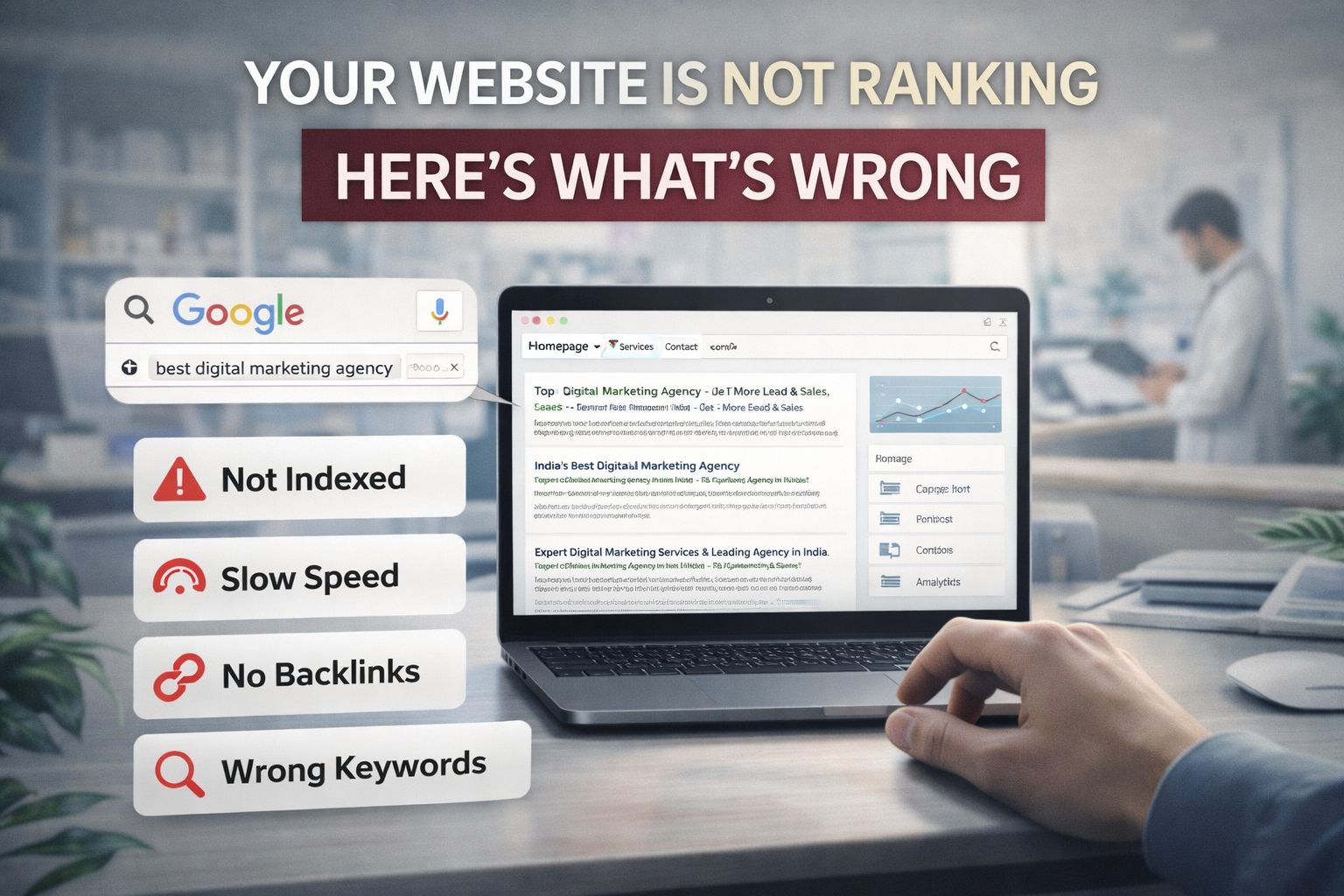
Before fixing your website not ranking on Google in India situation, identify exactly which problem type you are dealing with. Different symptoms need different solutions:
| Your Situation | Most Likely Cause | Start With |
|---|---|---|
| Brand new website, no impressions | Not indexed yet | Action 1: Check and fix indexing |
| Indexed but zero impressions | Wrong keywords or no search volume | Action 2: Keyword strategy |
| Getting impressions, no clicks | Poor title or meta description | Action 4: On-page SEO |
| Getting clicks but low ranking | Content quality or backlinks weak | Actions 6 and 7 |
| Was ranking, now dropped | Algorithm update or competitor improved | Actions 8, 9 and 10 |
Key Takeaway
Your website not ranking on Google in India is not one problem. It is one of at least 10 different problems that each require a different fix. Identifying your symptom first saves weeks of wasted effort on the wrong solution.
10 Proven Fixes When Your Website Is Not Ranking on Google in India
Here are the 10 most important actions to take when your website not ranking on Google in India is the problem you face:
1. Check That Google Has Indexed Your Website
The most fundamental reason for a website not ranking on Google in India is that Google has not indexed the pages at all, If Google does not know your pages exist, they cannot appear in any search results. Type site:yourwebsite.com into Google. If nothing appears, your site is not indexed, and this is the first problem to fix before anything else.
Fix
Submit your XML sitemap in Google Search Console under Indexing. Request indexing for each key page using the URL Inspection Tool. Check your robots.txt file is not blocking Googlebot. Remove any no index tags from important pages. For new websites, allow 4 to 8 weeks for Google to crawl and index pages after submission.
2. Your Website Is Too New: The Google Sandbox Effect
If your website not ranking on Google in India problem started the day you launched, the cause is almost certainly age. New websites typically take 3 to 6 months to achieve stable rankings in competitive keywords. Google’s trust algorithm, often called the sandbox effect, means even perfectly optimised new sites rank poorly for their first few months as Google assesses their credibility and consistency.
Fix
Publish fresh, original content consistently every week. Build initial backlinks from free business directories: Just Dial, India Mart, Sulekha, Google Business Profile, and Bing Places. Submit your sitemap. Be patient. SEO is a 3 to 6 month investment for new websites, not a 3 to 6 day one.
3. You Are Targeting the Wrong Keywords
The most common reason for a website not ranking on Google in India is targeting keywords that no one searches for, or attempting keywords that are impossibly competitive for a new or low-authority domain. According to data cited by SEO Discovery, 90.63% of all pages get zero organic traffic, and the primary cause is keyword mismatch between what a website targets and what users actually search. A keyword with 200 monthly searches that you can realistically rank for is worth infinitely more than a keyword with 200,000 searches where you rank on page 8.
Fix
Use Google Keyword Planner, Uber suggest, or Ahrefs to verify that your target keywords have real monthly search volume. Target long-tail keywords of 3 to 5 words: for example, ‘best SEO agency in Jaipur’ rather than just ‘SEO’. Check keyword difficulty and only target keywords where your domain authority is competitive. Use the Search Terms Report in Google Search Console to find what queries your existing pages already appear for.
4. Your On-Page SEO Is Incomplete or Missing
When a website not ranking on Google in India has been indexed and targets real keywords but still receives zero impressions, incomplete on-page SEO is almost always the cause. Google uses your page title, H1 heading, meta description, URL structure, image alt text, and internal links to understand what your page is about and who should see it. Missing or generic versions of any of these signals mean Google cannot categorise your page accurately and will not show it for relevant queries.
Fix
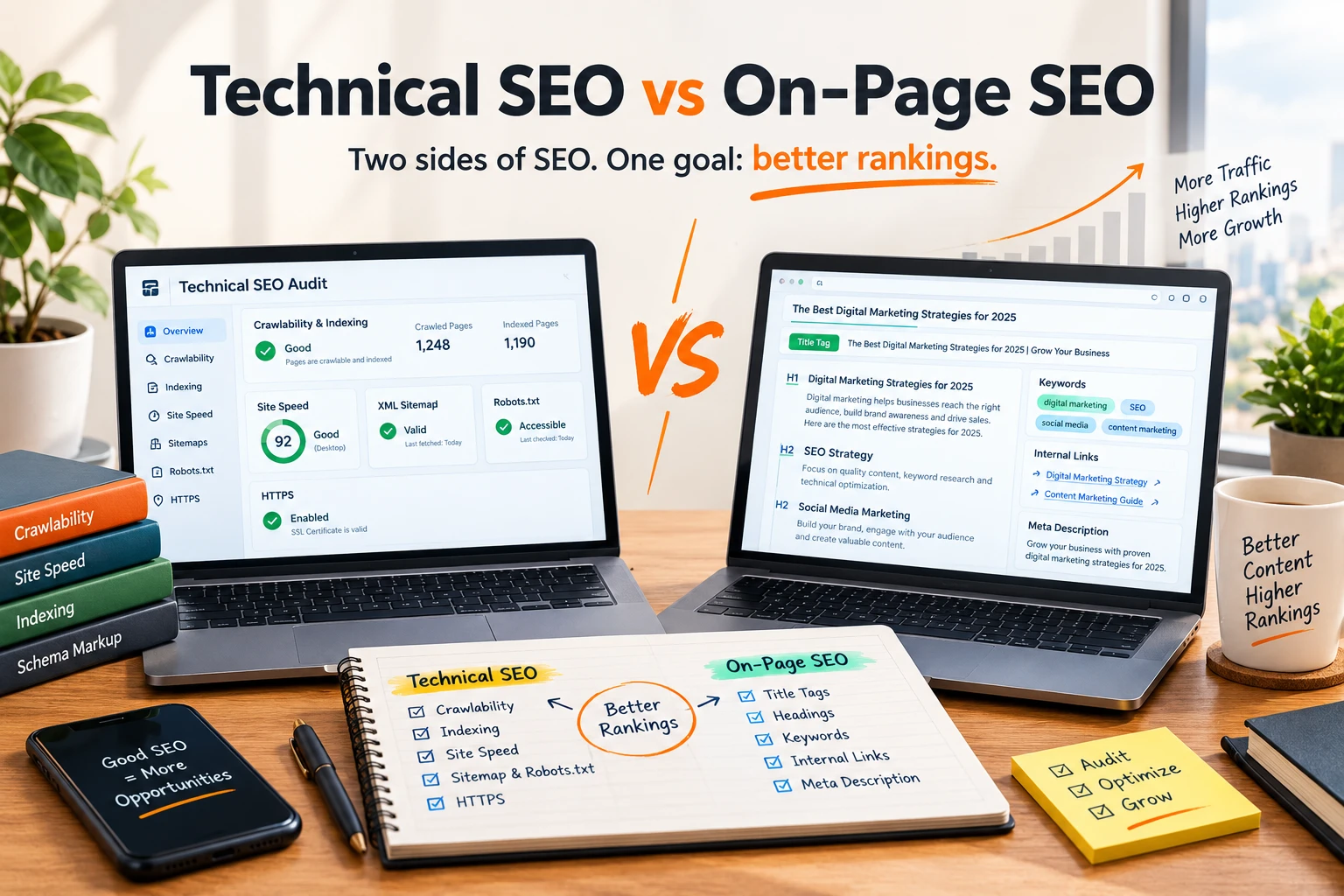
Each page must have: a unique meta title under 60 characters including the target keyword, a meta description under 160 characters with the keyword, one H1 heading that matches the page topic, 2 to 3 H2 subheadings structuring the content, image alt text describing each image with relevant keywords, and internal links connecting to other relevant pages on your site. Check every page in Google Search Console’s Pages report for missing meta data.
5. Your Website Loads Too Slowly on Mobile
A 1-second delay in page load time increases bounce rate by 32%. Google uses Core Web Vitals including Largest Content full Paint, Interaction to Next Paint, and Cumulative Layout Shift as direct ranking factors in India, where most users browse on smartphones with varying 4G connection speeds, a slow website is one of the fastest routes to a website not ranking on Google in India situation. Sites scoring below 50 on Google Page Speed Insights for mobile are at a measurable disadvantage in rankings versus faster competitors.
Fix
Run Google Page Speed Insights on your key pages. Target a mobile score above 70. Common fixes: compress images to Webp format, remove unused JavaScript and CSS, enable browser caching, switch to faster hosting, use a CDN like Cloudflare. In WordPress, plugins like WP Rocket or Lite speed Cache can implement most of these fixes without any coding knowledge.
6. Your Content Is Thin, Generic, or Does Not Match Search Intent
Google’s March 2026 Core Update targeted thin, AI-generated, and generic content with renewed force. For any website not ranking on Google in India in 2026, content quality is one of the highest-priority areas to audit. Google’s YMYL and E-E-A-T standards mean that content needs genuine expertise, original insight, and accurate answers to real user questions. Pages under 300 words with no original value are actively disadvantaged. More importantly, content that does not match the search intent of its target keyword will not rank even if it is technically excellent.
Fix
For each key page, search its target keyword on Google and study the format of the top 5 results. If they are all guides, write a guide. If they are comparison pages, build a comparison. Match format to intent. Expand every page under 800 words with original data, expert perspective, and specific answers to real user questions. Refresh any pages over 12 months old with updated statistics and new examples.
7. Your Website Has No Backlinks or Domain Authority
Backlinks remain one of Google’s top 3 ranking factors. A website not ranking on Google in India with zero referring domains will struggle to outrank competitors who have even modest backlink profiles, regardless of content quality. In India’s growing digital market, free local citation links from Just Dial, India Mart, Google Business Profile, Practo, Sulekha, and industry directories provide the foundational trust signals Google needs to begin ranking your pages.
Fix
Start with free, immediate wins: claim and verify your Google Business Profile, submit to JustDial, IndiaMart, Sulekha, and Bing Places, and get listed in any industry-specific directories relevant to your business. Then pursue earned backlinks through guest posts on relevant Indian blogs, creating shareable original research or data, and seeking press mentions in Indian digital publications. One strong contextual backlink from a relevant, authoritative site is worth more than 50 low-quality directory links.
8. Technical SEO Errors Are Blocking Google
Technical SEO problems are invisible to visitors but devastating for search visibility. Broken internal links, duplicate content across pages, missing or incorrect canonical tags, XML sitemap errors, and slow server response times all prevent Google from crawling and ranking your pages correctly. Many cases of website not ranking on Google in India stem from a single technical error introduced during a website redesign or platform migration that went undetected.
Fix
Run a free technical audit using Screaming Frog (free up to 500 URLs), Semrush Site Audit, or Google Search Console’s Coverage report. Fix in priority order: crawl errors and 4xx pages, redirect chains (A to B to C should be A to C directly), duplicate content and canonical tag errors, missing XML sitemap or sitemap errors, and pages with duplicate or missing meta titles. Set up a monthly site audit schedule to catch new issues before they impact rankings.
9. Your Competitors Have Improved and Outranked You
Sometimes a website not ranking on Google in India is not caused by anything you did wrong. Google’s algorithm constantly re-evaluates every page relative to its competitors. If a competitor published better content, earned stronger backlinks, or improved their site speed since you last ranked, Google may have replaced you with them even if your page quality has not declined. The Google March 2026 Core Update specifically targeted content relevance and topical authority signals, causing significant ranking shifts across Indian markets.
Fix
Use Google Search Console to identify the specific pages where your impressions or average position dropped. Then search each affected keyword on Google and compare your page side-by-side with the page that outranked you. Identify what they have that you do not: more comprehensive content, a stronger internal link structure, more backlinks, better page speed, or stronger E-E-A-T signals. Update your page to match or exceed what is now ranking.
10. You Have Not Given SEO Enough Time
The final and most often overlooked cause of website not ranking on Google in India is expecting results faster than SEO can realistically deliver. New content typically takes 3 to 6 months to achieve stable rankings. Technical improvements take 4 to 12 weeks to reflect in rankings as Google recrawls affected pages. Link building effects appear over 6 to 12 weeks. Many businesses invest in SEO for 4 to 6 weeks, see no dramatic change, and conclude it is not working. They then abandon the effort just before results were about to materialise.
Fix
Set realistic timelines: 3 to 6 months for new website to achieve first-page rankings for long-tail keywords, 6 to 12 months for competitive mid-tail keywords, and 12 to 24 months for high-competition head terms. Track leading indicators instead of rankings alone: check that impressions are growing in Search Console, that your indexed page count is increasing, and that your backlink count from quality domains is building month over month.
Quick Checklist: Fixing Website Not Ranking on Google in India
Run through this checklist every time you review your SEO performance:
- Google indexes your site: site:yourwebsite.com shows results in Google
- XML sitemap submitted and accepted in Google Search Console
- No noindex tags on important pages
- No Googlebot blocking in robots.txt
- Target keywords verified to have real monthly search volume
- Each page has a unique meta title (under 60 chars) and meta description (under 160 chars)
- One H1 heading per page, matching the target keyword
- Mobile PageSpeed Insights score above 70
- No crawl errors, broken links, or redirect chains in Search Console
- At least 5 to 10 backlinks from relevant, trustworthy Indian websites or directories
- Core content pages have at least 800 words of original, helpful content
- Content format matches the search intent of the target keyword
Conclusion
A website not ranking on Google in India problem is never random. It is always caused by one or more of the 10 specific issues covered in this guide. Start with the diagnosis table at the top, identify your symptom, and apply the relevant fix. Most website not ranking on Google in India situations improve measurably within 4 to 12 weeks of applying the right technical and content corrections.
The businesses that consistently rank well in India are not the ones with the biggest budgets. They are the ones that fix their technical foundations first, target keywords their domain can realistically rank for, publish content that matches what users actually need, and build genuine authority through consistent backlinks. Every fix in this guide is achievable without a large agency retainer. Start with action 1 today.
How Dizispark Can Help
Stop struggling with your website not ranking on Google in India and start fixing it with a proven, data-driven SEO system. Dizispark conducts comprehensive website SEO audits that identify exactly what is preventing your site from ranking, including indexing issues, technical errors, content gaps, keyword mismatches, and backlink deficits. We fix each issue methodically and build an ongoing SEO strategy that generates consistent, growing organic traffic month after month. Whether your site has never ranked or has recently lost traffic it once had, we diagnose the real cause and build the solution. Get your free Website Ranking Audit today.
Frequently Asked Questions
Why is my website not ranking on Google in India even though it is indexed?
A website not ranking on Google in India despite being indexed is almost always caused by targeting keywords with no real search volume, on-page SEO elements missing or incomplete, content that does not match the search intent of the target keyword, or a domain authority too low to compete against established competitors. Open Google Search Console and check your Total Impressions. If impressions are zero, the keyword strategy is the problem. If impressions exist but clicks are low, your title and meta description need improving.
How long does it take to fix a website not ranking on Google in India?
Technical fixes such as indexing errors, sitemap submission, and page speed improvements can show results in Google Search Console within 4 to 8 weeks of Google recrawling. Content improvements take 3 to 6 months to affect rankings. Backlink building effects appear over 6 to 12 weeks after links are acquired. The overall timeline for a website not ranking on Google in India to achieve first-page positions for long-tail keywords is typically 3 to 6 months of consistent, correct effort.
What is the fastest fix for website not ranking on Google in India?
The fastest fixes for a website not ranking on Google in India are technical: submitting your sitemap, fixing any no index tags, removing robots.txt blocks, and requesting indexing in Google Search Console. These can be done in a single day and show results within 1 to 4 weeks. Keyword research and targeting easier, lower-competition terms also shows faster results than trying to rank for highly competitive head terms with a new or low-authority domain.
Does Google penalize websites for having too many keywords?
Yes. Keyword stuffing, which means forcing a keyword into content unnaturally or excessively, is a confirmed Google quality signal violation. Google’s algorithms can detect unnatural keyword density and reduce a page’s ranking as a result. The correct approach is to use your target keyword naturally in the title, H1, first paragraph, 2 to 3 subheadings, and throughout the body at a density of 1% to 1.5%. Writing for the reader first and the search engine second consistently produces better ranking outcomes than formulaic keyword insertion.
How important are backlinks for ranking in Google in India?
Backlinks remain one of Google’s top 3 ranking factors. A website with zero referring domains will rarely outrank a competitor with even a modest backlink profile, regardless of content quality. For Indian businesses, free foundational backlinks from Google Business Profile, Just Dial, India Mart, Sulekha, and Practo are the highest-priority starting point. Then pursue contextual backlinks through guest posts on relevant Indian blogs, original research publications, and press mentions in Indian digital media.
Does website speed really affect Google ranking in India?
Yes. Google uses Core Web Vitals as a confirmed ranking factor, and mobile page speed is the most critical metric under mobile-first indexing. A 1-second delay in load time increases bounce rate by 32%. In India, where most users browse on smartphones with varying network speeds, a page that loads slowly on 4G is at a direct ranking disadvantage compared to faster competitors. Target a Google Page Speed Insights mobile score above 70 and a Largest Content full Paint time under 2.5 seconds.
What is the Google March 2026 Core Update and how did it affect Indian websites?
The Google March 2026 Core Update was a broad algorithm change that targeted content relevance, topical authority, and E-E-A-T signals with increased precision. Many Indian websites with thin content, AI-generated text lacking original expertise, or inconsistent topic coverage saw significant ranking drops. Websites that published genuinely helpful content by identifiable experts with consistent topical focus were the primary beneficiaries. Recovery requires improving content quality, adding original expertise signals, and building stronger topical coverage around your core subject area.
Should I hire an SEO agency to fix my website not ranking on Google in India?
Most website not ranking on Google in India problems can be diagnosed and corrected using free tools: Google Search Console, Google Page Speed Insights, and Screaming Frog (free up to 500 URLs). For straightforward issues like indexing errors, keyword research, and on-page SEO, a structured self-guided approach using this guide is achievable for most business owners. A professional SEO audit and ongoing management adds significant value when: your site has complex technical issues, you operate in a highly competitive niche, or you want faster and more systematic results than self-managed SEO delivers.