
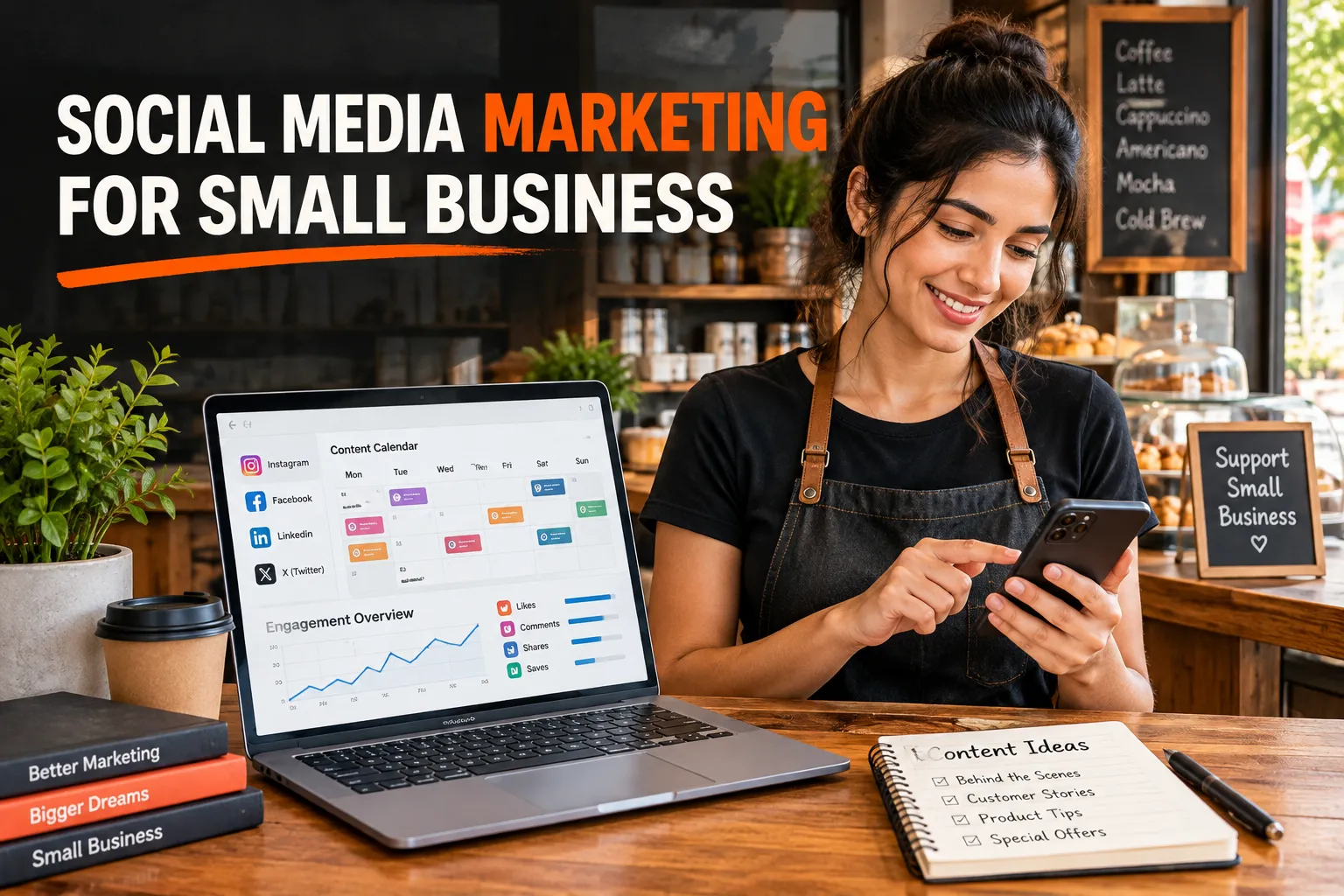
Most small business owners know they should be on social media. Fewer know where to start, what to post, or how to tell whether any of it pays off. Social media marketing for small business works best as a simple system, not a daily scramble for content ideas. This guide to social media marketing for small business walks through that system step by step, from goals and audience research to platforms, content, engagement, ads, and ROI. It draws on published guidance from Sprout Social, Hootsuite, and LYFE Marketing, so the advice stays practical for lean teams.
Table of Contents
ToggleWhy Social Media Marketing for Small Business Works ?
Social platforms give small teams three things that once required big budgets. The first is reach. More than half of global consumers (51%) discovered a new brand or product on social media in the last six months, according to eMarketer data cited by Hootsuite. The second is insight. Comments, direct messages, and reviews show what customers want, what frustrates them, and the words they use to describe their problems. That feedback shapes products and content without a single focus group.
The third is trust. Unlike a billboard, social media opens a two-way conversation. A quick reply to a question or a reshared customer photo can turn a first-time buyer into a repeat customer. A TikTok-commissioned survey also found that 45% of small businesses on the platform credit it with a meaningful share of their growth.
Step 1: Set Goals Tied to Business Results
Good social media marketing for small business starts with a goal, not a post. Pick the one problem you want social media to solve in the next 90 days. That might be awareness, qualified leads, online sales, repeat purchases, or faster customer care. Keep the list short, because small teams decide better when every post serves the same commercial need.
Make each goal SMART: specific, measurable, achievable, relevant, and time bound. Then pair it with two or three numbers that prove movement. Reach and profile visits suit awareness. Link clicks and form fills suit lead generation. Revenue from social traffic suits sales. For context on audience growth, Hootsuite’s Q1 2025 research found average weekly follower growth of 14.53% on Facebook, 3.24% on TikTok, 1.37% on Instagram, and 0.85% on LinkedIn. Treat these as rough benchmarks, not targets to chase.
Step 2: Understand Your Audience
In social media marketing for small business, going viral is no longer a useful goal. Reaching everyone dilutes your message, while reaching the right niche drives results. Define who you serve, what they want, what makes them hesitate, and what moment pushes them to act.
You already own most of the research. Customer emails, sales conversations, reviews, site search data, and direct messages reveal repeated questions and praise. When the same point appears in several places, it deserves content. Borrow your customers’ own words. Phrases like “fast quote” or “fits small spaces” persuade better than polished brand language. Studying competitors helps too, and nearby small businesses are often potential allies rather than rivals.
Step 3: Choose the Right Platforms
Pick platforms for your social media marketing for small business based on how your customers buy, not on which network is trending. Facebook remains the most popular platform for small business marketing worldwide, followed by Instagram and LinkedIn, but popularity is not the same as fit.
| Platform | Best for | Content strength |
|---|---|---|
| Local businesses, communities, repeat demand | Reviews, events, direct messages | |
| Visual products, launches, lifestyle brands | Reels, carousels, stories | |
| TikTok | Demos, education, discovery | Short, relatable video |
| B2B services, high-ticket offers | Case studies, expertise | |
| YouTube | Walkthroughs, complex questions | Long-form tutorials |
Give each channel a job. One platform introduces you to new people, a second helps them check your credibility, and a third makes it easy to message or book. A gym might use Instagram for classes and coach personality, while Facebook handles reviews and event questions. Be honest about capacity. Daily short video needs ideas, editing time, and someone to reply while posts are fresh. Two platforms done well beat five done badly.
Step 4: Plan Content You Can Sustain
A content calendar keeps social media marketing for small business consistent, so a small team is not posting only when inspiration strikes. For each post, record the idea, format, platform, owner, status, publish date, and the goal it supports. That one sheet shows gaps before they become silent weeks. Anchor the calendar to moments that move demand, launches, seasonal peaks, local events, promotions, and common customer questions. Leave a slot or two each week for timely content and block time for replies.
Consistency matters more than volume. Posting once a day beats posting ten times for three days and then disappearing for a week. Hootsuite’s research suggests carousels and video usually earn the best engagement, though the winner varies by platform. Simple ratios can guide your mix. The 70/20/10 rule suggests 70% value-building content, 20% content shared from others, and 10% promotion. Repurpose strong posts too, turning one testimonial into a quote card, a short clip, and a story.
Step 5: Engage Like a Real Business
In social media marketing for small business, posts earn attention, but replies earn trust. Buyers read comment threads and review responses before they act, so your response record is part of your marketing. Answer at the level of the question. Someone asking about sizing needs dimensions and a link, not a cheerful emoji. For complaints, acknowledge the problem calmly in public, move account details to a private message, keep one owner on the case, and post a brief update once it is resolved.
Authenticity helps too. Candle brand Mala shares honest behind-the-scenes moments, including a video about slower sales, and earned local media coverage as a result. Humor and carefully chosen trends also make content feel less like an ad, as long as they fit your audience and goals. Collaboration is optional but useful. Micro-influencers cost less and often engage better than celebrities, and commenting on creators’ posts is a free way to build visibility.
Step 6: Use Paid Social Wisely
Paid ads in social media marketing for small business should accelerate something that already works. Look for posts that drive profile visits, saves, direct messages, or product page views, not just likes. Hootsuite notes that 81% of small businesses planned to raise paid social investment in late 2024, and boosted posts are a low-risk way to start.
Give each campaign one objective, such as traffic, leads, or sales. Build separate audiences for cold prospects, engaged viewers, cart abandoners, and past customers, and exclude people who already converted. Creative should feel native to the platform, with a clear first frame, on-screen proof, and a simple call to action like “Book now” or “Get a quote.” Track cost per click, cost per lead, landing page conversion rate, and return on ad spend. If numbers slip, check the landing page and offer before blaming the ad.
Step 7: Measure ROI Honestly
ROI for social media marketing for small business starts with a plain formula: return minus investment. Count real costs, including creative time, design, software, and freelancers, not just ad spend. Match your review window to your sales cycle. A bakery may see results within days, while a consultancy may need a quarter.
Keep tracking simple enough to maintain. Add UTM tags to key links, use dedicated landing pages for big offers, give each platform its own promo code, and ask customers where they first heard about you. Add field evidence too, such as sales-call notes about a video that brought someone in.
Common Mistakes to Avoid
These mistakes quietly drain results from social media marketing for small business:
- Chasing every platform instead of mastering two
- Posting only promotions, with no value or personality
- Ignoring comments and direct messages
- Judging success by followers instead of leads and revenue
- Boosting posts with no clear objective or landing page
- Jumping on trends that do not fit the brand
Conclusion
Social media marketing for small business is less about posting more and more about operating with focus. Set one clear goal, learn your audience, choose a few platforms you can sustain, and respond to people the way a real business would. Add paid promotion only after you know what works, and measure results against revenue, not vanity metrics. For social media marketing for small business, start small, review monthly, and let the data decide what to scale.
A successful social media marketing for small business strategy starts with understanding customer needs and creating content that builds trust. Effective social media marketing for small business includes sharing practical tips, answering common questions, highlighting services, and demonstrating how your business solves real problems. Consistent branding helps make your business recognizable across different platforms. With social media marketing for small business, you can improve online visibility by responding to comments, engaging with followers, and sharing useful information regularly. Track website traffic, enquiries, and conversions to measure progress. A data-driven social media marketing for small business plan helps identify successful content, while professional social media marketing for small business practices support stronger customer relationships and sustainable business growth.
How Dizispark Can Help ?
Dizispark delivers social media marketing for small business as a complete service, from audience research and platform selection to content calendars, community management, paid campaigns, and monthly reporting tied to leads and sales. Every plan is built around the owner’s real budget and capacity, not a generic package.
For local businesses, Dizispark also keeps Google My Business aligned with social profiles and ads, so reviews, location details, and promotions tell the same story wherever a customer finds you. You keep ownership of every account throughout.
Frequently Asked Questions
How do I start social media marketing for a small business?
To start social media marketing for small business, first decide what you want to achieve within the next 90 days. Your goal could be increasing brand awareness, generating enquiries, driving website traffic, or improving sales. Define your target audience by considering their interests, needs, location, and buying behavior. Select two social media platforms where potential customers are active. Create a simple content calendar that includes educational posts, product information, customer stories, and promotions. Publish consistently and respond to comments and messages. Review your results monthly to identify which posts attract relevant attention and enquiries. Once you understand what works organically, consider testing paid advertising with a small budget.
Which social media platform is best for a small business?
The best platform depends on your audience, products, services, and available resources. Facebook can suit local businesses that rely on community engagement, customer reviews, events, and direct messages. Instagram is useful for visual products, launches, and lifestyle brands, while LinkedIn can support B2B companies and professional services. TikTok is suitable for short demonstrations and discovery, while YouTube can explain complex topics through tutorials. An effective social media marketing for small business strategy prioritizes audience relevance over platform popularity. Start with one or two channels that match your customers’ behavior and your team’s capabilities. Monitor engagement, website visits, and enquiries before expanding to additional platforms.
How often should a small business post on social media?
The ideal posting frequency depends on your platform, audience, content resources, and business objectives. Three to five posts per week can be a practical starting point, but the right schedule varies. Social media marketing for small business works best when publishing remains consistent rather than stopping and starting frequently. Prepare a weekly calendar with educational posts, customer questions, product demonstrations, testimonials, and promotions. Reuse successful ideas in different formats, such as turning a customer review into a graphic or short video. Track engagement, saves, shares, profile visits, and enquiries to understand what your audience finds useful. If content quality declines because of an unrealistic schedule, reduce the frequency and improve the content.
How much does social media marketing cost for a small business?
The cost of social media marketing for small business depends on whether you manage activities yourself, hire a freelancer, work with an agency, or invest in paid advertising. Organic posting can begin with your time and free platform tools, although content planning and engagement still require resources. Additional expenses may include scheduling software, graphic design, video production, creator partnerships, and advertising budgets. Before spending money, define your objective and decide how much you can reasonably invest. Track relevant outcomes such as qualified enquiries, website visits, bookings, and sales instead of focusing only on likes. If you hire an agency, confirm which services are included and whether advertising spend is charged separately.
Can small businesses compete with large brands on social media?
Yes, small businesses can compete by using their local knowledge, personal communication, and customer relationships effectively. Large brands may have bigger production budgets, but small businesses can often respond quickly and show the people behind their products or services. Social media marketing for small business can focus on practical demonstrations, behind-the-scenes content, customer testimonials, and useful answers to common questions. Local businesses can also collaborate with complementary businesses and participate in relevant community conversations. Avoid copying competitors without considering your own audience. Focus on a clear message, consistent branding, and reliable customer service. Measure whether your content attracts relevant people and encourages meaningful actions rather than judging success by viral reach alone.
What is the 70/20/10 rule for social media content?
The 70/20/10 rule is a content-planning guideline that helps businesses balance useful posts with promotional messages. Approximately 70% of content provides value or builds the brand, 20% shares relevant content from other sources, and 10% promotes products or services directly. Value-building posts might include tutorials, practical tips, industry insights, and helpful demonstrations. Shared content can include relevant resources from trusted sources, with appropriate attribution. Promotional posts may announce offers, new products, or service packages. For social media marketing for small business, this rule provides a starting point rather than a strict requirement. Adjust the mix according to your audience, industry, campaign goals, and performance data.
How do I measure social media ROI for a small business?
Measuring social media marketing for small business ROI starts with identifying the total investment and the results generated. Include advertising spend, design tools, software subscriptions, freelance fees, and the time spent managing accounts. A basic ROI formula is (Return minus Investment) divided by Investment, multiplied by 100. Track campaign links with UTM parameters, use suitable landing pages, and configure conversion tracking for important actions. You can also use promotional codes or ask customers how they discovered your business. Review results over a period that reflects your sales cycle. Focus on meaningful outcomes such as qualified leads, purchases, bookings, and customer retention rather than engagement metrics alone.
Is paid social media advertising worth it for a small business?
Paid social media advertising can be worthwhile when a business has a clear objective, an appropriate audience, and a realistic budget. It can help increase awareness, attract website visitors, generate enquiries, or promote products and services. However, advertising does not guarantee sales. Social media marketing for small business should use paid campaigns to support a defined goal, such as lead generation or purchases. Create advertisements with a clear message, relevant creative, and a suitable call to action. Start with a controlled test and monitor cost per click, cost per lead, conversion rate, or return on ad spend. If results are weak, review the audience, offer, creative, and landing page before increasing spending.