
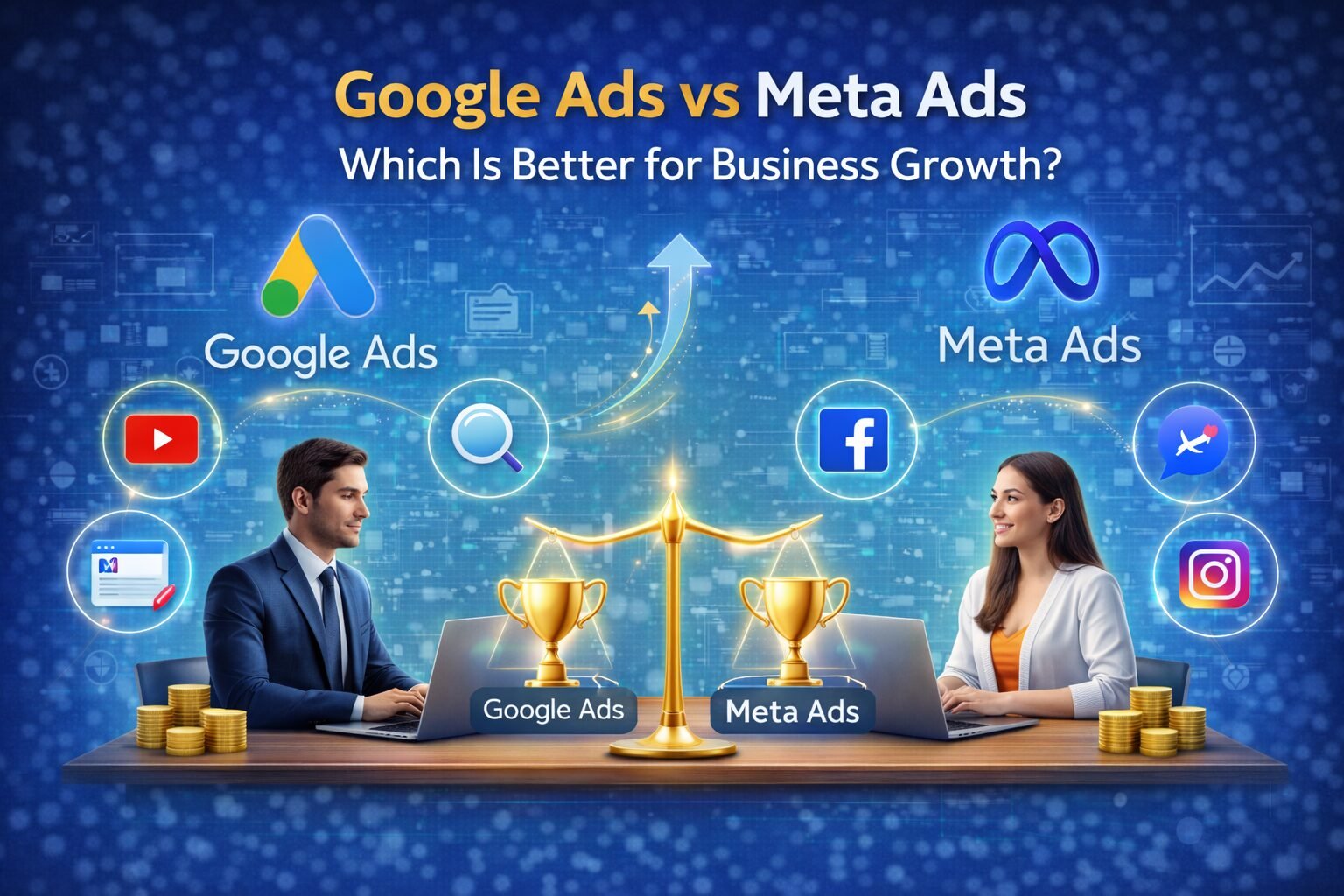
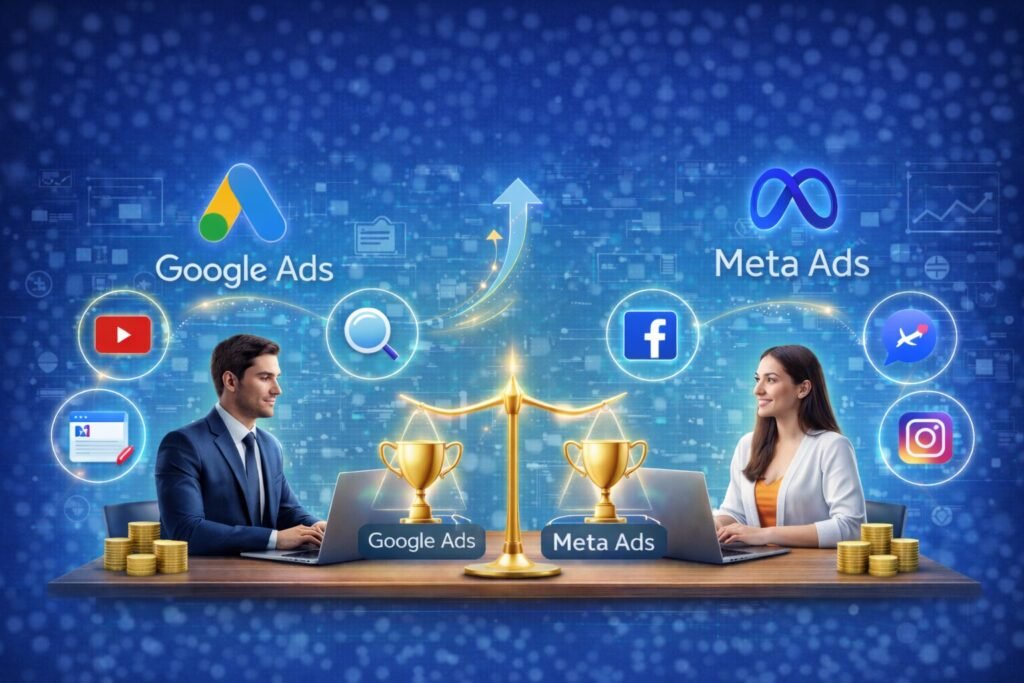
When businesses decide to invest in paid advertising, one question always comes up first: Google Ads vs Meta Ads, which platform is better for business growth?
Some marketers swear by Google Ads because of high intent traffic, while others prefer Meta Ads for brand awareness and lower costs. The truth is, both platforms work exceptionally well, but only when used for the right purpose.
This guide breaks down google ads vs meta ads in a practical, no-fluff way. We’ll compare how they work, how much they cost, where they perform best, and how businesses should choose between them based on real goals, not assumptions.
Understanding the Core Difference Between Google Ads and Meta Ads
The biggest difference in google ads vs meta ads lies in user intent.
Google Ads is built around intent-based advertising. When someone searches for a product or service, Google shows ads that directly match that search. This means users already want a solution and are closer to making a decision.
Meta Ads, on the other hand, are discovery-based. Ads appear while users scroll through Facebook or Instagram. They are not searching for anything specific, but the platform shows ads based on interests, behavior, and demographics.
In simple terms:
- Google Ads captures existing demand
- Meta Ads creates new demand
This difference shapes everything else, from ad formats to cost and conversion behavior.
How Google Ads Works in Real Business Scenarios
Google Ads displays ads across Google Search, YouTube, Gmail, and the Display Network. The most powerful part of Google Ads is search advertising, where businesses bid on keywords related to their offerings.
When someone searches for “best web design agency near me” or “buy running shoes online,” Google Ads allows businesses to appear at the top of results instantly.
Why Google Ads works so well:
- Users already have intent
- Ads match real search queries
- Conversions happen faster
- Tracking and attribution are strong
Because of this, Google Ads is often the first choice for lead generation, service-based businesses, and high-intent sales.
How Meta Ads Works for Businesses
Meta Ads run across Facebook, Instagram, Messenger, and Audience Network. Instead of keywords, Meta uses interest, behavior, and demographic signals to decide who sees an ad.
For example, a fitness brand can show ads to users interested in health, gyms, or workout content even if those users are not actively searching for products.
Why Meta Ads is powerful:
- Excellent for brand awareness
- Strong audience targeting
- Visual and creative-driven
- Ideal for retargeting
Meta Ads shines when businesses want visibility, storytelling, and long-term brand recall rather than instant conversions.
Google Ads vs Meta Ads: Cost Comparison (CPC, CPA, ROI)
Cost is one of the most discussed topics in google ads vs meta ads.
Meta Ads generally offers lower cost per click, especially for broad audiences and awareness campaigns. This makes Meta attractive for startups and brands testing the market.
Google Ads usually has higher CPC, especially in competitive industries like real estate, finance, legal, and digital services. However, conversion rates are often higher because users are already searching.
What matters more than CPC is cost per acquisition and return on investment.
Key takeaway:
- Meta Ads: lower CPC, longer conversion cycle
- Google Ads: higher CPC, stronger conversion intent
Businesses focused on direct leads often see better ROI from Google Ads, while Meta Ads supports long-term growth and brand building.
Ad Formats and Creative Requirements
Another important factor in google ads vs meta ads is ad format.
Google Ads relies heavily on text-based search ads. While it also supports display ads, shopping ads, and YouTube video ads, success depends on keyword relevance and landing page quality.
Meta Ads is highly visual. Image ads, videos, reels, carousels, and stories dominate performance. Creative quality plays a massive role in success on Meta platforms.
If your business depends on visuals, lifestyle branding, or emotional messaging, Meta Ads has a clear edge. If your business solves a clear problem people search for, Google Ads is more effective.
When Google Ads Is the Better Choice
Google Ads works best when:
- Users actively search for your product or service
- You want immediate leads or inquiries
- You run a local or service-based business
- Your offering solves a direct problem
Industries like healthcare, legal services, B2B software, education, and local services benefit strongly from Google Ads.
In most google ads vs meta ads comparisons, Google wins for bottom-funnel conversions.
When Meta Ads Is the Better Choice
Meta Ads is ideal when:
- You want brand awareness or visibility
- Your product needs explanation or demonstration
- You run e-commerce or D2C brands
- You want to build retargeting audiences
Meta Ads works exceptionally well for fashion, beauty, fitness, lifestyle, and content-driven brands. Meta also plays a major role in warming up cold audiences before conversion happens through other channels.
Conversion Tracking and Attribution Differences
Tracking is a critical part of paid advertising.
Google Ads offers strong attribution, especially when connected with Google Analytics. Calls, form submissions, and purchases are easier to track and analyze.
Meta Ads relies on pixel-based tracking and modeled data. Privacy changes have reduced visibility, but Meta still contributes significantly to assisted conversions and remarketing performance.
Smart businesses don’t judge Meta Ads only by last-click conversions. They evaluate its impact on the overall funnel.
Brand Safety, Trust, and Platform Challenges
Both platforms have challenges. Meta Ads faces issues like fake engagement, ad fraud, and reduced data transparency after privacy updates. Google Ads faces rising competition, higher CPCs, and stricter regulations in some industries. This makes optimization, monitoring, and proper strategy essential regardless of platform.
The Smart Way to Use Google Ads and Meta Ads Together
The real answer to google ads vs meta ads is not choosing one, but combining both.
A proven strategy:
- Use Meta Ads to build awareness and engagement
- Retarget interested users
- Capture high-intent searches with Google Ads
- Convert warm audiences faster
This full-funnel approach delivers better long-term ROI than running either platform alone.
Final Verdict: Google Ads vs Meta Ads
There is no universal winner in google ads vs meta ads. The better platform depends on your business goal, audience behavior, and funnel stage. Choose Google Ads if you want high-intent traffic and fast conversions. Choose Meta Ads if you want brand visibility, discovery, and scalable audience growth. Businesses that understand this difference and use both platforms strategically always outperform those who rely on just one.
How Dizispark Can Help You
At Dizispark, we specialize in Google Ads and Meta Ads solutions, ensuring that your advertising campaigns meet the performance standards required for consistent business growth. Our comprehensive advertising services include keyword research, audience targeting, creative ad development, conversion tracking setup, campaign optimization, and more. With our data-driven strategies and expert team, we help businesses generate quality leads, maximize ROI, comply with platform best practices, and scale profitably. Let Dizispark assist you in achieving measurable results and sustainable growth through the right paid advertising strategy.
1. Google Ads vs Meta Ads: Which is better for small businesses?
In the google ads vs meta ads comparison, small businesses should choose based on goals. If you need immediate leads from people actively searching, Google Ads works better. If you want brand awareness and audience building on a lower budget, Meta Ads is a strong option.
2. Are Meta Ads cheaper than Google Ads?
Meta Ads often have a lower cost per click compared to Google Ads. However, in the google ads vs meta ads debate, lower CPC does not always mean better ROI. Google Ads may have higher CPC but often converts faster due to strong search intent.
3. Which platform gives higher ROI: Google Ads or Meta Ads?
ROI depends on funnel stage and strategy. In most google ads vs meta ads comparisons, Google Ads performs better for high-intent conversions, while Meta Ads supports long-term growth and assisted conversions.
4. Can I run Google Ads and Meta Ads together?
Yes. The smartest strategy in the google ads vs meta ads discussion is often using both platforms together. Meta Ads builds awareness, and Google Ads captures demand when users search.
5. Is Google Ads better for lead generation?
Yes, especially for service-based and local businesses. In the google ads vs meta ads comparison, Google Ads usually performs better for direct lead generation because users already have intent.
6. Is Meta Ads better for e-commerce brands?
Meta Ads works extremely well for e-commerce and D2C brands due to visual creatives and audience targeting. However, combining it with Google Ads often delivers the strongest results.