Meta Ads have changed more in the past twelve months than in the previous five years combined. If your Meta Ads strategy 2026 still looks like it did in 2024, it is almost certainly underperforming. The platform has been rebuilt around artificial intelligence at every level: ad delivery, audience targeting, creative optimisation, bidding, and measurement. The rules that made campaigns profitable in 2023 and 2024 no longer apply in the same way.
This complete guide covers every significant change you need to understand about Meta Ads strategy 2026, what each change means in practice, and exactly how to adapt. Every fact is backed by verified data from Meta’s official announcements and industry research listed at the end of each section.
The Biggest Change: Meta’s Andromeda Algorithm
The foundation of any effective Meta Ads strategy 2026 is understanding Andromeda. In late 2024, Meta replaced its old ad delivery system with a completely new algorithm called Andromeda, powered by NVIDIA’s GH200 chip. It is 100 times faster at matching people to ads and can handle 10,000 times more ad variants simultaneously compared to the previous system.
The most important shift is this: Andromeda changed who controls targeting. Previously, advertisers manually selected audiences based on interests, behaviours, and demographics. Andromeda flips that dynamic entirely. Now Meta controls the targeting, using your ad creative as the primary signal to determine who should see your ad.
According to Social Media Examiner’s 2026 analysis, the brands winning with Meta in 2026 are those that feed the system creative variety rather than creative volume. The algorithm analyses your visuals, text, format, and context cues to match the ad with the most relevant users, without you explicitly selecting those interests. Your creative is now your targeting.
Key Takeaway
Stop spending time fine-tuning interest-based audience filters. Andromeda makes that effort largely redundant. Instead, invest that time into creating diverse, high-quality ad variants. The algorithm needs variety to learn and to match your ads with the right people.
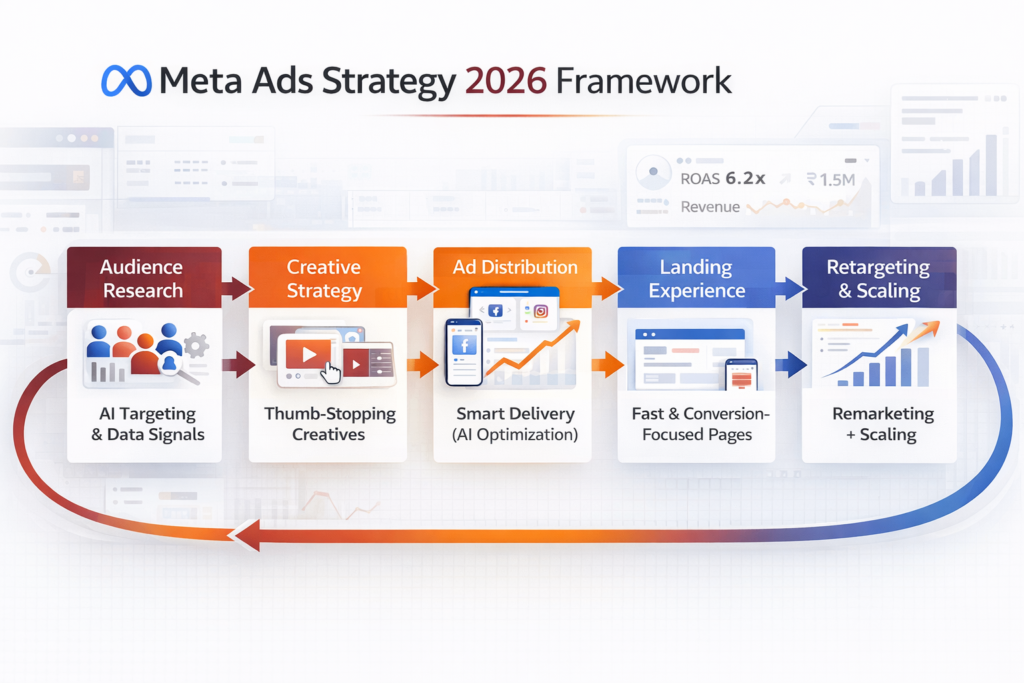
What Changed in Meta Ads Strategy 2026: Before vs Now
Here is a direct comparison of the old Meta Ads strategy 2026 versus what actually works in 2026:
| Area | Old Strategy (2024 and before) | New Strategy (2026) |
|---|---|---|
| Targeting | Manual interest stacking, detailed behaviour filters | Creative-led targeting; let Andromeda find the audience |
| Campaign structure | Many ad sets, narrow audiences | Fewer, broader campaigns; use Advantage Plus audiences |
| Creative approach | One winning image, tested with different headlines | 3 to 5 fully different creative variants per ad set |
| Creative formats | Heavy reliance on video | Static images still drive 60% to 70% of conversions |
| Bidding | Manual bid caps and cost caps | Automated bidding (Lowest Cost or Advantage Plus) |
| Optimisation | Frequent manual adjustments | Trust the algorithm; change less, test creatives more |
| Measurement | Last-click attribution windows | Incremental attribution; Privacy-aligned AEM 2.0 signals |
| Campaign objective | Many separate objectives per funnel stage | Consolidated objectives; Advantage Plus Shopping or Lead |
| Placements | Manual placement selection per format | Advantage Plus Placements across all surfaces including Threads |
| AI tools | Optional extras | Core to campaign performance: Dynamic and Flexible Creative |
6 Key Changes in Meta Ads Strategy for 2026 You Must Understand
1. Creative Is Now the Primary Targeting Signal
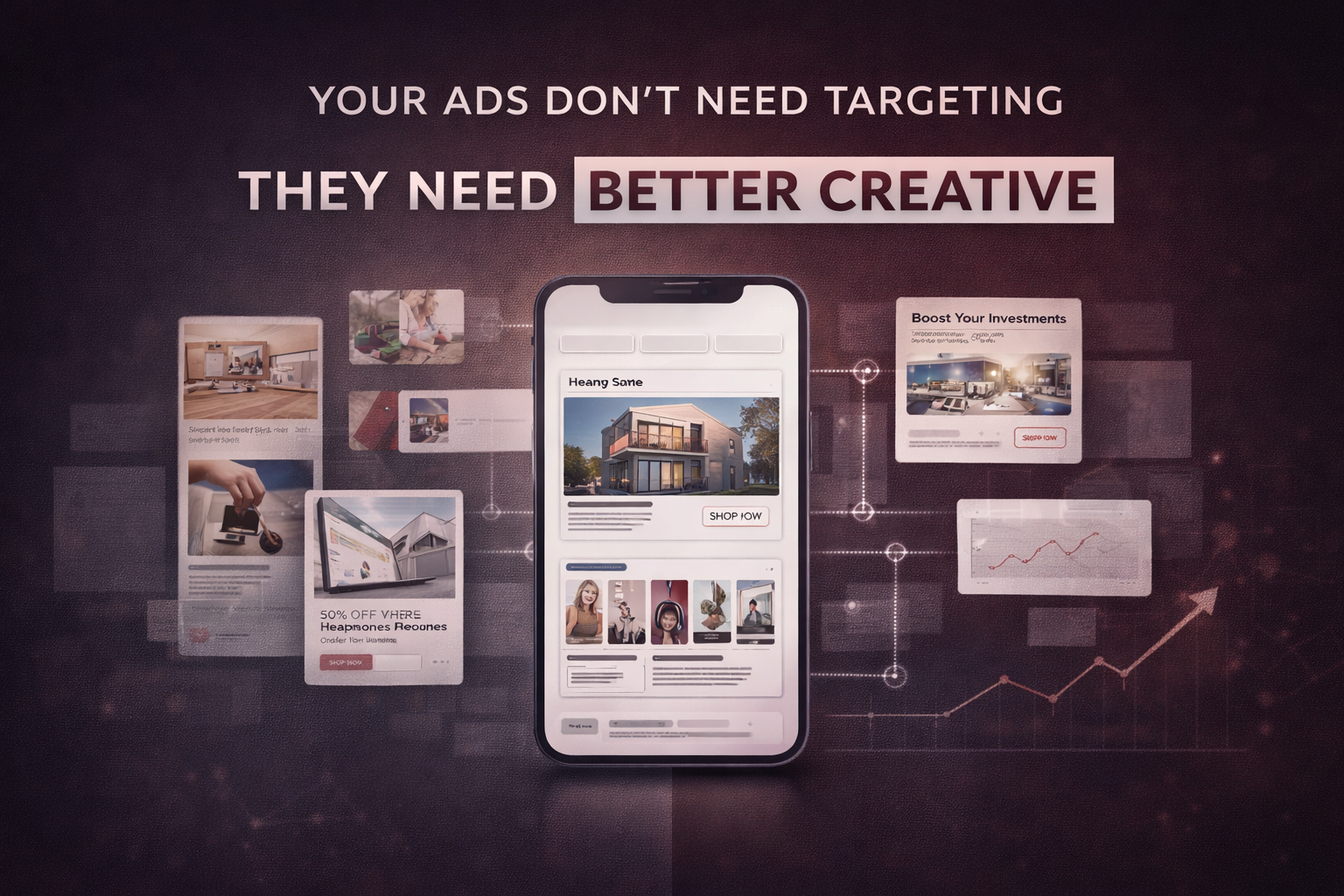
Meta’s Andromeda algorithm analyses every element of your ad creative including visuals, text, format, tone, and context to determine which users are most likely to respond. This means weak creative does not just underperform. It fails to deliver at all because the algorithm cannot identify who to show it to. You cannot fix poor creative performance with better targeting. Creative quality and diversity are now the most important inputs in any Meta ad campaign.
2. Advantage Plus Is the New Default Campaign Structure
Meta’s Advantage Plus suite (Advantage Plus Shopping, Advantage Plus Audiences, Advantage Plus Placements, and Advantage Plus Creative) is now the recommended campaign structure for most advertisers. It hands over audience selection, placement decisions, and creative optimisation to Meta’s AI. In Q4 2025, Meta’s AI-driven attribution improvements drove a 24% increase in incremental conversions compared to standard attribution models. Advertisers who resist Advantage Plus and insist on full manual control are increasingly fighting the algorithm rather than working with it.
3. Threads Is Now Part of the Meta Ad Ecosystem
Threads ads are now available globally through Meta Ads Manager with full integration alongside Facebook, Instagram, Reels, Stories, and Messenger. Threads uses the same buying tools, creative formats, and targeting capabilities as the rest of the Meta stack. For advertisers, this means a new placement surface that reaches a text-first audience without any additional learning curve. Including Threads in Advantage Plus Placements adds reach with no extra setup required.
4. Attribution Has Changed: Incremental Measurement Matters Now
Meta introduced a major update to its attribution system in 2026. Click-through attribution now counts only real link clicks. Interactions such as likes, shares, saves, and comments are tracked separately in a new category called Engage-through attribution. Meta also rolled out its incremental attribution model, which drove a 24% increase in measured incremental conversions compared to standard last-click models. According to Meta’s official 2026 AI performance report, these improvements also drove a 3.5% lift in ad clicks on Facebook and a 1% gain in conversions on Instagram in Q4 2025.
5. First-Party Data Is Now a Competitive Advantage
With third-party cookies declining and privacy regulations tightening, first-party data has become the most valuable input you can give Meta’s algorithm. Uploading your customer lists, using Conversions API instead of pixel-only tracking, and building Custom Audiences from your email lists and website visitors all give Meta cleaner signals to optimise against. In 2026, brands with clean, accurate first-party data consistently outperform those relying on Meta’s default demographic targeting.
6. Generative AI Ad Creation: GEM Is Coming
Meta is actively building toward a Generative Ad Model (GEM) that will allow advertisers to provide a product URL, a budget, and a brief prompt, and the AI will generate the entire campaign including images, copy, headlines, and animations. The combined revenue run-rate of Meta’s video generation tools hit $10 billion in Q4 2025, with quarter-over-quarter growth nearly three times faster than overall ads revenue. As GEM develops, the advertiser’s competitive advantage will shift from campaign configuration to offer quality, landing page experience, and creative brief quality.
What Still Works in Meta Ads Strategy 2026
With so much changing, it is easy to throw out tactics that still work.
Here is what remains effective in any Meta Ads strategy 2026:
- Static images still drive 60% to 70% of Meta ad conversions. Do not abandon static creative for video-only. Static images with strong copywriting remain the most reliable conversion driver on the platform.
- Retargeting warm audiences still delivers strong ROAS. People who visited your website, watched your video, or engaged with your page remain highly convertible. Custom Audience retargeting remains one of the highest-ROI tactics on Meta.
- Lookalike Audiences remain powerful when built on quality first-party data. Upload your best customers and build 1% Lookalikes. This continues to outperform broad interest targeting for most businesses.
- Consistent budget scaling still works with the 20% rule. Never increase budgets by more than 20% at a time. Larger increases reset the learning phase and destabilise delivery.
- Facebook referral traffic has surged in 2026. Some publishers are reporting 4x more Facebook referral traffic than in 2025, driven by the algorithm’s renewed favouritism toward content that generates comments and shares.
Pro Tip
The most effective Meta Ads strategy in 2026 combines three things: creative diversity to feed Andromeda, clean first-party data to give the algorithm accurate signals, and a strong post-click experience to convert the traffic Meta delivers. You cannot compensate for a weak offer or a slow landing page with better ad settings.
Meta Ads Strategy 2026: Quick Action Checklist
Use this checklist to align your Meta Ads strategy 2026 with how the platform actually works today:
- Upload 3 to 5 fully different creative variants per ad set (different visuals, formats, and angles)
- Include at least one static image, one short video, and one Reel or carousel in every ad set
- Switch to Advantage Plus Audiences and let Meta find your audience rather than manually stacking interest filters
- Enable Advantage Plus Placements to reach users across Facebook, Instagram, Threads, and Reels
- Install Conversions API alongside Meta Pixel to give the algorithm clean, complete conversion data
- Upload your customer list and build 1% Lookalike Audiences from your best customers
- Use Dynamic Creative or Flexible Creative tools to let Meta test headline and visual combinations automatically
- Refresh ad creative when frequency reaches 4 or above
- Use the 20% budget scaling rule to avoid resetting the learning phase
- Review attribution using Meta’s incremental attribution model, not last-click only
Conclusion
The Meta Ads strategy 2026 that works is fundamentally different from what worked in 2024. Andromeda has replaced manual audience targeting with creative-driven delivery. Advantage Plus has automated bidding, placements, and optimisation. Attribution has shifted to incremental measurement. First-party data has become the most valuable input you can provide.
The advertisers who will win with Meta Ads strategy 2026 are not those who master Ads Manager settings. They are the ones who invest in creative diversity, provide the algorithm with clean conversion signals, and build post-click experiences that convert the traffic Meta delivers. Meta is no longer a media-buying platform. In 2026, it is a creative discovery engine.
How Dizispark Can Help
Grow your business with a proven Meta Ads strategy for 2026 that works with the new Andromeda algorithm, not against it. Dizispark builds and manages Meta advertising campaigns for businesses across India that are built around creative diversity, Advantage Plus automation, clean conversion tracking, and strong post-click landing pages. We stay ahead of every Meta platform change so your campaigns keep improving every month. Whether you are starting fresh or fixing an underperforming account, we deliver a Meta Ads system that generates real leads and sales at a consistent cost per result. Get your free Meta Ads Strategy Audit today.
Frequently Asked Questions
What is the biggest change in Meta Ads strategy for 2026?
The biggest change in Meta Ads strategy 2026 is the Andromeda algorithm, which has shifted targeting control from the advertiser to Meta’s AI. Your ad creative is now the primary targeting signal. The algorithm analyses your visuals, copy, format, and context to decide who sees your ad. This means creative quality and diversity are now more important than audience selection.
What is the Meta Andromeda algorithm and how does it affect my campaigns?
Meta Andromeda is the new AI-powered ad delivery system Meta introduced in late 2024 and fully rolled out in 2026. It is 100 times faster than the previous system and can process 10,000 times more ad variants simultaneously. It uses your creative content as its primary signal to match your ad with the most relevant users. If your creative lacks variety or quality, Andromeda cannot find the right audience and your delivery suffers regardless of your targeting settings.
Should I still use detailed interest targeting in my Meta Ads in 2026?
Detailed interest targeting is significantly less important in 2026 than in previous years. Meta recommends using Advantage Plus Audiences, which lets the algorithm define and expand your audience based on conversion data and creative signals. Manual interest stacking can actually restrict the algorithm’s ability to find high-converting users outside your pre-defined parameters. Use interest targeting to suggest a starting point, then let Advantage Plus expand from there.
What types of creative work best for Meta Ads in 2026?
Despite the rise of video content, static images still drive 60% to 70% of Meta ad conversions. The best creative strategy in 2026 is format diversity: include static images, short-form videos, Reels-style content, carousels, and founder-style raw videos in each ad set. Upload at least 3 to 5 fully different creative variants with different visuals, angles, and messaging. Avoid minor variations of the same image because Andromeda may treat them as duplicates and reduce their reach.
What is Advantage Plus and should I be using it?
Meta Advantage Plus is a suite of AI-driven campaign tools that automates audience selection, placement decisions, bidding, and creative optimisation. In Q4 2025, Meta’s incremental attribution model within Advantage Plus drove a 24% increase in measured conversions compared to standard campaigns. For most advertisers in 2026, using Advantage Plus Shopping Campaigns or Advantage Plus Audiences alongside manual creative input delivers better results than fully manual campaign structures.
How has attribution changed in Meta Ads for 2026?
Meta updated its attribution metrics in 2026. Click-through attribution now counts only real link clicks. Passive interactions such as likes, saves, and shares are tracked separately as Engage-through attribution. Meta also introduced incremental attribution, which measures the genuine lift your ads generate rather than simply crediting the last click before a conversion. This gives a more accurate picture of real campaign performance and helps with budget decisions.
How important is first-party data for Meta Ads in 2026?
First-party data is now a significant competitive advantage. Brands that upload clean customer lists, use Conversions API for server-side tracking, and build Custom Audiences from website visitors consistently outperform those relying on Meta’s default demographic data. With third-party cookies declining and privacy restrictions tightening, Meta’s algorithm increasingly depends on the first-party signals advertisers provide to optimise delivery accurately.
Is Meta Ads still worth investing in for Indian businesses in 2026?
Absolutely. India has 378 million Facebook users and 481 million Instagram users, making it one of the largest Meta audiences in the world. CPMs in India remain significantly lower than Western markets, meaning Indian businesses get exceptional reach per rupee spent. The Andromeda algorithm works the same in India as globally, so the same creative-first strategy applies. Indian businesses that invest in diverse, high-quality creative and clean conversion tracking will see strong results from Meta Ads in 2026.