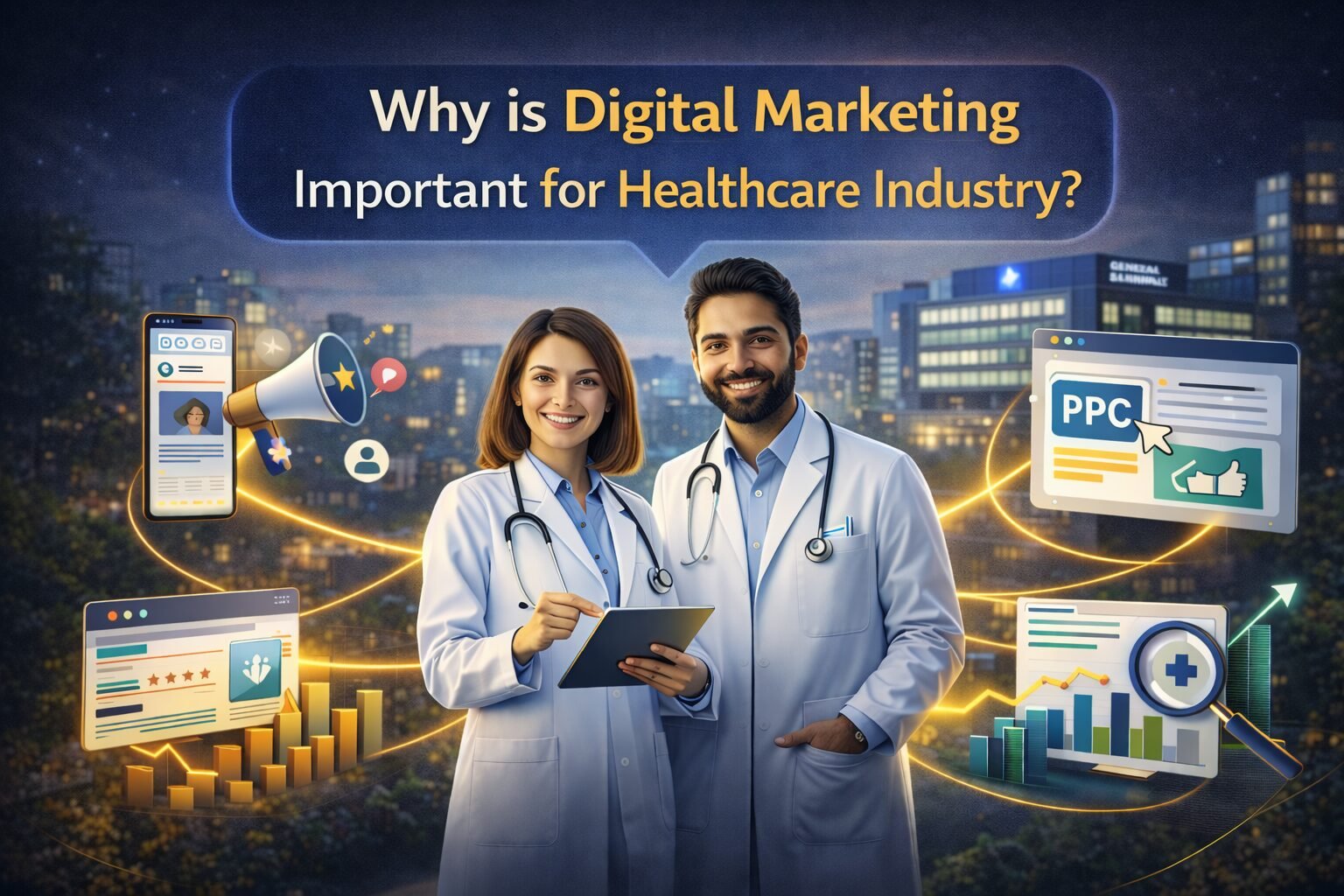
Think about the last time you needed to find a doctor. What did you do? If you’re like most people, you probably pulled out your phone and searched Google. Maybe you checked reviews. Looked at the doctor’s website. Scrolled through their social media. Compared them with other options. This is how healthcare decisions are made in 2026. The way patients find and choose healthcare providers has fundamentally changed. People turn to the internet for health advice, doctor reviews, and nearby clinics. They do this before ever picking up the phone to book an appointment. This shift is exactly why digital marketing important for healthcare industry has become a critical conversation for hospitals, clinics, and medical practices everywhere.
Digital marketing helps healthcare providers connect with patients, build trust, and stay visible online. With the right approach, it’s easier to guide people toward better care and support when they need it most. Let’s explore why this matters and what it means for your practice.
What is Healthcare Digital Marketing?
1.Defining Digital Marketing in Healthcare Context
Healthcare digital marketing is the practice of promoting medical services through online platforms. It helps hospitals, clinics, and wellness brands grow their online presence. This includes tools like social media, content creation, and search engine optimization (SEO). Local SEO plays a key role by improving your Google Business Profile, helping more nearby patients find and trust your services. From updating listings to gaining reviews, every step builds local reach. This approach not only builds credibility but also brings in more leads and appointments.
2. How Healthcare Marketing Has Evolved
Healthcare marketing hasn’t always looked like this. In the past, healthcare marketing focused on traditional tactics like print ads, TV commercials, radio spots, and direct mail. Marketers would launch campaigns and hope for the best, unable to make real-time adjustments once the ads were published.
Hospitals also had an easier time acquiring patients because the population was generally less proactive about their health. Healthcare costs were lower, so patients didn’t delay or reject procedures based on cost like they often do today.
3. Today’s Healthcare Consumer is Different
Today’s healthcare consumer bears little resemblance to patients of the past. Patients are healthier, live longer, and rely on healthcare organizations less frequently. But when they need care, they do extensive research online. They read physician reviews, check ratings, and participate in online forums to learn from other patients with similar conditions.
They expect transparency and two-way communication from their healthcare providers. Digital marketing allows providers to meet these expectations by promoting offerings through online platforms and delighting today’s increasingly online population.
Why Digital Marketing Important for Healthcare Industry:
Let’s look at the numbers. They tell a compelling story.
1. Patient Research Behavior
- 77% of patients perform online research prior to booking an appointment.
- 80% of internet users have searched for a health-related topic online. That’s approximately 93 million Americans.
- Search engines drive three times more visitors to hospital websites than other sources.
2. Mobile and Local Search
- 44% of patients who research hospitals on a mobile device end up scheduling an appointment.
- Mobile searches now make up more than 50% of web searches overall.
- Most people check Google before checking hospital websites.
3. Social Media Impact
- 57% of consumers’ decisions to seek treatment at a healthcare facility are strongly influenced by that provider’s social media presence.
- In a study of vascular surgery practices, 41% of new patients came from social media.
- Social media generated a 38% positive impact on practice revenue in the same study.
4. Content and Trust
- Educational content drives 42% more patient appointments.
- Non-commercial health sources increase patient trust by 4.3 times compared to commercial sources.
These statistics make one thing clear: digital marketing important for healthcare industry isn’t just a nice-to-have. It’s essential for reaching patients where they already are.
Top Benefits of Digital Marketing for Healthcare Industry
1. Cost-Efficient Marketing
Digital marketing is much more budget-friendly compared to traditional advertising. You can reach a wider audience through SEO, social media, and email without spending a fortune. Unlike TV or print ads that require significant investment upfront, digital channels allow you to start small and scale based on results.
2. Builds Higher Trust and Credibility
Trust is everything in healthcare.
When your clinic appears in top search results, shares informative content, and receives positive reviews, trust builds naturally. Patients feel more confident booking appointments with providers they see online often.
Consider this: 98% of patients read online reviews for local businesses. Your digital presence directly influences whether patients choose you or your competitor.
3. 24/7 Availability and Accessibility
People search for health information at all hours – early morning, late night, weekends, holidays with digital platforms, patients can find your services anytime, anywhere. Whether they need your phone number, directions, or want to book online, everything is just a click away.
User-friendly websites, online booking systems, chat support, and teleconsultation services improve convenience for patients.
4. Improves Local Visibility
Thanks to healthcare SEO and local SEO practices, your practice can show up in searches like “dentist near me” or “clinic in [city name].”
Local SEO and Google Business Profile optimization help more nearby patients discover your services. From updating listings to gaining reviews, every step builds local reach.
5. Better Patient Engagement
Through regular social media posts, newsletters, and updates, you stay connected with your audience. This improves loyalty and keeps your brand top-of-mind when someone needs care.
Research shows that a 10% increase in social media posting leads to a 4.8% increase in followers. Even more importantly, a 10% increase in interactivity leads to a 4.5% increase in followers.
6. Trackable and Measurable Results
Unlike offline marketing, digital campaigns give you clear data. You can measure what’s working – from clicks to appointments – and improve your efforts accordingly. Organizations with strong SEO and content marketing report a 32% higher MQL-to-SQL conversion rate.
7. Target Specific Demographics
Digital marketing strategies allow you to target patients based on their age, sex, location, interests, and other factors. This enables you to create more successful campaigns and provide more personalized experiences to potential patients. More importantly, you can reach people with problems you can solve, making them more likely to use your services.
Industry data shows that 88% of healthcare and pharma marketers plan to increase spending on social media advertising, and the same percentage plans to increase digital display and video ad spending.
8. Builds Authority and Thought Leadership
Educational content establishes your expertise. Blog posts, YouTube videos, and guides that address common patient issues build trust and show your audience that you know what you’re talking about. Since 2022, there has been a 45% rise in tailored digital content from healthcare organizations.
9. Maintains Online Reputation
Review management systems help you build and protect your professional reputation. This means motivating satisfied patients to leave online reviews, addressing common complaints and critiques professionally, and monitoring for fake or inappropriate reviews. Positive reviews directly influence patient decisions and strengthen confidence in your services.
10. Creates Multiple Communication Channels
When you create a website and social media profiles, you allow people to contact you on multiple platforms. Interacting with people on these platforms helps attract more potential patients with similar interests. Digital marketing connects you better with your audience and allows them to contact you more easily.
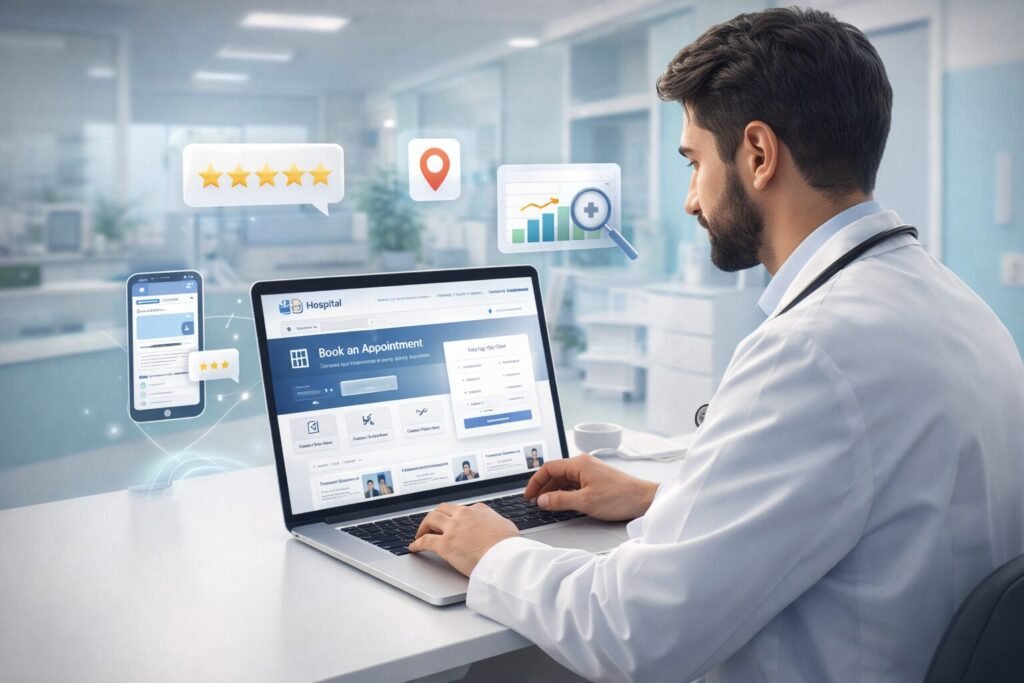
Core Healthcare Digital Marketing Services
Let’s explore the specific services that make digital marketing important for healthcare industry practices.
1.Healthcare SEO (Search Engine Optimization)
Healthcare SEO helps make healthcare providers more prominent on search engines, meaning patients can easily identify relevant services. Optimizing for healthcare SEO increases local and specialized traffic. This helps enhance patient engagement levels. According to recent data, 79% of healthcare providers now prioritize SEO as their primary marketing tactic.
2. Local SEO for Doctors and Clinics
Local SEO ensures that your website appears on the first page during local searches. This is critically important for practices trying to reach more patients within their geographic locations. Google Business Profile optimization plays a central role, helping more nearby patients find and trust your services.
3. Healthcare Content Marketing
Content marketing involves creating valuable health information such as blogs, guides, and FAQs that educates and engages patients. Quality healthcare content writing positions you as a reliable medical expert. Educational content like symptom guides, treatment explanations, and medication information create what one expert calls “compound returns” – they continue attracting and helping patients long after publication.
4. Social Media Marketing for Hospitals
Social media is a powerful tool for connecting with patients. Useful health tips can be shared, services marketed, and an online community built that is supportive in nature.
Useful health tips can be shared, services marketed, and an online community built that is supportive in nature. The vascular surgery study mentioned earlier found that 41% of new patients came from social media, demonstrating its effectiveness even in specialized fields.
5. PPC Advertising (Pay-Per-Click)
Medical service providers can easily reach patients who need specific services through PPC advertising. This ensures resources are utilized effectively to hit the target market at the right time. PPC allows you to target specific locations, age groups, and medical needs, appearing at the top of search results instantly.
6. Video Marketing
Videos containing informative content and patient testimonials help gain patient trust and provide interactive information about health and wellness.
This approach impacts patients by teaching them with visuals. According to an Eyeview Digital study, using video on landing pages can increase conversions by up to 80%.
7. Email Marketing
Emails keep patients informed and engaged, updating them on regular health information, reminders, and customized content that fosters patient loyalty. Email marketing is still alive and well. It’s a relatively low-cost, effective, and immediate form of communication with plenty of opportunity for narrow-focus personalization. Important note: 47.6% of healthcare industry emails are opened via mobile devices.
8.Website Design and Development
Patients need structured, responsive websites to source information about doctors, book appointments, and call the practice. A properly designed website supports SEO efforts and improves online visibility.
9. Online Reputation Management
Managing Google reviews and healthcare listings protects your reputation and strengthens patient confidence in your services.
10. Telemedicine Integration and AI Chat Support
Online consultations, automated chatbots, and easy appointment systems improve patient convenience and clinic efficiency.
Key Components of a Successful Healthcare Digital Marketing Strategy
A comprehensive healthcare digital marketing strategy includes several interconnected elements working together.
1. Target Audience Identification
Define patient personas to tailor messaging that resonates with specific health needs.
2. Healthcare SEO and Clinic SEO
Optimize for search engines to improve visibility, making it easier for patients to find your services.
3. Content Marketing
Create valuable health information that educates and engages patients.
4. Social Media Engagement
Connect with patients by sharing health tips, updates, and community stories.
5. Local SEO Optimization
Focus on local SEO to reach patients nearby and improve clinic visibility.
6. Paid Advertising (PPC)
Use targeted ads to reach patients searching for specific healthcare services.
7. Data Analysis and Tracking
Monitor performance to refine strategies and improve patient engagement.
The AI Revolution in Healthcare Digital Marketing
1. AI Overviews Are Transforming Healthcare Search
The landscape of healthcare search is changing rapidly. According to recent data from BrightEdge, more than 80% of health-related searches on Google now trigger AI Overviews.
This is dramatically higher than the 13-16% of searches overall that trigger AI Overviews. Even more striking, AI Overview citations in healthcare jumped 116% in just two months.
2. The Impact on Click-Through Rates
When AI Overviews appear, the impact on traditional website traffic is significant. Click-through rates can drop 50-80% when users get answers directly in search results. As one industry observer noted, “The traditional search funnel is breaking down or even collapsing” for healthcare organizations.
3. How Healthcare Marketers Are Responding
Healthcare marketers are adapting to this new reality:
- 73% of healthcare marketers plan to increase investment in AI-driven automation and marketing.
- There’s a shift away from traditional campaigns toward real-time personalization based on patient behavior and preferences.
- Marketers are broadening their mix to include connected TV (CTV), audio advertising, and digital out-of-home channels.
4. The Trust Gap with AI Health Information
However, there’s an important caveat. Approximately 30% of patients don’t trust generative AI for health information. This creates significant demand for authoritative healthcare sources that AI platforms can cite confidently. Educational content from credible healthcare providers becomes the trusted source that AI systems reference.
Future Trends in Healthcare Digital Marketing
1. Voice Search Optimization
Patients are increasingly using Siri and Google Assistant to find healthcare information. Current data shows that 60% of healthcare queries are now conversational – full questions rather than short keyword phrases.
2. AI-Based Personalization
Predictive analytics are shaping how healthcare brands communicate with patients. Real-time personalization based on patient behavior and preferences is becoming the standard.
3. Hyperlocal Marketing
Targeting patients in very specific geographic areas continues to grow in importance. “Near me” searches show no signs of slowing down.
4. Telehealth Services Expansion
Virtual care has become a standard expectation rather than a novelty. 74% of millennials prefer virtual visits to in-person appointments.
5. AR/VR in Healthcare Marketing
The augmented and virtual reality market in healthcare is growing at a 26% compound annual growth rate through 2030. These immersive experiences are being used for patient education, medical training, and even treatment visualization.
6. Data Security and Privacy
HIPAA and FDA regulations continue to shape healthcare marketing frameworks. The challenge is balancing personalization with privacy protection.
Conclusion
The idea that Digital Marketing Important for Healthcare Industry is no longer just a trend. It is a necessity for modern healthcare growth. Today, most patients search online for medical information, compare providers, read reviews, and even book appointments digitally before choosing a clinic or hospital. Platforms like Google and social media networks play a major role in influencing these decisions, while emerging AI-powered features such as Google AI Overviews are reshaping how healthcare information is discovered. By investing in digital marketing strategies such as SEO, educational content, local search optimization, and patient engagement healthcare providers can reach more patients, build trust, and remain visible in an increasingly digital healthcare environment.
How Dizispark Can Help
Understanding why Digital Marketing Important for Healthcare Industry is only the first step implementing the right strategy is what truly drives patient growth. Dizispark helps healthcare providers strengthen their online presence through specialized services such as healthcare SEO, local search optimization, patient-focused content marketing, social media management, and targeted PPC campaigns. We also optimize your Google Business Profile to improve local visibility, while managing online reviews to build trust with potential patients. With the right digital strategy in place, your clinic or hospital can reach more people and ensure that when patients search for care on Google, they find your practice first.
FAQs
1. How do patients find healthcare providers online?
Through search engines (Google, Bing), social media, review sites, and direct website visits. 77% research online before booking.
2. Is SEO really worth it for medical practices?
Yes. 79% of healthcare providers make SEO their primary marketing focus. Organizations investing heavily in SEO report 32% higher conversion rates.
3. How important are online reviews for healthcare?
Extremely important. 98% of patients read reviews. Positive reviews influence both rankings and patient decisions.
4. What's the ROI of social media for hospitals?
A vascular surgery study found 41% of new patients came from social media, generating a 38% positive revenue impact.
5. How has AI changed healthcare marketing?
80%+ of health searches now trigger AI Overviews. Click-through rates drop 50-80% when they appear. Marketers are shifting strategies accordingly.
6. What type of content works best for healthcare?
Educational content that answers patient questions. Symptom guides, treatment explanations, and medication information perform best. Educational content drives 42% more appointments.
7. How long does it take to see results from healthcare SEO?
Typically 3-6 months, depending on competition and current optimization. Strong topical authority and proper indexing speed results.
8. Is social media marketing effective for all medical specialties?
Yes, but strategy varies. The vascular surgery study showed 41% of new patients came from social media, demonstrating effectiveness even in specialized fields.