
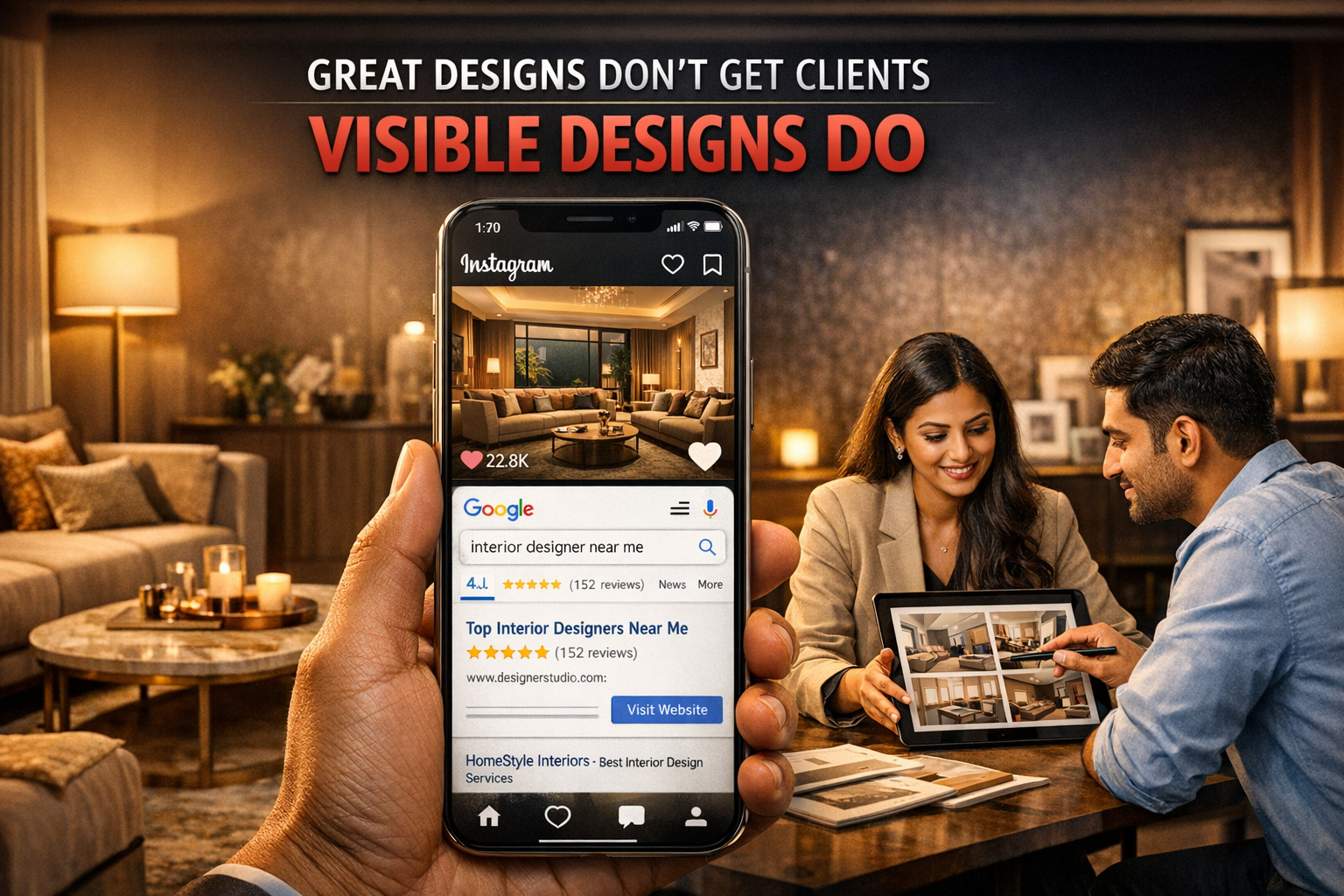
Digital marketing for interior designers is no longer a nice-to-have, it is the primary way that high-budget clients discover, evaluate, and choose their designer. When a homeowner planning a complete renovation types ‘interior designer in Delhi’ or ‘luxury home designer near me’ into Google on a Sunday evening, they are actively choosing which firm to call on Monday morning.
If your studio does not appear in that search, does not have a credible Instagram presence, and does not have a professional website, you do not exist in that moment. According to Hemant Kumar Sharma’s India-specific digital marketing guide for interior designers, the most important reality of 2026 is that digital marketing for interior designers is not limited to likes and shares, it is about making your business visible, credible, and profitable.
This guide covers every practical channel and strategy, from building a portfolio website that converts visitors to winning Google rankings, dominating Instagram and Pinterest, generating leads through paid ads, and building the email and referral systems that keep your pipeline consistently full.
Table of Contents
ToggleWhy Interior Designers Cannot Rely on Referrals Alone in 2026
Word of mouth built most design studios. It still matters. But in 2026, referrals have a ceiling that digital marketing for interior designers does not have. A referred client calls you because a friend recommended you. An organic Google search, an Instagram Reel that goes viral, or a well-placed Google Ad means the client finds you before anyone else gets the recommendation. Alpha Media’s analysis of interior designer marketing notes that the digital channels together drive both B2B and B2C contracts, expand market share, and add brand awareness that referrals alone cannot scale.
The competitive reality is sharper than ever. Upfront Operations’ digital marketing strategy guide for interior design companies confirms that being online is not just an option but essential, and that interior designers who fail to establish a robust digital presence will consistently lose clients to competitors who have invested in SEO, social media, and paid advertising. The clients your competitors are booking through Instagram and Google are clients who could have been yours.
Build a Portfolio Website That Sells While You Sleep
Your website is the single most important asset in digital marketing for interior designers because every other channel, from Instagram to Google Ads to Pinterest, sends traffic to it. Dark Roast Copy’s guide to interior designer marketing calls the website the number one priority for any creative service provider because a website can have a huge ROI for your business, guiding potential clients from first impression to booked consultation with no manual effort from you.
A high-converting interior design website in April 2026 must be mobile-responsive and fast-loading, because the majority of potential clients will browse your portfolio on a smartphone before ever reaching a desktop. It must feature a curated visual portfolio of your best work, with professional photography that captures the quality and style of your design.
It needs clear service descriptions that answer the questions a prospective client would ask: what types of projects you take on, your geographic service area, your process, and how to start working with you. A visible contact form or appointment booking system, client testimonials with specific project outcomes, and a clear headline on the homepage that immediately communicates your niche and expertise all combine to convert visitors into enquiries.
Upfront Operations notes that the portfolio showcase is crucial and recommends using high-quality images to show projects in detail, including before-and-after transformations where available. Alpha Media’s guide to interior designer marketing adds that the website should be designed with interactive elements that give users multiple ways to connect, and that an easy-to-update plugin structure allows you to add new projects quickly, keeping the portfolio current and signalling to both visitors and search engines that your studio is active and growing.
SEO: Get Found by the Right Clients at the Right Moment
Search Engine Optimisation is the long-term foundation of digital marketing for interior designers because it generates consistent, free, high-intent traffic from people actively searching for exactly what you offer. Hemant Kumar Sharma’s guide to digital marketing for interior designers in India identifies SEO as a long-term investment that builds business over time, recommending on-page optimisation including keyword-rich title tags, meta descriptions, alt tags, and headings, alongside technical SEO factors like site speed and schema markup, and off-page SEO through quality backlinks from home decor, architecture, and lifestyle publications.
1. Local SEO for Interior Designers
Local SEO is the most immediately impactful SEO investment for most interior designers because the majority of clients prefer a designer based in their city. Hemant Kumar Sharma recommends creating city-specific landing pages, for example pages targeting ‘luxury interior designer in South Delhi’ or ‘residential interior designer in Delhi’, alongside optimising your Google Business Profile to appear prominently in local map searches. Dark Roast Copy identifies local SEO as a major visibility driver, noting that ranking for ‘interior designer’ in your area means free, consistently generated leads.
2. Blogging to Build Authority and Organic Rankings
A strategic blog is one of the highest-return content investments in digital marketing for interior designers. Dark Roast Copy identifies blogging as a great way to share your work and build up SEO, noting that blogs increase the SEO visibility of your site and turn readers into fans of your brand. Upfront Operations confirms that a well-maintained blog with high-quality posts can significantly impact a website’s search engine performance by demonstrating expertise and incorporating the keywords that your ideal clients search for. Blog topics should address real client questions, such as how to choose a colour palette for an open-plan living area, what to expect from a full home renovation, or how modular kitchen design differs from traditional cabinetry.
Social Media Marketing: The Visual Advantage of Interior Design
Interior design is inherently visual, which means social media is one of the most natural and powerful channels in digital marketing for interior designers. Your finished spaces, project transformations, material selections, and behind-the-scenes process all generate the kind of compelling visual content that drives discovery, saves, and enquiries across multiple platforms simultaneously.
1. Instagram: Your Primary Discovery and Trust Platform
Instagram is described by Hemant Kumar Sharma as a goldmine for interior designers because home decor, renovation Reels, and transformation posts are content that people watch, save, and share extensively. His recommended Instagram strategy for digital marketing for interior designers includes Reels, Stories, and Carousels showcasing past projects and work in progress, branded hashtags combining popular discovery tags with location-specific ones such as #interiordesignIndia and #livingroomdesignDelhi, a monthly content calendar to maintain consistency, and geo-tagging posts to specific locations for local visibility. Upfront Operations adds that Reels and Stories of behind-the-scenes content make your brand feel more personal and relatable, which is critical for a high-trust, high-investment service like interior design.
2. Pinterest: Long-Shelf-Life Traffic for Interior Designers
Pinterest is a no-brainer for interior designers, as Dark Roast Copy notes, because it is such a visible platform for home and design content, and Pins have a long shelf life measured in years rather than days or weeks. The recommended strategy is to create boards organized by project type, such as living room design, modular kitchen, office interiors, and sustainable homes, link every pin back to a blog post or portfolio page on your website, and use SEO-optimized board titles and pin descriptions so that your content appears in both Pinterest searches and Google Image searches.
Hemant Kumar Sharma adds that Pinterest traffic converts well for designers because users on the platform are typically in inspiration and planning mode for a real project, making them high-intent prospects rather than casual browsers.
3. LinkedIn for B2B and Commercial Interior Design Projects
LinkedIn is essential for interior designers targeting commercial projects such as office fit-outs, hospitality design, and retail environments. Hemant Kumar Sharma’s digital marketing guide for interior designers recommends using LinkedIn for personal branding through your professional profile, showcasing corporate and office projects, publishing thought leadership content on interior design trends and processes, and building a network of architects, builders, developers, and real estate professionals who can refer commercial projects. Alpha Media notes that LinkedIn supports both B2B and B2C lead generation for design firms, particularly in Tier-1 cities.
Paid Advertising: Get in Front of Ready-to-Buy Clients Fast
Paid advertising is the acceleration layer in digital marketing for interior designers. While SEO and organic social media build long-term visibility, Google Ads and Meta Ads deliver your studio directly to potential clients who are actively searching or highly targeted within days of launching a campaign. Dark Roast Copy describes paid ads as a way to shorten the timeframe it takes to get in front of more people who are a good fit for your services, and Upfront Operations confirms that Google Ads, Facebook Ads, and Instagram Ads all offer highly effective targeting options for interior design businesses.
Google Ads are particularly powerful for capturing high-intent searches: someone who types ‘modular kitchen designer Delhi’ or ‘luxury bedroom interior designer Delhi’ into Google is ready to take action. Alpha Media, as a certified Google partner, recommends PPC campaigns as one of the most affordable ways to get high-quality interior design leads because you only pay when a prospect actually clicks, and you can target precisely by location, service type, and keyword. Hemant Kumar Sharma adds that Facebook and Instagram lead generation ads produce highly converting leads for interior designers, especially in Tier-1 and Tier-2 cities, by targeting homeowners, newly married couples, builders, and property investors based on age, location, and interests.
Email Marketing and Lead Magnets: Stay Top of Mind
Email marketing is one of the most underused channels in digital marketing for interior designers, yet Digital Engager’s guide notes it can yield an average ROI of 4,300 percent for businesses in the US. For interior designers, the email list is a direct, algorithm-free channel that keeps your studio visible to potential clients who are not yet ready to hire but are in the consideration phase. Dark Roast Copy recommends building an email list using a lead magnet, a free high-value resource offered in exchange for an email address, such as a room planning guide, a home renovation checklist, a material and finish selection guide, or a ‘what to expect from your first interior design consultation’ document.
Upfront Operations identifies the newsletter as a tool for building client trust and personalizing your brand, recommending design advice content, project updates, behind-the-scenes stories, and exclusive offers as the most effective newsletter content types. The goal is to keep your name in your subscribers’ inboxes consistently so that when they are finally ready to start a project, your studio is the first name that comes to mind rather than a competitor they stumbled across through a search.
Best Digital Marketing Channels for Interior Designers: Quick Reference
The table below summarises the most important channels in digital marketing for interior designers, what each one delivers, and the ideal investment sequence for a design studio building its digital presence in 2026.
| Channel | What It Delivers | Timeline | Cost Type |
|---|---|---|---|
| Portfolio Website | Foundation of all channels; converts all traffic | Start immediately | One-time build + maintenance |
| Local SEO + Google Business | Rank in local map searches; free organic leads | 3 to 6 months for rankings | Ongoing monthly investment |
| Blog / Content Marketing | Long-term organic traffic; builds authority | 3 to 12 months | Time or copywriting cost |
| Instagram (Organic + Reels) | Visual brand building; discovery; lead warm-up | 2 to 6 months | Time + content creation |
| Long shelf life; high-intent design inspiration traffic | 3 to 12 months | Time; links back to website | |
| B2B commercial leads; architect and developer network | 2 to 6 months | Time + personal branding | |
| Google Ads (PPC) | Immediate high-intent lead generation | Days to weeks | Daily ad budget required |
| Facebook / Instagram Ads | Target local homeowners; fast audience expansion | Days to weeks | Ad spend + creative cost |
| Email Marketing | Retention; stay top of mind; referral activation | Immediate upon send | Low cost; email platform |
| Lead Magnets (Guides/Quizzes) | Collect leads from website visitors | Immediate upon launch | Content creation one-time |
Key Takeaway:
You do not need to do everything at once. Start with your website, local SEO, and one social platform. Add paid ads once your profile and portfolio are strong enough to convert the traffic they generate. Then layer in email, lead magnets, and Pinterest for compounding long-term results.
Collaborations, Reviews, and Offline Partnerships That Amplify Your Digital Reach
Digital marketing for interior designers extends beyond owned channels to include the partnerships and reputation signals that amplify everything else. Alpha Media notes that building strong digital partnerships with complementary businesses, such as furniture companies, electrical equipment suppliers, flooring brands, and smart home technology providers, creates referral networks that both parties benefit from. These partnerships can generate collaborative content on social media, mutual backlinks that improve SEO, and a flow of warm referrals from trusted business connections.
Online reviews are a critical component that Alpha Media specifically highlights: reviews have the potential to make or break your business. Actively collecting positive reviews from satisfied clients on Google Business Profile, Houzz, and Just Dial, and responding to all feedback professionally, builds the credibility that converts a prospective client who finds you online into one who actually picks up the phone and calls. Dark Roast Copy identifies Houzz specifically as essential for interior designers, comparing it to the Angie’s List of home improvement businesses, where an optimised profile and strong review history attract the exact clients who are ready to invest in professional design services.
Conclusion
Digital marketing for interior designers in 2026 is a layered, compounding system rather than a single tactic. A portfolio website converts the traffic that SEO, Instagram, and paid ads send to it. Local SEO and your Google Business Profile generate free, consistent leads from nearby clients who are actively searching. Instagram and Pinterest build the visual authority and community that make cold prospects warm before they even reach out. Google Ads and Meta Ads accelerate the process when you need clients quickly. Email marketing and lead magnets keep your studio top of mind through the long consideration cycles typical of high-value interior design projects. And collaborations with complementary businesses and a strong review profile amplify every other channel.
The interior designers growing fastest in 2026 are not the most talented, they are the most visible. They are the studios that show up when a client searches, impress when that client investigates, and stay memorable long enough to be the name that client calls when their project is ready to begin.
How Dizispark Can Help
Dizispark is a digital marketing agency that builds end-to-end online growth strategies specifically for creative businesses including interior designers, architects, and design studios across India.
We manage everything your design business needs to win clients online: portfolio website development optimised for conversions and local SEO, Instagram and Pinterest content strategies that showcase your work to the right audiences, Google and Meta ad campaigns that generate qualified leads from homeowners and developers actively planning projects, and reputation management that builds the trust signals that turn online discovery into booked consultations. Whether you are a solo designer building your first digital presence or an established studio looking to scale beyond referrals, Dizispark brings the strategy, execution, and accountability that turns your creative expertise into a consistently full client pipeline.
Frequently Asked Questions
Why do interior designers need digital marketing?
Digital marketing for interior designers is essential because the majority of high-budget clients now begin their designer search online, researching portfolios, reading reviews, and comparing studios on Instagram and Google before reaching out to anyone. Interior designers who are not visible online consistently lose projects to competitors who are, regardless of the quality of their actual work. A strong digital presence is now the primary driver of new client acquisition for design studios at every scale.
Which social media platform is best for interior designers?
Instagram is the most important social media platform in digital marketing for interior designers because it is highly visual and interior design content, including before-and-after transformations, project walkthrough Reels, and material selection carousels, consistently performs very well. Pinterest is the second most powerful platform for organic discovery because Pins have a shelf life of years and drive high-intent traffic from people actively planning home projects. LinkedIn is essential specifically for designers targeting commercial, hospitality, or office design projects.
How long does SEO take to work for an interior designer?
Local SEO improvements, such as optimizing your Google Business Profile and creating location-specific service pages, typically show meaningful ranking improvements within four to eight weeks. Organic blog content and keyword rankings take three to six months to gain significant traction. However, the traffic generated by SEO is free, consistent, and compounding, making it the highest long-term ROI investment in digital marketing for interior designers compared to paid advertising, which stops generating leads the moment the budget stops.
How much does digital marketing cost for interior designers in India?
A foundational digital marketing package for interior designers in India, covering website maintenance, local SEO, Google Business Profile management, and basic social media content, typically starts from INR 15,000 to INR 25,000 per month. A more complete strategy including Google Ads management, Instagram content creation, Pinterest strategy, and email marketing ranges from INR 30,000 to INR 70,000 per month depending on the number of channels and the competitiveness of the city. Google and Meta ad spend is charged separately on top of management fees.
Is Instagram or Google Ads better for interior designers?
Both serve different purposes in digital marketing for interior designers. Google Ads captures active demand: someone typing ‘interior designer near me’ is ready to hire right now, making it ideal for generating immediate enquiries. Instagram builds passive discovery and brand trust over time, turning people who were not actively looking into warm prospects who follow your work and eventually reach out when they are ready to start a project. The strongest digital marketing strategies for interior designers use both channels together, with Google Ads for immediate leads and Instagram for long-term brand building.
What is Houzz and why should interior designers use it?
Houzz is a specialist home improvement and interior design discovery platform that functions similarly to a professional directory for design businesses. An optimized Houzz profile with a strong portfolio and positive client reviews places your studio directly in front of homeowners who are actively researching and planning renovation projects. Dark Roast Copy identifies Houzz as a no-brainer for interior designers and essential alongside Google, Instagram, and Pinterest in any complete digital marketing for interior designers’ strategy.
How can interior designers get more clients through digital marketing?
The most effective approach to digital marketing for interior designers combines several channels that reinforce each other: a portfolio website optimised for local SEO to capture Google searches, an active Instagram presence showcasing your best projects to build brand trust, Google Ads to generate immediate enquiries from high-intent prospects, Pinterest to drive sustained discovery traffic, a review building strategy on Google Business Profile and Houzz to convert that discovery into trust, and email marketing to stay top of mind with prospects who are not yet ready to book. The sequence matters: build your website and local SEO first, then add social media, then layer in paid ads.
Should an interior designer hire a digital marketing agency?
An interior designer should consider hiring a digital marketing agency for interior designers when the volume of digital marketing activity required exceeds what can be managed alongside client project work, when specialist skills like SEO, paid advertising management, and content strategy are needed that most designers do not have, or when the cost of learning and self-managing outweighs the cost of outsourcing to an expert. Agencies with specific experience in the interior design industry, who understand portfolio presentation, luxury brand positioning, and the client acquisition process for high-value design projects, deliver significantly better results than generalist agencies.