
Ask any B2B marketing director in 2026 which channel consistently delivers the highest return and the most qualified leads, and the answer is almost always the same. SEO is important for B2B and the data backs this up decisively. Website, blog, and SEO ranked as the number one ROI-generating marketing channel for B2B brands in HubSpot’s 2026 State of Marketing report, above paid social, events, email, and everything else. Despite constant headlines about AI changing search, 93% of B2B buying journeys still begin with a search online.
This complete guide explains exactly why SEO is important for B2B in 2026. You will find the latest data on B2B buyer behaviour, organic search performance, ROI benchmarks, and a clear strategy breakdown. Every fact is backed by a verified source listed at the end of each section.
What Makes B2B SEO Different from B2C SEO
Understanding why SEO is important for B2B starts with understanding how B2B SEO differs from consumer-focused SEO. The tactics look similar on the surface, but the buyer behaviour, keyword economics, and conversion goals are fundamentally different.
| Factor | B2B SEO | B2C SEO |
|---|---|---|
| Keyword volume | Lower but each click is worth significantly more | Higher competitive, commoditised traffic |
| Sales cycle | Weeks to months SEO nurtures at every stage | Hours to days SEO drives quick decisions |
| Decision makers | Multiple: procurement, IT, finance, CEO | Usually one person at the time of purchase |
| Content depth | Long-form, technical, educational content | Short, engaging, emotional content |
| Conversion goal | Demo booking, consultation, quote request | Direct purchase, add to cart |
| Trust requirement | High — large contracts require deep credibility | Lower — brand and price drive decisions |
| Lead quality focus | Qualification over volume | Volume is often the primary goal |
In B2B, a single keyword like ‘enterprise cloud security solutions’ may receive only 500 monthly searches globally. But a single conversion from that keyword could be worth hundreds of thousands of dollars in annual contract value. B2B SEO is not about traffic volume. It is about reaching the right person, with the right content, at the right stage of a complex decision process.
The Numbers That Prove SEO Is Important for B2B in 2026
Before examining the reasons in detail, the data makes the case for why SEO is important for B2B impossible to argue with.
Here are the most important verified statistics from 2026:
- SEO delivers a 748% ROI for B2B companies, making it the highest-performing marketing channel by a significant margin.
- B2B companies generate twice as much revenue from organic search as from any other channel.
- Search engines account for 76% of all website traffic to B2B sites, far surpassing paid search, social media, and direct traffic.
- Website, blog, and SEO is the number one ROI-generating channel for B2B brands according to HubSpot’s 2026 State of Marketing report, above paid social, events, and email.
- SEO leads convert at 14.6%, while outbound leads convert at just 1.7%. That is an 8.6x conversion rate advantage for organic search.
- 70% of B2B marketers state that SEO generates more sales than PPC, despite PPC often receiving a larger share of the marketing budget.
- 88% of marketers who invest in SEO intend to increase or maintain their investment through 2026, reflecting sustained confidence in organic search as a core channel.
Key Takeaway
SEO is important for B2B not because it is a trend or a best practice. It is important because the data is unambiguous. No other channel delivers 748% ROI. No other channel produces leads that convert at 14.6%. No other channel generates twice as much revenue. The B2B companies that prioritise SEO are systematically outperforming those that do not.
How B2B Buyers Actually Use Search in 2026
To fully appreciate why SEO is important for B2B, you need to understand the modern B2B buying journey. It has changed dramatically, and SEO sits at the centre of every stage.
- 93% of B2B buying journeys start with a search engine. The buyer’s first instinct is to search, not to call a salesperson.
- 72% of B2B buyers start their purchase journey with a generic search query, before they even know which vendor or solution they are looking for.
- B2B buyers review an average of 11.4 pieces of content before they are ready to contact a vendor.
- 81% of B2B buyers choose their vendor before any direct contact with a sales team. The decision is made through online research, not through sales calls.
- 6 in 10 B2B buyers would prefer to complete their entire purchase without ever speaking to a sales representative (Gartner, 2024).
- 73% of buyers actively avoid suppliers that send irrelevant outreach, meaning your content must do the work that sales teams used to do.
- 66% of B2B buyers turn to internet search results when exploring products they plan to buy, rather than relying on industry publications or trade shows.
According to research from Backlinko and Semrush, B2B buyers spend nearly one-third of their total purchase journey on online research. If your content does not appear during that research phase, you are not being considered. This is the core reason why SEO is important for B2B: your SEO strategy is, effectively, your sales process.
8 Key Reasons Why SEO Is Important for B2B in 2026
Here are the eight most important, data-verified reasons that explain why SEO is important for B2B has become non-negotiable for any company selling to other businesses in 2026:
1. Organic Search Drives the Majority of B2B Revenue
Organic search generates 44.6% of all B2B revenue and is the single largest revenue channel. Search engines account for 76% of all trackable website traffic to B2B sites. The first five organic results on Google account for 67.6% of all organic clicks. B2B websites in the top three SERP positions receive 65% of all clicks. These numbers make it clear why SEO is important for B2B: organic search is not just a marketing channel. It is the primary revenue engine for B2B companies that invest in it correctly.
2. SEO Reaches Decision-Makers Before Sales Teams Do
In B2B, buying decisions typically involve an average of 13 people. Procurement managers, IT directors, CFOs, and operations leaders all have different search behaviours and different questions at different stages of the buying process. SEO allows you to create content that answers each decision-maker’s specific questions at exactly the right stage, building awareness and trust long before any sales contact is initiated. 81% of B2B buyers choose their vendor before any direct sales contact, meaning SEO content is often making the sale before your sales team even knows the opportunity exists.
3. SEO Delivers the Highest ROI of Any B2B Marketing Channel
The financial case for why SEO is important for B2B is overwhelming. SEO delivers a 748% ROI for B2B companies. B2B SaaS businesses experience an average ROI of 702% from SEO with a 7-month payback period. SEO delivers an average ROI of 825% over 3 years. SEO generates a nearly 800% return compared to PPC’s 400% according to data from 119 companies. And SEO campaigns achieve positive ROI within 6 to 12 months, with peak results in years two and three as organic rankings compound and content assets appreciate.
4. SEO Builds Credibility and Trust with B2B Buyers
B2B purchasing decisions involve significant financial risk and organisational accountability. Buyers are not making impulse decisions. They are building a case for their organisation. Companies seen as authoritative through SEO efforts close deals with an 89% larger average deal value. 81% of B2B marketers prioritise SEO for brand awareness specifically because appearing consistently in search results builds perceived authority that no paid ad can replicate. When your content appears at the top of organic search results consistently, buyers interpret it as an independent signal of expertise and trustworthiness.
5. SEO Supports the Long B2B Sales Cycle
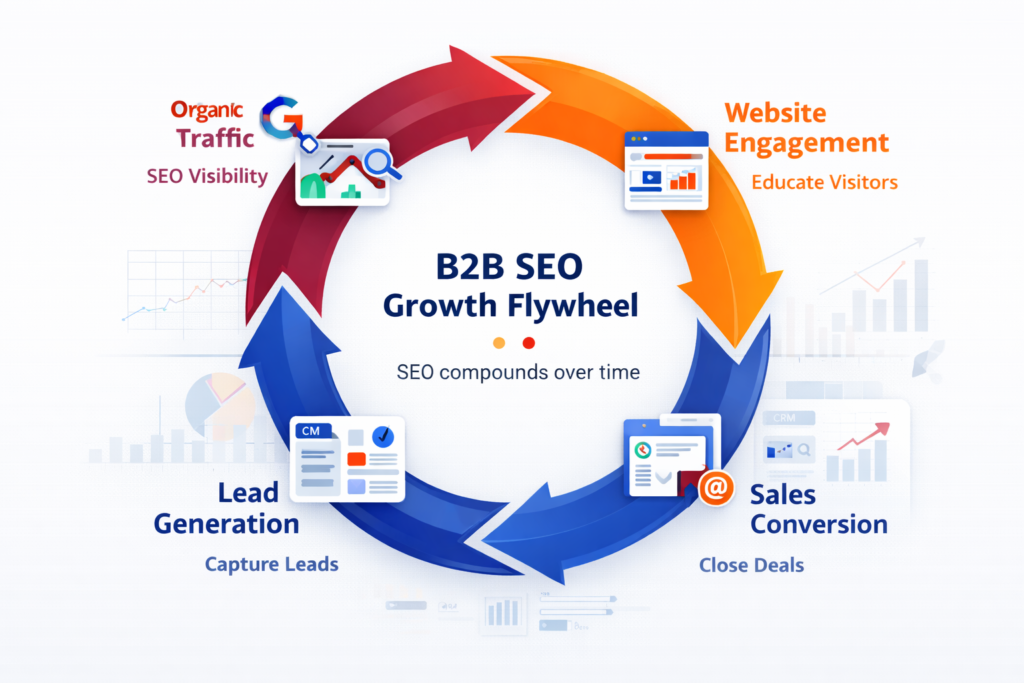
B2B deals can take weeks or months to close. SEO creates a content ecosystem that supports buyers at every stage: awareness content for early-stage research, comparison and evaluation content for shortlisting, and case studies for final decision-making. Well-targeted content assets built around the full sales cycle consistently outperform single-channel campaigns.
6. SEO Generates Higher-Quality Leads than Paid Channels
SEO leads have an average close rate of 14.6%, compared to just 1.7% for outbound leads. This 8.6x difference exists because organic search traffic consists of people who are actively researching a specific problem or solution and found your content because it matched their intent precisely. Paid ads can reach people who match a demographic profile. SEO reaches people who are actively typing the exact problem your business solves into a search engine. The intent quality is fundamentally different.
7. SEO Compounds and Appreciates Over Time
Unlike paid advertising, which stops the moment you pause spending, SEO assets compound and appreciate over time. A well-written B2B blog post published today can continue generating qualified leads for years. Refreshing and updating old content lifts organic traffic by 10% to 40% within 30 to 90 days. Publishing original research boosts organic traffic by nearly 30% year-over-year. Companies that prioritise consistent blogging generate 67% more monthly leads. Marketers who prioritise blogging are 13 times more likely to experience positive ROI. SEO is the only marketing channel where past investment continues to pay dividends in the present.
8. AI and Search Are Converging: SEO Is Now More Critical
AI has not reduced the importance of B2B SEO. Over 92% of marketers plan to maintain or increase their SEO investment in 2026. 99% of people using generative AI tools still use search engines. 90% of B2B buyers who see a citation in an AI Overview click through to the cited source. Companies investing in E-E-A-T signals and authoritative content are the ones being cited in AI Overviews and capturing that growing traffic.
B2B SEO Strategy: What Actually Works in 2026
Knowing why SEO is important for B2B is the first step. Knowing how to implement it effectively is what generates results. Here is what the data shows actually works for B2B companies in 2026:
| Strategy Element | What It Delivers and Why It Works |
|---|---|
| Pillar and cluster content | B2B pillar pages linking to 15 or more cluster articles build topical authority. This structure signals comprehensive expertise to Google and guides buyers through the full sales funnel. |
| High-intent keyword targeting | 72% of B2B buyers start with generic searches. Target the full keyword journey from awareness terms to comparison and vendor evaluation queries. |
| Long-form, original content | Long-form content (2,000+ words) earns 77.2% more backlinks. B2B blog posts over 2,000 words typically rank better on Google. Publishing original research boosts organic traffic by nearly 30% year-over-year. |
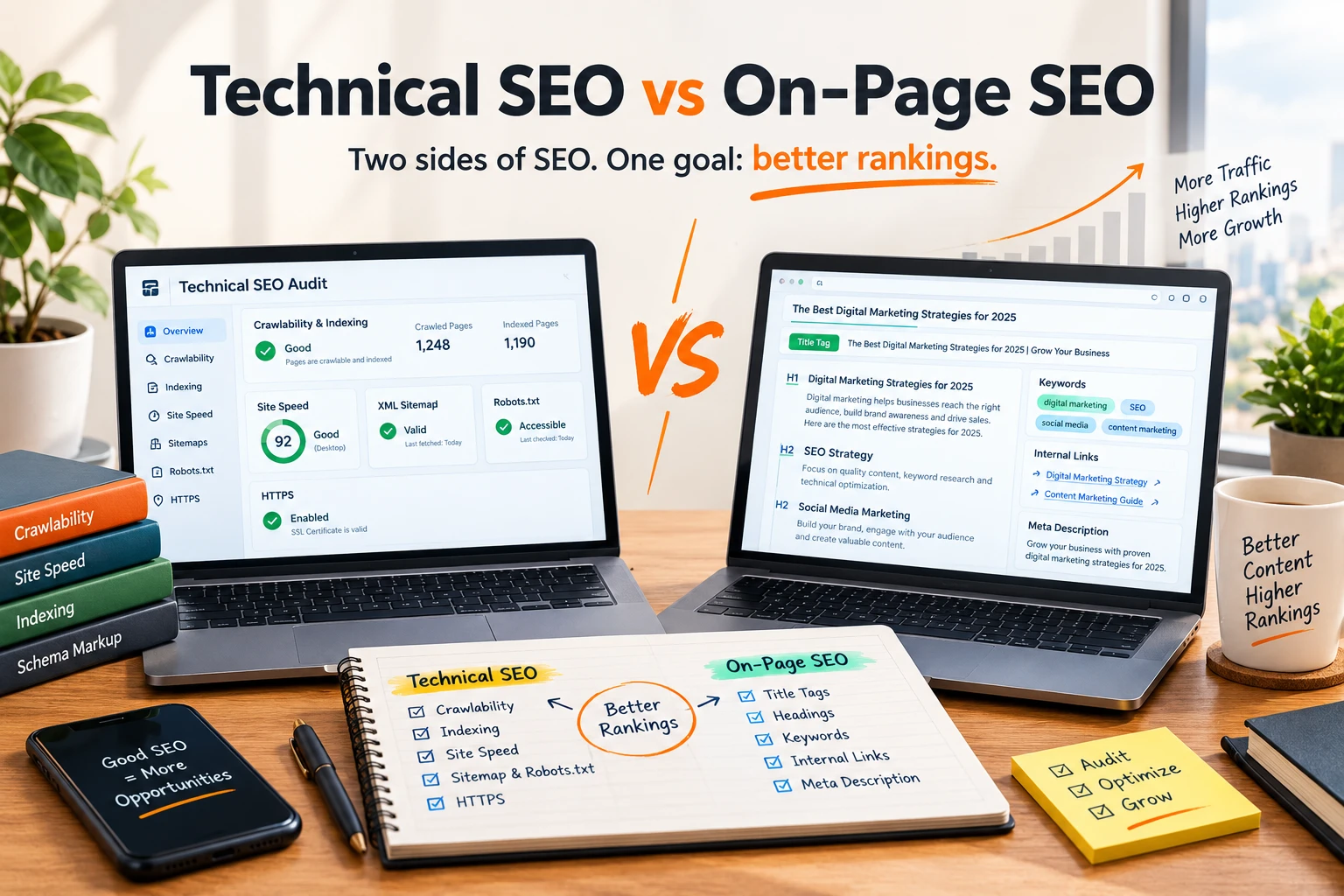
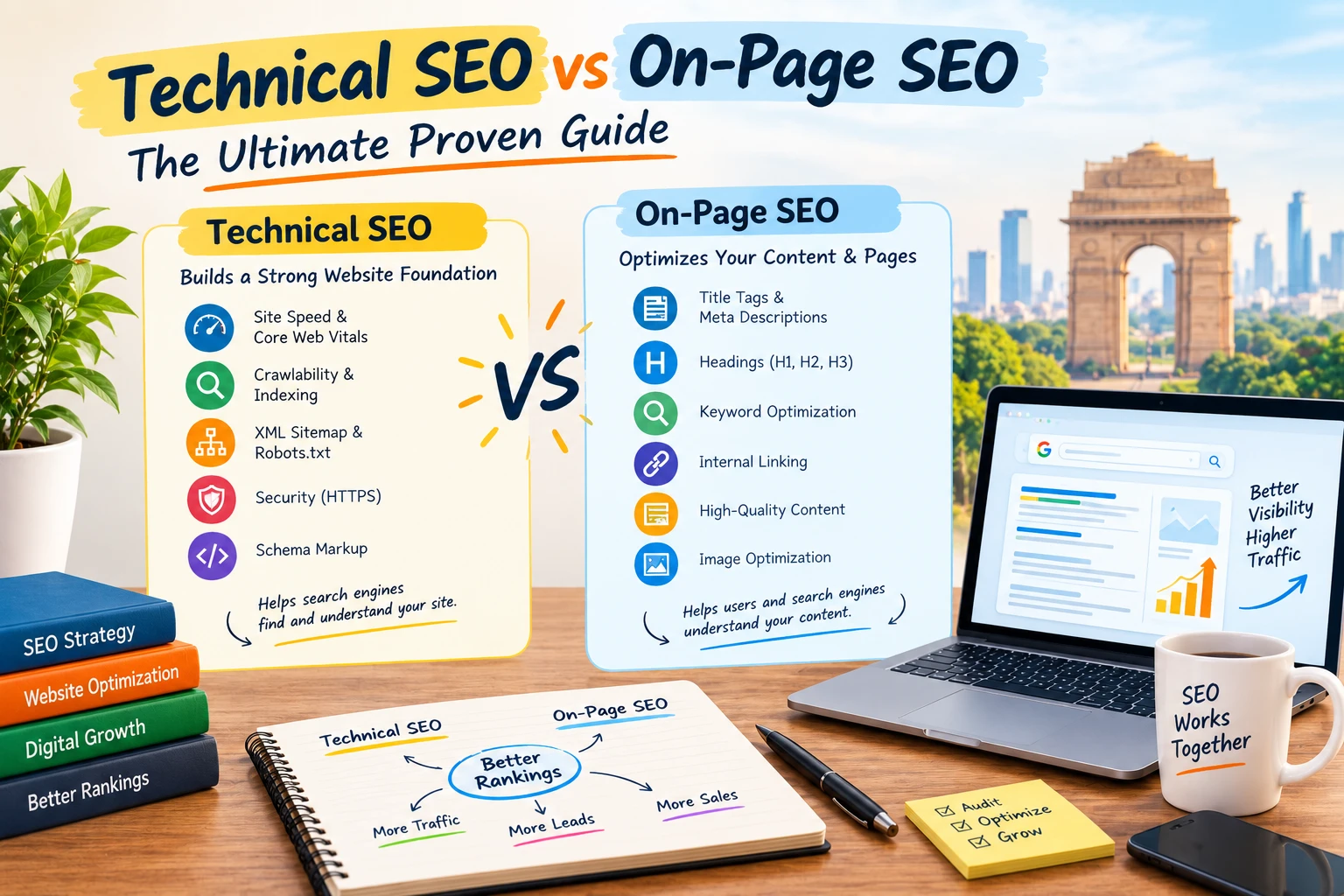
| Technical SEO foundations | A 1-second faster mobile load time improves conversions by up to 20%. B2B sites with HTTPS see 30% more organic traffic. Core Web Vitals optimisation is a confirmed Google ranking factor. |
| E-E-A-T signal building | E-E-A-T signals boost B2B rankings by 24% in specialist niches. Clear author credentials, cited sources, and original expertise are now core ranking factors. |
| Strategic link building | B2B backlinks from .edu domains boost rankings by 44%. The average high-ranking B2B site has 1,200 referring domains. Guest posts generate 21% of B2B backlinks. |
Common B2B SEO Mistakes That Kill Your Results
Many B2B companies invest in SEO but consistently underperform because of avoidable errors. Here are the most damaging mistakes in B2B SEO, which directly contradict why SEO is important for B2B:
- Targeting high-volume keywords instead of high-intent keywords: A keyword with 500 monthly searches from procurement managers deciding between vendors is worth 100 times more than a keyword with 50,000 searches from students researching a topic.
- Creating content without mapping to the buyer journey: B2B buyers need awareness content, comparison content, and decision content. Publishing only one type means you are invisible for most of the buying cycle.
- Ignoring technical SEO: Technical SEO provides brands with an average ROI of 117%. Slow load times, poor mobile experience, and crawl errors directly prevent your content from ranking regardless of its quality.
- Publishing shallow content: 93% of B2B content generates no external links because it lacks depth, originality, or genuine expertise. Only 3% of B2B content gets linked to multiple websites. Shallow content does not rank and does not earn authority.
- Treating SEO as a one-time project: New content commonly takes 3 to 6 months to reach stable rankings and 6 to 12 months to become a consistent lead driver. B2B SEO requires sustained, consistent investment to realise its compounding value.
Conclusion
The case for why SEO is important for B2B in 2026 is built on data that leaves no room for doubt. 748% ROI. Twice the revenue of any other channel. 14.6% lead conversion rate versus 1.7% for outbound. 93% of B2B buying journeys starting with search. 81% of buyers choosing their vendor before any sales contact. These are not projections or opinions. They are verified benchmarks from the most authoritative marketing research available.
Understanding why SEO is important for B2B is the starting point. The next step is building a B2B SEO strategy that targets the right keywords at the right funnel stages, creates content of genuine depth and expertise, builds technical foundations that support ranking performance, and measures success in qualified leads and revenue, not just traffic.
The B2B companies that will dominate organic search in 2026 and beyond are those that treat SEO as what it truly is: not a marketing tactic, but a long-term, compounding, revenue-generating system. SEO is important for B2B because it is the only channel that works harder for you every month than it did the month before.
How Dizispark Can Help
Grow your B2B business with proven SEO strategies that put you in front of decision-makers who are actively searching for what you offer. Dizispark helps B2B companies build organic visibility that generates qualified leads, builds brand authority, and delivers compounding ROI over time. We handle everything from technical SEO audits and content strategy to keyword research, on-page optimisation, and link building so your website ranks higher, attracts better prospects, and converts more of them into real revenue. Get your free B2B SEO Audit today and find out exactly where your biggest organic growth opportunities.
Frequently Asked Questions
Why is SEO important for B2B businesses specifically?
SEO is important for B2B because 93% of B2B buying journeys start with a search engine, 81% of B2B buyers choose their vendor before any direct sales contact, and B2B buyers review an average of 11.4 pieces of content before contacting a vendor. In B2B, the sales process largely happens through online research. SEO is important for B2B ensures your business is visible and trusted throughout that research process.
What ROI can a B2B company expect from SEO?
SEO delivers a 748% ROI for B2B companies on average, making it the highest-performing marketing channel. B2B SaaS businesses experience an average SEO ROI of 702% with a 7-month payback period. Over a 3-year horizon, the average ROI reaches 825%. SEO campaigns typically achieve positive ROI within 6 to 12 months, with peak returns in years two and three as content assets compound and organic rankings strengthen.
How is B2B SEO different from regular SEO?
B2B SEO targets lower-volume, higher-intent keywords where a single conversion can be worth significantly more than thousands of B2C sales. It requires content that educates multiple decision-makers across a long buying cycle of weeks to months. Technical and thought leadership content, case studies, whitepapers, and comparison pages are core content types. B2B SEO also places greater emphasis on E-E-A-T signals, domain authority, and industry-specific credibility than consumer-focused SEO.
How long does B2B SEO take to generate results?
New content typically takes 3 to 6 months to reach stable rankings and 6 to 12 months to become a consistent lead driver in competitive spaces. However, technical SEO improvements and content refreshes can begin showing results within 30 to 90 days. The compounding nature of SEO means that results accelerate over time: a B2B SEO programme in year two consistently delivers better results than year one, and year three better than year two.
Does AI mean SEO is less important for B2B?
No. The data shows the opposite. Over 92% of marketers plan to maintain or increase their SEO investment for both traditional and AI-powered search. 99% of people using generative AI tools continue to use traditional search engines. 90% of B2B buyers who see a citation in an AI Overview click through to the cited source. According to HubSpot’s 2026 State of Marketing report, website, blog, and SEO remains the number one ROI channel for B2B brands despite AI changes to search.
What type of content works best for B2B SEO?
Long-form content over 2,000 words earns 77.2% more backlinks and typically ranks better than shorter content. Original research boosts organic traffic by nearly 30% year-over-year. Pillar pages linking to 15 or more cluster articles build the topical authority that Google rewards in B2B niches. Comparison pages, ROI calculators, use case articles, and case studies are particularly valuable because they serve the multiple decision-makers involved in B2B purchasing and align content with purchase intent at every funnel stage.
How does SEO fit with the B2B sales process?
In modern B2B, SEO content is effectively the first stage of the sales process. Since 81% of buyers choose their vendor before any sales contact, and 6 in 10 buyers prefer to complete their purchase without speaking to a sales representative, your SEO content must educate, build trust, answer objections, and demonstrate value at every stage of the buying journey. Comparison pages, case studies, and pricing transparency content are particularly important for the decision stage where the final vendor selection happens.
What budget should a B2B company invest in SEO?
According to industry data, 45% of enterprises invest more than $20,000 per month on SEO. The monthly SEO budget for B2B companies typically falls between $1,000 and $10,000, with 23.4% of B2B SEO professionals working with budgets above $10,000. The right budget depends on your market competitiveness, target keyword difficulty, and revenue goals. Given that SEO delivers a 748% ROI on average, even a modest, consistent investment produces significant returns over a 12 to 36 month horizon compared to paid channels that stop generating leads the moment you pause spending.