
There is a serious problem in the Indian digital marketing space. Businesses are making decisions based on information that is outdated, incomplete, or simply wrong. The result is wasted budgets, failed campaigns, and a growing belief that digital marketing does not work. In most cases, digital marketing works perfectly fine. The strategy behind it does not.
This blog addresses the most damaging digital marketing myths and facts that are holding Indian businesses back in 2026. Each myth is followed by the verified fact, supported by real data from credible sources. If you are a business owner, a marketer, or someone building a career in this field, what you read here will save you time, money, and a great deal of frustration.
Here is the context you need before we begin. According to the Internet and Mobile Association of India, digital advertising in India reached Rs. 49,000 crore in 2025 and is growing at 20% year on year. India now has over 806 million internet users. The opportunity in digital marketing has never been larger. The businesses that act on facts rather than myths are the ones capturing it.
Myth 1. Digital Marketing is Only for Large Companies
MYTH
A significant number of small and medium business owners in India operate under the assumption that digital marketing is a tool reserved for large corporations with substantial budgets and dedicated marketing teams. They see global brands running complex campaigns and conclude that this space is not for them.
FACT
This assumption is one of the most costly digital marketing myths and facts in the Indian market. The reality is that digital marketing delivers a disproportionately higher advantage to small businesses compared to large ones, precisely because it levels the competitive landscape. A local coaching institute in Delhi, a boutique in Delhi, or a dental clinic in Delhi can run a targeted Google Ads or Instagram campaign for Rs. 200 to Rs. 500 per day and consistently reach thousands of potential customers in their area.
Google own research confirms that 97% of consumers search online for local products and services before making a purchase decision. A well-optimized Google Business Profile, which costs nothing to set up, can place a small business in front of thousands of local searches every month. Digital marketing does not require scale to produce results. It requires relevance and consistency.
Myth 2. SEO is Dead and No Longer Worth Investing In
MYTH
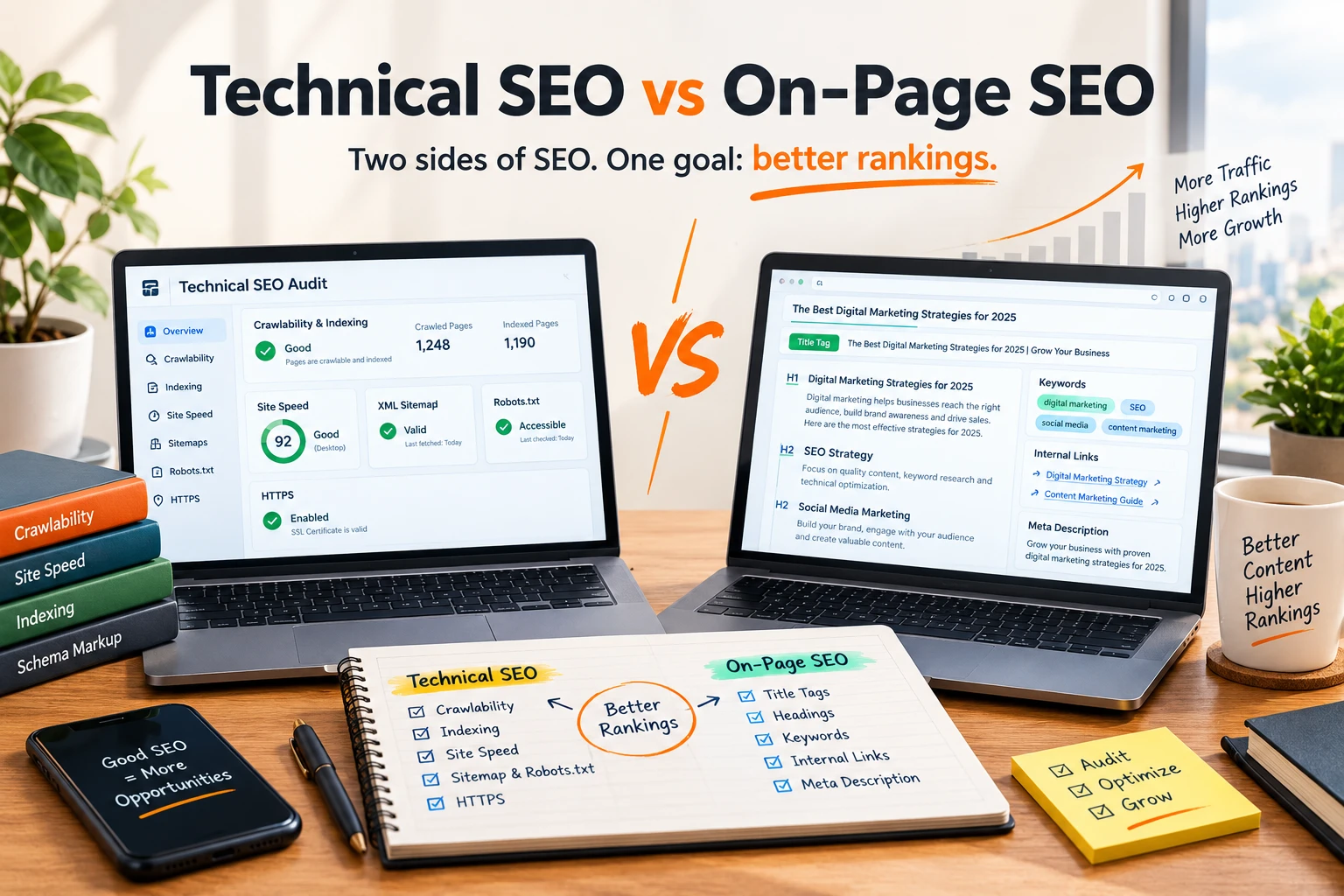
As social media platforms have grown in India, a narrative has emerged that SEO is an outdated practice. Some marketers argue that because Google’s algorithm changes frequently and because younger audiences spend more time on Instagram and YouTube, investing in search engine optimization is no longer a sound strategy.
FACT
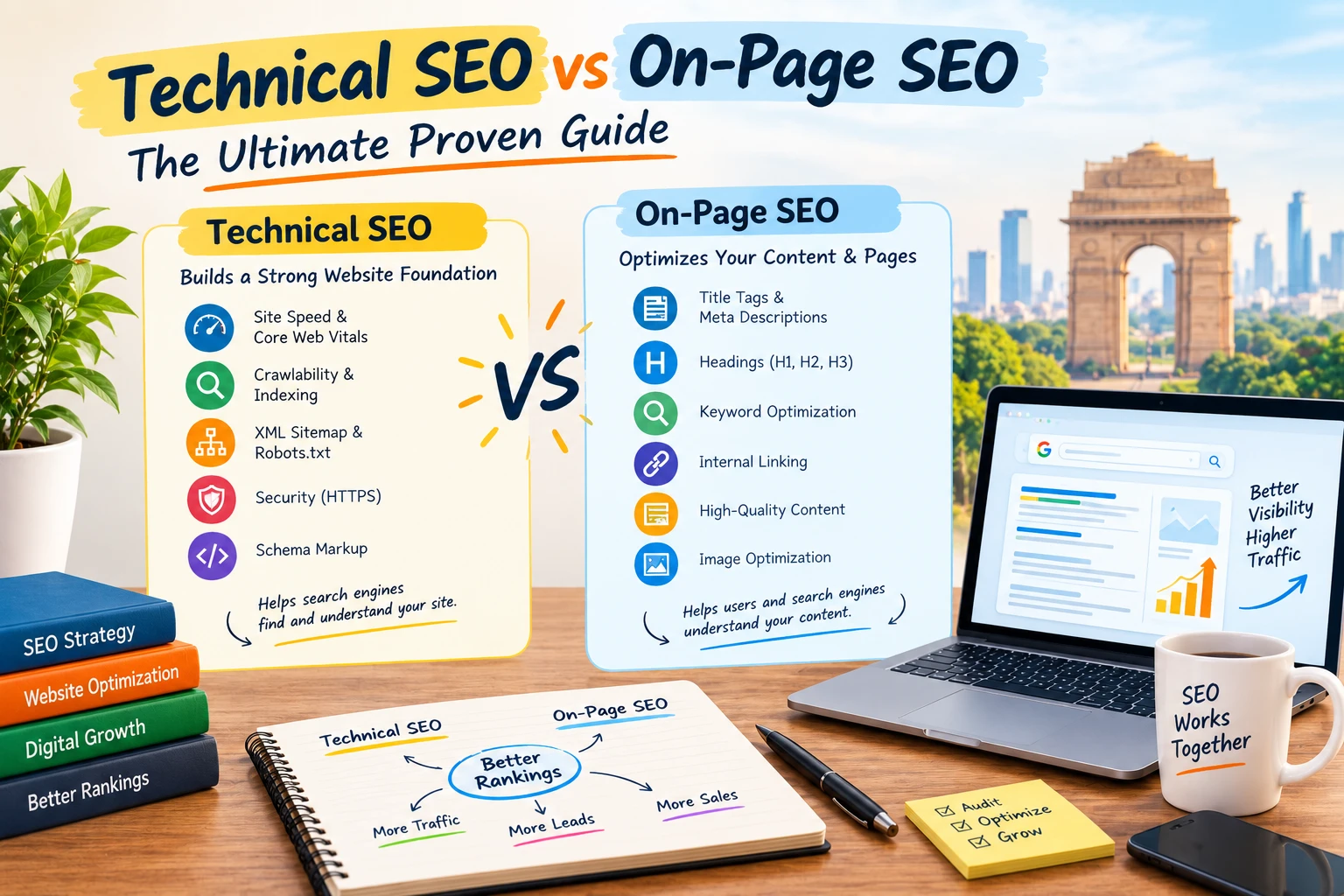
This narrative is entirely incorrect. Google processes over 8.5 billion searches every single day globally, and the volume in India grows year on year as smartphone penetration reaches deeper into Tier 2 and Tier 3 cities. SEO remains the only digital marketing channel that generates consistent, high-quality, free traffic over an extended period. A well ranked page on Google continues to attract visitors 24 hours a day, 365 days a year, without any ongoing ad spend.
According to Moz, the top three organic results on Google receive over 75% of all clicks on a search results page. Businesses that rank on page one for relevant keywords have a substantial and durable competitive advantage. The reason this particular digital marketing myth persists is that SEO requires patience. Results typically take 3 to 6 months to materializ. But the businesses that invest in SEO consistently and strategically build a marketing asset that continues to compound in value year after year.
Myth 3. Higher Follower Count Equals Higher Revenue
MYTH
The obsession with follower counts has led many Indian businesses to spend significant resources on tactics designed purely to inflate their numbers, whether through purchased followers, irrelevant giveaways, or mass follow strategies. The underlying assumption is that a larger audience automatically translates into more sales.
FACT
Follower count is a vanity metric. It communicates nothing meaningful about the commercial value of an audience. What drives business results is the quality and engagement level of your followers, not the quantity. A 2024 study published by Influencer Marketing Hub found that micro-influencers, those with between 10,000 and 100,000 followers, achieve conversion rates 22 times higher than macro-influencers and celebrities with millions of followers. The reason is audience trust and relevance.
For a business operating in India, 800 genuinely interested, geographically relevant, and actively engaged followers are commercially more valuable than 80,000 passive, disengaged ones. Platforms like Instagram and Facebook also algorithmically reduce the reach of accounts with poor engagement ratios, meaning that artificially inflated follower counts actively damage your organic reach. Build an audience that cares. The revenue will follow.
Myth 4. Digital Marketing Produces Immediate Results

MYTH
Unrealistic expectations are one of the primary reasons businesses abandon digital marketing before it has had the opportunity to work. Many business owners launch a campaign, invest for two to three weeks, and when the phones do not start ringing immediately, they conclude that the strategy has failed.
FACT
The timeline for digital marketing results varies significantly by channel, and this is one of the most important digital marketing myths and facts to understand before investing. Google Ads and Meta Ads can begin generating leads within 24 to 48 hours of launch, but they require 2 to 4 weeks of testing and optimization before performing at full efficiency. SEO requires 3 to 6 months of consistent effort before meaningful ranking improvements appear. Social media organic growth requires 3 to 12 months of regular, high-quality content before an audience develops sufficient trust to convert.
The businesses that achieve the strongest digital marketing results in India are those that approach it as a long term investment with a clearly defined strategy, realistic expectations, and the discipline to stay consistent through the early period before results accelerate. Impatience is the single biggest reason for digital marketing failure.
Myth 5. Email Marketing is Dead
MYTH
WhatsApp, Instagram, and YouTube dominating people’s attention in India, many marketers have written off email marketing as something that belongs to the past. They assume nobody reads emails anymore, especially younger audiences.
FACT
Email marketing is not dead. It is one of the highest performing digital marketing channels available today. According to HubSpot’s marketing research, email marketing delivers an average return of Rs. 36 for every Rs. 1 spent. No other channel comes close to that kind of return on investment. Email is direct, personal, and lands in a space the customer owns privately. It is not subject to algorithm changes like social media posts, which means every subscriber you email actually receives your message.
In India, the rise of e-commerce, fintech, and online education has made email marketing more relevant than ever. Brands like Nykaa, Myntra, Swiggy, and hundreds of other Indian companies send highly personalized email campaigns that drive significant repeat purchases. The key is not to send boring, generic emails. The key is to send the right message to the right person at the right time. Done well, email marketing consistently outperforms most other channels in India.
Myth 6. You Need a Very Big Budget to Run Digital Ads
MYTH
A lot of Indian business owners believe that running ads on Google or Facebook requires lakhs of rupees every month. They see large brands running massive campaigns and assume that digital advertising is only for those with deep pockets.
FACT
This is another very common digital marketing myth that stops small businesses from getting started. The truth is that you can start running Google Ads with as little as Rs. 500 per day and Facebook or Instagram Ads with Rs. 100 to Rs. 200 per day. What matters is not how much you spend but how smartly you spend it. A well targeted Rs. 500 per day Google Ads campaign for a local dentist in Mumbai can generate 3 to 5 qualified leads every single day. That could mean 15 to 20 new patients per week.
The key to success with a small budget is tight targeting. Show your ads only to people in your city, in your target age group, with the specific interest or intent that matches your product. Use negative keywords to avoid wasting money on irrelevant clicks. Start small, test what works, and then gradually increase your budget as your campaigns prove their value.
Myth 7. A Good Product Does Not Need Marketing
MYTH
This is a belief that many passionate entrepreneurs hold. They put all their energy into creating an excellent product or service and assume that if the product is good enough, word will spread on its own. They believe marketing is only needed for average products.
FACT
Even the best product in the world will not sell if nobody knows it exists. The internet is full of great products that failed because they had no marketing strategy. And it is also full of average products that became huge successes because they were marketed brilliantly. In today’s world, where thousands of businesses compete for the same customer’s attention online, visibility is everything.
Understanding the real digital marketing myths and facts here means recognising that marketing and product quality are not alternatives to each other. They work together. A great product combined with smart digital marketing is the formula for sustainable growth. In India especially, where new businesses are launching every day in every city, the businesses that grow fastest are those that market consistently and intelligently alongside delivering a great product or service.
Myth 8. Digital Marketing is Only About Social Media
MYTH
When many people in India hear the words digital marketing, they immediately think of Instagram posts, Facebook pages, and YouTube videos. They believe digital marketing and social media marketing are the same thing. So they either focus only on social media and ignore everything else, or they avoid digital marketing altogether because they do not understand social media.
FACT
Social media is just one part of digital marketing. The full picture of digital marketing includes SEO, Google Ads, email marketing, content marketing, affiliate marketing, influencer marketing, WhatsApp marketing, online reputation management, video marketing, and much more. Each of these channels serves a different purpose and works best for different types of businesses and goals.
A real estate company in India might get most of its leads from Google Ads and SEO. A fashion brand might thrive on Instagram. A B2B software company might find LinkedIn and email marketing more effective. A restaurant might grow fastest through Google Maps, Zomato, and Instagram together. The right digital marketing strategy depends on your business type, your audience, and your goals. Not everything revolves around social media.
Myth 9. More Website Traffic Always Means More Sales
MYTH
Many business owners believe that if they can just get more people to visit their website, the sales will follow automatically. So they focus on driving as much traffic as possible through any means available, whether it is cheap clicks, clickbait headlines, or irrelevant keywords.
FACT
This is one of the most misleading digital marketing myths and facts in the industry. Traffic without the right audience means nothing. 10,000 visitors who are not interested in your product will generate zero sales. But 500 highly targeted, motivated visitors who are actively looking for what you sell can generate dozens of enquiries and purchases.
The metric that actually matters is conversion rate, not traffic volume. According to research from Unbounce, the average landing page conversion rate across industries is around 2 to 5%. But the best-performing pages convert at 10 to 15% or higher. The difference is not more traffic. The difference is better targeting, a clearer message, a faster page, and a more compelling offer. Focus on attracting the right traffic and converting it well, rather than chasing big visitor numbers.
Myth 10. Digital Marketing Results Cannot Be Measured
MYTH
Some traditional business owners believe that digital marketing, like traditional marketing, is difficult to measure. They think it is hard to know what is working and what is not, or that the numbers shown in dashboards are not really meaningful.
FACT
This could not be further from the truth. Digital marketing is actually the most measurable form of marketing ever created. Every single click, every page visit, every form submission, every call, every purchase, and every rupee spent can be tracked in real time. Tools like Google Analytics 4, Google Ads dashboard, Meta Ads Manager, and email marketing platforms like Mailchimp give you a complete, detailed picture of exactly how your marketing is performing.
You can see which city your leads are coming from, which ad creative got the most clicks, which keyword generated the most conversions, what time of day your audience is most active, and how much each lead or sale cost you. This level of data-driven insight is something traditional marketing through TV, newspapers, or hoardings can never provide. Digital marketing is not just measurable, it is the most accountable form of marketing in existence.
Conclusion
The world of digital marketing is full of noise, half-truths, and outdated advice. Understanding the real digital marketing myths and facts is not just interesting, it is essential for making smart decisions about your business. Every myth we covered in this blog is actively costing Indian businesses time, money, and growth.
The facts are clear. Digital marketing works for businesses of every size. SEO is alive and growing. Email marketing delivers outstanding returns. Followers do not equal sales. Results require patience and consistency. And every rupee you spend on digital marketing can be tracked and measured.
India added 56 million new internet users in 2025 alone, taking the total to over 806 million. The digital marketing industry in India is growing at 20% every year and is expected to reach Rs. 56,400 crore by 2026. The opportunity is massive and it is available to every business in India, big or small. The businesses that stop believing in myths and start acting on facts are the ones that will win.
Stop Believing Myths Start Growing Your Business.
Most businesses in India lose time and money because they believe the wrong things about digital marketing. At DiziSpark, we have worked with businesses across India and helped them cut through the confusion, build the right strategy, and start getting real results. Digital Marketing Myths and Facts Whether you are a small shop, a startup, or an established brand, we can build a digital marketing plan that actually works for your business. No guesswork. No myths. Just clear strategy and consistent results. Visit us today Dizispark and get a consultation for your business.
Frequently Asked Questions
What are the most common digital marketing myths in India?
The most common digital marketing myths and facts confusion in India involves beliefs like digital marketing is only for big companies, SEO is dead, more followers means more sales, and digital marketing requires a large budget. All of these are myths. Digital marketing works for every business size, SEO is growing stronger, engagement matters more than follower count, and you can start with as little as Rs. 100 to Rs. 200 per day.
How long does digital marketing take to show results?
It depends on the channel. Google Ads and Meta Ads can show results within 24 to 48 hours. Social media organic growth takes 1 to 3 months. SEO takes 3 to 6 months to start ranking. Content marketing can take 6 to 12 months to generate consistent traffic. The key is to start early, stay consistent, and not give up before results begin to show.
email marketing still relevant in India in 2026?
Yes. Email marketing remains one of the highest-ROI channels in digital marketing. Research shows it delivers returns of Rs. 36 for every Rs. 1 spent. In India, as e-commerce and online services grow rapidly, email marketing is becoming more important, not less. The key is to send personalized, valuable emails rather than generic promotional blasts.
Do I need a big budget to start digital marketing in India?
No. You can start with Google Ads for Rs. 500 per day or Facebook and Instagram Ads for Rs. 100 to Rs. 200 per day. A well-optimised Google Business Profile, which is completely free, can generate significant leads for local businesses. The quality of your targeting and your offer matters far more than the size of your budget.
Is social media the only way to do digital marketing?
No. Social media is just one channel in digital marketing. The full range includes SEO, Google Ads, email marketing, content marketing, video marketing, WhatsApp marketing, influencer marketing, and more. The right mix depends on your business type, your audience, and your goals. Many Indian businesses get the majority of their leads from Google Ads or SEO, not social media.