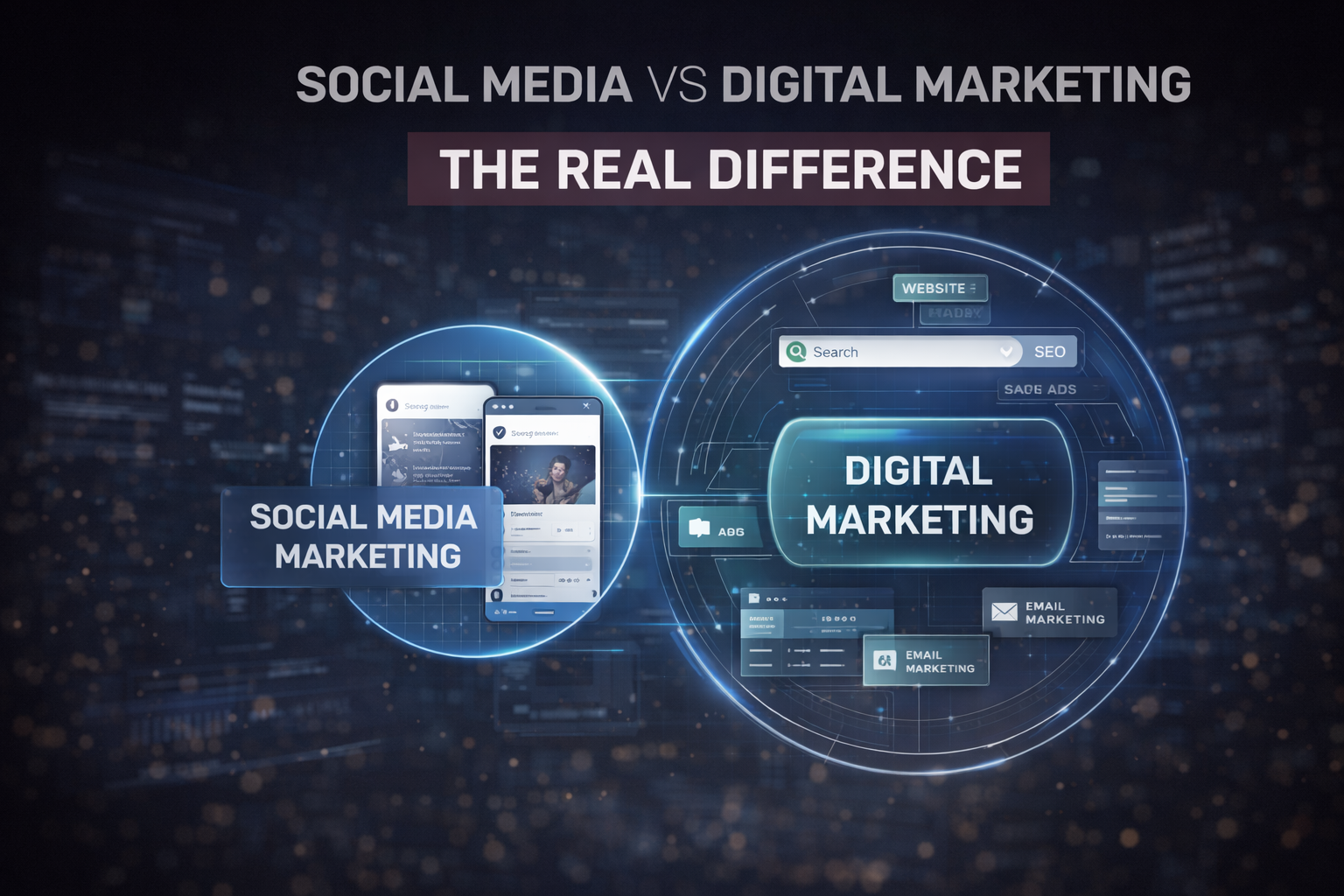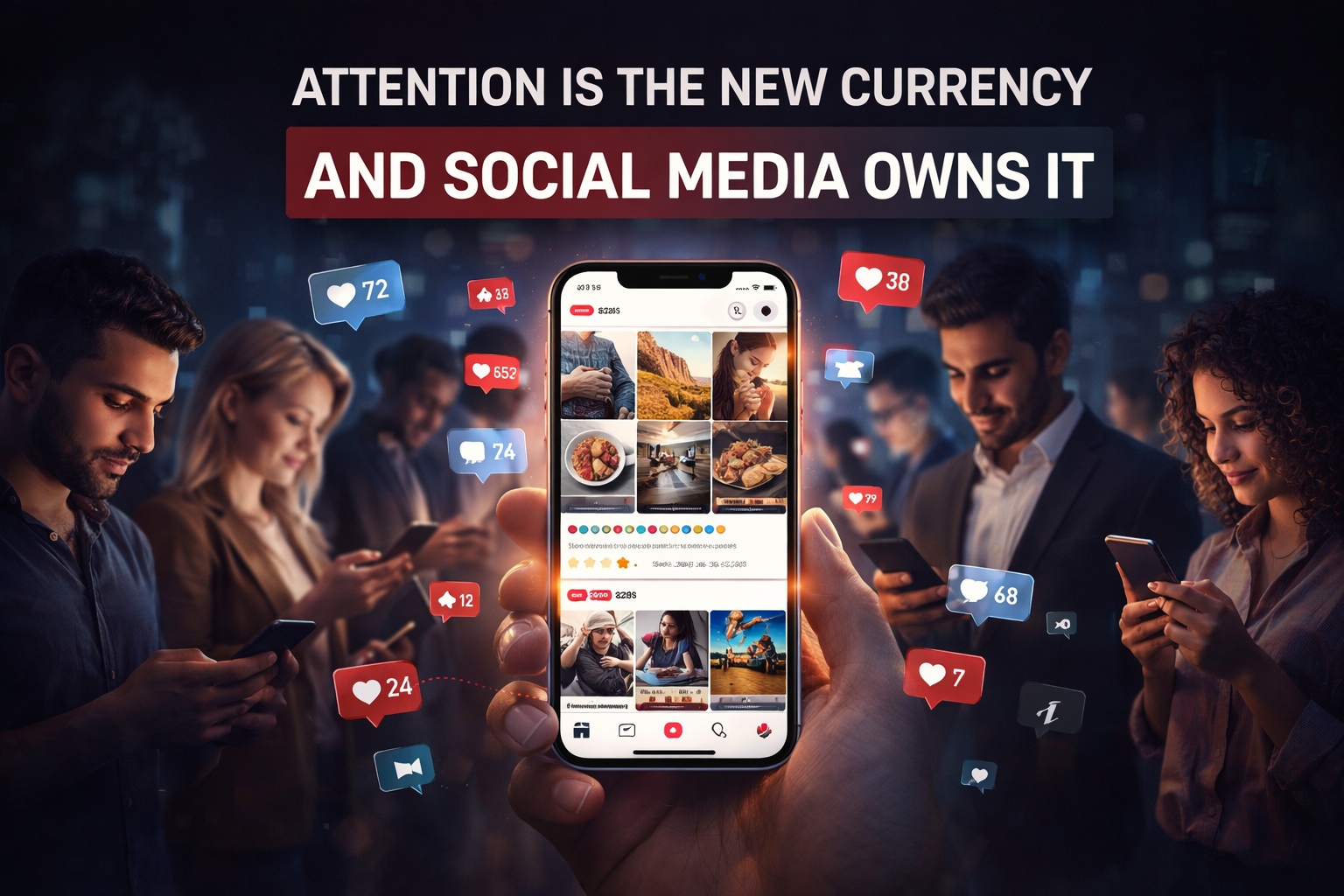
If you have ever wondered why social media marketing is powerful enough to transform a business, the answer is straightforward: it is where your customers already are with an estimated 4.89 billion social media users worldwide, and the average person spending more than 150 minutes on social platforms every day, no other marketing channel offers that combination of scale, targeting precision, and direct audience connection. Over 92 percent of marketers now use social media as part of their marketing strategy, according to Statista data cited by Nucleon Analytics, and there is a clear reason for that near universal adoption.
This guide explains why social media marketing is powerful, what the evidence actually shows, and how businesses of every size can use it strategically to grow in 2026.
Table of Contents
ToggleWhat Is Social Media Marketing?
Social media marketing (SMM) is the use of platforms like Facebook, Instagram, LinkedIn, YouTube, and TikTok to build brand awareness, engage with audiences, generate leads, and drive sales. According to Word Stream, it is not simply creating accounts and posting occasionally. It involves maintaining optimized profiles, publishing content that represents your brand, responding to your community, engaging with followers and influencers, and running targeted paid campaigns when organic reach is not enough.
The core strength of social media marketing lies in its dual nature: it functions as both a broadcasting tool and a conversation platform. Unlike a TV ad or a newspaper feature, a social media post invites responses, shares, and discussions in real time, making it a living, interactive channel rather than a static one.
The Scale That Makes Social Media Impossible to Ignore
The numbers that explain why social media marketing is powerful are striking. Facebook alone has nearly 3 billion monthly active users. Instagram has surpassed 1.4 billion. LinkedIn hosts over 4 out of 5 decision makers who use the platform to inform business choices, according to data referenced by Word Stream.
Beyond raw audience size, the engagement data is equally compelling. Word Stream reports that the average US adult spends 2.25 hours on social media every day. Over 70 percent of people who have a positive experience with a business on social media will recommend that business to their personal networks. Instagram alone is used by 81 percent of people to research products and services before purchasing.
These are not passive audiences browsing content: they are active, high-intent users whose purchasing decisions are being influenced by what they encounter on social platforms every single day.
7 Reasons Why Social Media Marketing Is Powerful
Understanding why social media marketing is powerful requires looking at each of its core contributions to business growth individually. Here are the seven most significant.
1. It Builds Genuine Brand Awareness
Brand awareness is the foundation on which all other marketing outcomes are built. Before someone buys from you, refers you, or even Googles you, they need to know you exist. Social media is the most cost-effective way to build that awareness at scale. Nuclei Analytics cites Smart Insights data showing that over 4 billion people worldwide use social media, making it an unmatched platform for connecting with both existing and prospective customers. A well-managed social presence exposes your brand to new audiences repeatedly and consistently, creating the familiarity that drives trust and eventual purchase decisions.
2. It Is Highly Cost-Effective
One of the most practically important reasons why social media marketing is powerful is its cost-efficiency relative to traditional advertising. Organic social media content is free to publish. Paid campaigns on platforms like Facebook and Instagram can be run at any budget level, with even modest spend generating strong returns when targeting is done well. TLH Marketing notes that compared to TV, radio, or print advertising, social media offers an affordable way to promote products and services with granular control over who sees your content. Small businesses that could never compete with large brands on broadcast media can build substantial, engaged audiences on social platforms with a fraction of the budget.
3. It Drives Website Traffic and Improves SEO
Social media is a direct traffic driver. Every post containing a link to a blog, product page, or landing page has the potential to send engaged visitors to your website. Hootsuite data cited by Nuclei Analytics shows that 90 percent of marketers report increased business exposure from social media, and 75 percent say it has increased traffic to their websites.
While social signals are not a direct Google ranking factor, Word Stream notes that active social profiles can boost brand visibility and drive referral traffic that, combined with more brand mentions and backlinks over time, produces positive indirect effects on search engine rankings. More visibility across social channels means more people searching for your brand directly, which is one of the strongest positive SEO signals there is.
4. It Generates Leads and Converts Customers
Lead generation and sales conversion are where why social media marketing is powerful becomes most commercially tangible. Platforms have evolved well beyond content distribution into direct commerce ecosystems. Instagram and Facebook Shops allow customers to discover and purchase products without leaving the app. LinkedIn has built-in lead generation forms within ads. Direct messaging features on every major platform allow prospects to initiate sales conversations instantly. Nuclei Analytics points out that the average person spends 147 minutes per day on social media, meaning well-crafted content reaches a broad audience repeatedly, and with the right call to action, it moves a meaningful percentage of those viewers through the conversion funnel.
5. It Builds Trust and Brand Loyalty
Trust is the currency of modern commerce, and social media is one of the primary places where it is built or lost.
TLH Marketing emphasizes that consumers today want to buy from brands they trust, and social media enables the direct, two-way communication that creates that trust: responding to comments and messages, sharing behind-the-scenes content, featuring genuine customer stories, and demonstrating that real people stand behind the brand. Nuclei Analytics adds that more than 90 percent of people choose to buy from brands they follow on social media, which illustrates just how directly consistent social engagement translates to commercial loyalty. When customers feel a genuine connection to a brand through social media, they do not just buy once; they return, refer others, and defend the brand publicly.
Key:
Over 70% of people who have a positive brand experience on social media recommend that business to their networks. Word of mouth has gone digital, and social media is its primary engine.
6. It Delivers Measurable, Real-Time Results
Unlike many traditional marketing methods where attribution is vague, social media marketing offers real-time, detailed analytics that allow businesses to make data-driven decisions.
TLH Marketing highlights analytics as one of social media marketing’s most significant advantages: platforms provide engagement metrics, click-through rates, audience demographics, and conversion data that make it possible to continuously optimize strategy and focus resources on what is working. Word Stream reinforces this, noting that 72 percent of high-performing marketing teams analyze performance in real time, something social media platforms make accessible to businesses of any size. The ability to test, measure, and immediately refine campaigns is one of the strongest practical reasons why social media marketing is powerful compared to channels where data arrives slowly and imprecisely.
7. It Keeps You Competitive in Your Market
If your competitors are active on social media and you are not, they are shaping the conversation in your category without you.
TLH Marketing makes this point directly: maintaining a strong social media presence ensures you stay visible, relevant, and competitive in your industry. By keeping pace with trends, engaging consistently with your audience, and responding quickly to what customers care about, businesses on social media capture market share from those that are not. In many industries, a brand’s social media presence is now evaluated before its website by prospective customers, making it a baseline expectation rather than a bonus marketing channel.
What an Effective Social Media Marketing Strategy Looks Like
Knowing why social media marketing is powerful is only useful if that power is harnessed strategically.
Word Stream identifies the core components that all successful social media marketing strategies share: a clear understanding of the target audience and the platforms they use, a consistent brand identity that carries across all channels, a structured content strategy that maintains a regular publishing cadence, built-in analytics review cycles, and an inbound mindset that prioritizes adding value rather than pitching products.
The practical implication is that social media marketing requires showing up consistently, not just when you have something to sell. Businesses that treat social media as a community, engaging back with comments, participating in conversations beyond their own posts, and sharing content that genuinely helps their audience, build the kind of trust and familiarity that drives long-term commercial outcomes.
Word Stream describes this as the inbound approach: when you consistently add value, your audience grows organically and promotes you naturally, reducing dependency on paid reach over time.
| Platform | Audience Scale | Best Used For |
|---|---|---|
| 3B+ monthly users | Brand building, community, local business, older demographics | |
| 1.4B+ monthly users | Visual products, lifestyle brands, influencer marketing, younger audiences | |
| Decision-makers (4 in 5) | B2B marketing, professional services, recruitment, thought leadership | |
| YouTube | 2B+ monthly users | Tutorials, product demos, how-to content, SEO via video |
| TikTok | 1B+ monthly users | Entertainment, short-form video, younger audiences, viral content |
Which Platforms Should Your Business Focus On?
One of the most common mistakes businesses make after understanding why social media marketing is powerful is trying to be everywhere at once.
Word Stream’s guidance is clear on this: choose platforms based on your target audience, the norms of your industry, and the bandwidth you realistically have to manage them. It is far more effective to be consistently excellent on two platforms than sporadically present on six.
For most consumer-facing businesses, Facebook and Instagram provide the broadest reach and the most versatile ad capabilities. B2B companies and professional services firms typically find LinkedIn the highest-value channel for direct client acquisition. E-commerce brands with strong visual products benefit significantly from Instagram’s shopping features. Content-heavy or educational brands can build substantial audiences on YouTube, which also delivers SEO benefits since video content is increasingly dominant in Google search results for how-to queries. TikTok is the right investment for brands targeting younger demographics with entertaining, relatable short-form content.
Common Mistakes That Reduce Social Media Marketing Power
Even with a clear understanding of why social media marketing is powerful, businesses frequently undermine their results through avoidable errors. The most common is treating social media as a broadcast channel rather than a community platform, posting content but never responding to comments, engaging with others’ posts, or participating in conversations. This creates the impression of a brand talking at its audience rather than with it, which suppresses engagement and organic reach.
A second major mistake is inconsistency.
Word Stream is explicit about this: social media is a real-time platform, and businesses that post actively for a few weeks and then go silent lose algorithmic momentum and audience trust simultaneously. A third error is prioritizing follower count over engagement quality. A smaller, genuinely engaged audience is commercially far more valuable than a large passive one. And finally, many businesses fail to track any meaningful metrics, making it impossible to identify what is working and improve over time. Social media marketing’s power is maximised only when it is measured, reviewed, and continuously refined.
Avoid This:
Using social media only to promote and sell, without offering value, is one of the fastest ways to lose followers and stall organic growth.
Word Stream puts it simply: social media is not a platform to pitch your business. It is a community to express your values, share useful information, and build up your audience.
Conclusion
Why social media marketing is powerful comes down to a combination of factors that no other single channel can match: the scale of its reach, the depth of its targeting capabilities, the directness of its audience relationships, the richness of its analytics, and its unique ability to build trust over time through consistent, value-first interaction. With billions of active users spending hours on these platforms every day, and purchasing decisions being shaped in real time by the content and brands people encounter there, social media is not a supplementary marketing activity for most businesses. It is a core one.
Businesses that approach social media with a clear strategy, consistent presence, and genuine commitment to serving their audience before selling to them are the ones that consistently see long-term growth. The platforms will keep evolving, the algorithms will keep changing, and new formats will keep emerging.
But the underlying reason why social media marketing is powerful will remain the same: it puts your brand exactly where your customers already are, every single day.
How Dizispark Can Help
Social media marketing is powerful only when it is executed with the right strategy, the right content, and the right consistency. Knowing that 4.89 billion people use social media is one thing; knowing how to turn that audience into real business growth for your specific brand, in your specific market, is another entirely. That is exactly where Dizispark comes in.
Dizispark is a digital marketing agency that helps businesses across India build social media presences that do more than accumulate followers. We build strategies rooted in your business goals, your audience behavior, and the platforms where your customers actually spend their time. From crafting content calendars and producing scroll-stopping visuals to managing paid campaigns on Facebook, Instagram, and LinkedIn, we handle the full execution, so your brand shows up consistently, professionally, and persuasively every single day.
Frequently Asked Questions
Why is social media marketing so powerful compared to traditional advertising?
Social media marketing is powerful because it combines massive audience reach with precise targeting, two-way communication, real-time analytics, and low cost. Traditional advertising is one-directional and expensive; social media allows businesses of any size to reach their exact audience, receive direct feedback, build genuine relationships, and measure every outcome in real time.
How many people use social media globally in 2026?
Approximately 4.89 billion people use social media worldwide, with the average user spending over 150 minutes per day on platforms. Facebook has nearly 3 billion monthly active users, Instagram over 1.4 billion, and TikTok over 1 billion.
Is social media marketing cost-effective for small businesses?
Yes. Organic social media content costs nothing but time, and paid campaigns can be scaled to any budget. Even modest ad spend on platforms like Facebook and Instagram delivers strong returns when targeting and creative are well-managed. Social media allows small businesses to compete with much larger brands for audience attention in a way traditional advertising channels do not.
Which social media platforms are best for business marketing?
The best platforms depend on your audience and business type. Facebook and Instagram are the most versatile for consumer brands. LinkedIn is the strongest channel for B2B and professional services. YouTube is highly effective for tutorial and educational content with SEO benefits. TikTok is best for reaching younger audiences through short-form video entertainment.
How does social media marketing help with SEO?
While social media signals are not a direct Google ranking factor, active social profiles increase brand visibility, drive referral traffic to your website, generate brand searches, and can produce backlinks over time. Nuclei Analytics notes that 75 percent of marketers report increased website traffic after investing in social media marketing, which indirectly supports stronger search engine rankings.
How long does it take to see results from social media marketing?
Paid social campaigns can generate traffic and leads within days of launch. Organic growth, including follower growth, brand awareness, and search traffic from social activity, typically shows meaningful results over 60 to 90 days of consistent posting and engagement. Long-term compounding benefits, including brand authority and loyal community, build over months and years.
What types of content perform best on social media?
Word Stream identifies diverse content as key: how-to tips, industry news, data and insights, polls and questions, behind-the-scenes content, and customer stories all perform well. Visual formats including short-form video, Reels, and carousels consistently generate the highest engagement rates across most platforms in 2026.
How do you measure social media marketing success?
Key metrics include engagement rate (likes, comments, shares), reach, click-through rate to your website, follower growth, lead form submissions, and direct sales attributed to social campaigns. Platform-native analytics tools provide these metrics for free, and Google Analytics can be used to track social referral traffic and conversions on your website.