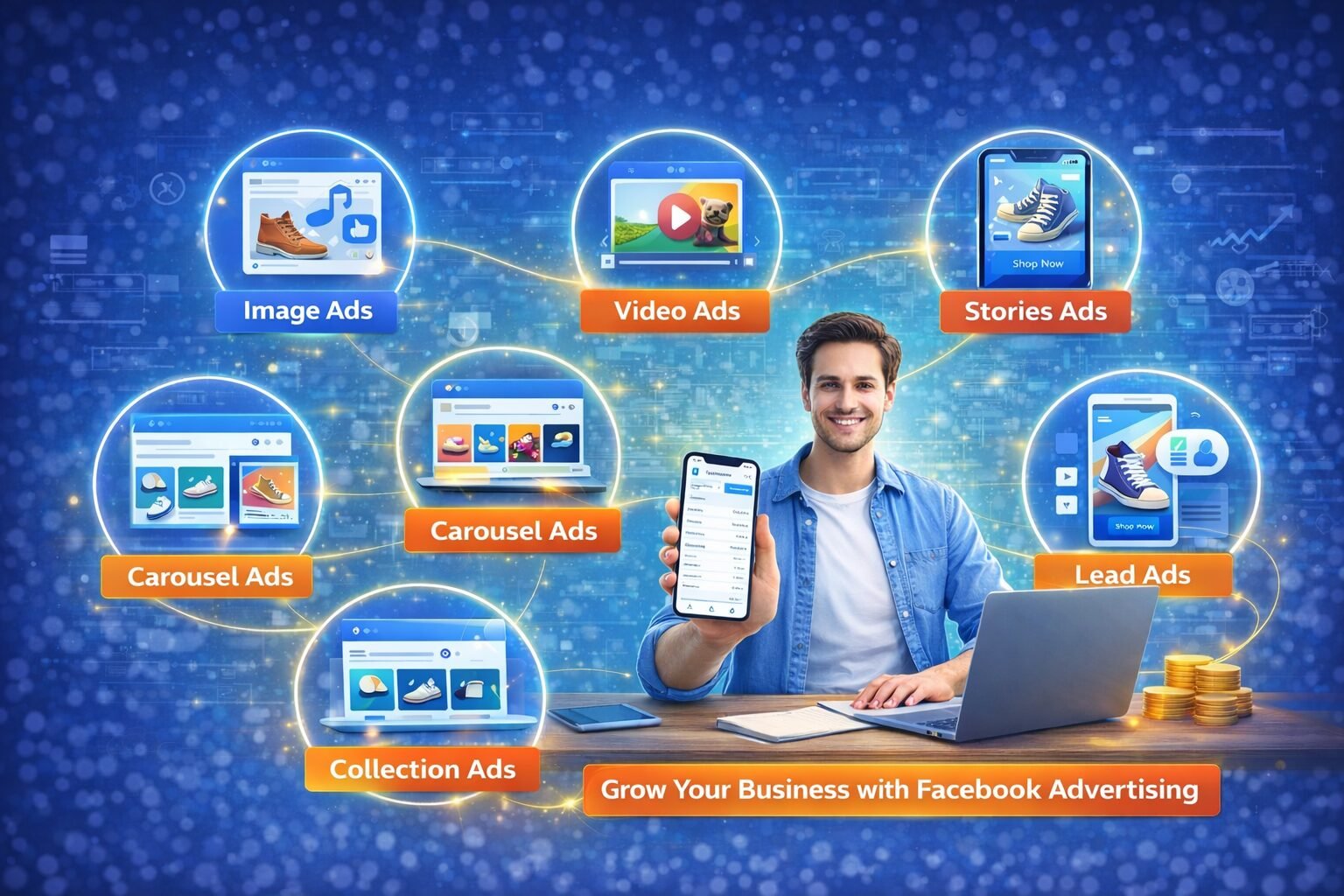
Understanding the types of Facebook ads is essential for businesses that want to promote products and services effectively on social media. Advertising on Facebook allows companies to reach highly targeted audiences based on demographics, interests, and online behavior. Businesses use Facebook advertising because the platform provides detailed targeting tools and flexible ad formats that support different marketing goals. According to marketing research and advertising guides, Facebook offers several ad formats, including image ads, video ads, carousel ads, collection ads, lead ads, and messaging ads that help businesses connect with potential customers. See this overview of formats in the Types of Facebook ads guide.
With billions of users interacting on the platform each month, businesses can promote their brand, generate leads, and drive website traffic through well-planned advertising campaigns.
How Facebook Ads Work in Modern Digital Marketing
Facebook ads operate within the advertising system developed by Meta Platforms. Businesses create campaigns using Meta Ads Manager, where they select a campaign objective such as brand awareness, traffic, engagement, or lead generation. Once the objective is selected, advertisers choose an ad format that determines how the advertisement appears to users. These ads can appear in different placements, including the Facebook news feed, stories, messenger inbox, or video streams. Modern digital marketing strategies rely heavily on social media advertising because it allows businesses to target specific audiences and track campaign performance through analytics and engagement data. This data helps marketers optimize campaigns and improve results over time.
Main Types of Facebook Ads
1. Image Ads
Image ads are one of the simplest and most widely used types of Facebook ads. These ads include a single image, advertising text, and a call-to-action button that directs users to a website or landing page. Businesses often use image ads to promote products, announce special offers, or build brand awareness. They are easy to create and can appear in several placements including the Facebook news feed and marketplace. Marketing guides explain that image ads combine a strong visual with short promotional text, making them effective for capturing attention during quick social media scrolling as explained in this Facebook ad formats explanation.
2. Video Ads
Video ads allow businesses to present information using motion and storytelling. These ads can appear in the Facebook feed, stories, and in-stream video placements. Short video ads are particularly effective for demonstrating products, explaining services, or sharing customer experiences. Many marketing experts recommend keeping promotional videos short and visually engaging to capture viewer attention quickly as discussed in this video advertising guide. Because video content communicates information more dynamically than static images, many brands use video ads to increase engagement and improve campaign performance.
3. Carousel Ads
Carousel ads allow advertisers to display multiple images or videos in a single advertisement. Users can swipe through the cards to explore different products or features. Each card in a carousel ad can include its own headline, description, and link. This format is commonly used by e-commerce businesses that want to showcase multiple products in a single campaign as described in the carousel Facebook ads explanation.
4. Collection Ads
Collection ads are designed primarily for mobile shopping experiences. This format combines a main image or video with several product images displayed below it. When a user clicks the advertisement, a full-screen experience opens inside Facebook where they can explore products without leaving the platform. This format is particularly useful for online stores that want to display product catalogs, which is why collection ads are widely recommended in this collection ads overview.
5. Instant Experience Ads
Instant Experience ads provide an immersive full-screen interface designed for mobile devices. These ads load instantly when a user taps on the advertisement and can include images, videos, text, and interactive elements. This format allows businesses to present more detailed content compared with standard ads. It is often used for storytelling campaigns, product showcases, or brand experiences as explained in this Meta advertising format guide.
6. Slideshow Ads
Slideshow ads create a video-like experience using multiple images, transitions, and text overlays. They are designed to provide engaging visual content without requiring full video production. These ads are lightweight and load quickly, making them suitable for audiences with slower internet connections. Businesses often use slideshow ads when they want dynamic visual content but only have static images available as explained in this slideshow Facebook ads guide.
7. Lead Ads
Lead ads are designed to collect customer information directly on Facebook. When users click the ad, a form appears where they can submit details such as their name, email address, or phone number. These forms are often prefilled with information from the user’s profile, making the process quick and convenient. Businesses frequently use lead ads for webinar registrations, consultation requests, and newsletter subscriptions.
8. Messenger Ads
Messenger ads encourage users to start conversations with businesses through Facebook Messenger. These ads can appear in the messenger inbox or direct users from the news feed into a chat conversation. Because messaging allows real-time communication, businesses can answer questions, provide support, or guide customers toward purchasing decisions.
9. Stories Ads
Stories ads appear between user stories in a full-screen vertical format optimized for mobile viewing. These ads are designed for quick engagement and usually contain short videos or images. Stories have become one of the most popular content formats on social media, which makes story ads highly visible to users.
Choosing the Right Facebook Ad Format
Selecting the right format from the available types of Facebook ads depends on the goal of the advertising campaign. Businesses that want to increase brand awareness may choose image or video ads because they capture attention quickly. Companies promoting multiple products may benefit from carousel or collection ads that display several items in a single advertisement. Lead ads and messenger ads are more suitable when the goal is to generate inquiries or start conversations with potential customers. Testing different formats and analyzing campaign data can help businesses determine which advertising style works best for their audience.
Benefits of Using Facebook Ads for Business Growth
Facebook advertising offers several advantages that support business growth. One of the most important benefits is advanced audience targeting. Businesses can target users based on age, interests, location, and online activity. Another benefit is cost flexibility. Advertisers can set daily budgets and adjust campaigns depending on performance. Facebook also provides detailed analytics that allow businesses to monitor engagement, conversions, and campaign performance.
Common Mistakes Businesses Make With Facebook Ads
While Facebook advertising can deliver strong results, many businesses make mistakes that reduce campaign effectiveness. One common mistake is choosing the wrong ad format for the campaign objective. Another mistake is poor audience targeting. Even the most creative ads may fail if they are shown to the wrong audience. Many businesses also neglect testing different ad formats. Experimenting with various types of Facebook ads helps identify which formats generate the highest engagement and conversions.
Conclusion
Understanding the different types of Facebook ads helps businesses design more effective digital marketing campaigns. Each ad format offers unique advantages depending on the marketing objective. Image ads provide simplicity and quick visibility. Video ads enhance storytelling and engagement. Carousel and collection ads help businesses showcase multiple products, while lead ads and messenger ads focus on customer interaction and lead generation. By selecting the right ad format and continuously optimizing campaigns, businesses can use Facebook advertising to increase brand awareness, generate leads, and drive long-term growth.
Call to Action
Running successful Facebook advertising campaigns requires strategic planning, audience targeting, and continuous optimization. If you want to use the types of Facebook ads effectively to attract more customers and generate leads, professional support can make a significant difference.
Dizispark Technology helps businesses design and manage high-performance Facebook advertising campaigns that deliver measurable results. Partner with experts and start building campaigns that drive real business growth.
FAQs
1. What are the main types of Facebook ads?
The main types of Facebook ads include image ads, video ads, carousel ads, collection ads, instant experience ads, slideshow ads, lead ads, messenger ads, and stories ads.
2. Which Facebook ad type is best for lead generation?
Lead ads are specifically designed for collecting customer information directly on Facebook. These ads include built-in forms that allow users to submit details without leaving the platform.
3. Are video ads better than image ads on Facebook?
Video ads often generate higher engagement because they use motion and storytelling to capture attention. However, image ads remain effective for simple promotions and quick announcements.
4. How do businesses choose the right types of Facebook ads?
Businesses should choose the right types of Facebook ads based on their marketing objectives, audience behavior, and campaign goals.