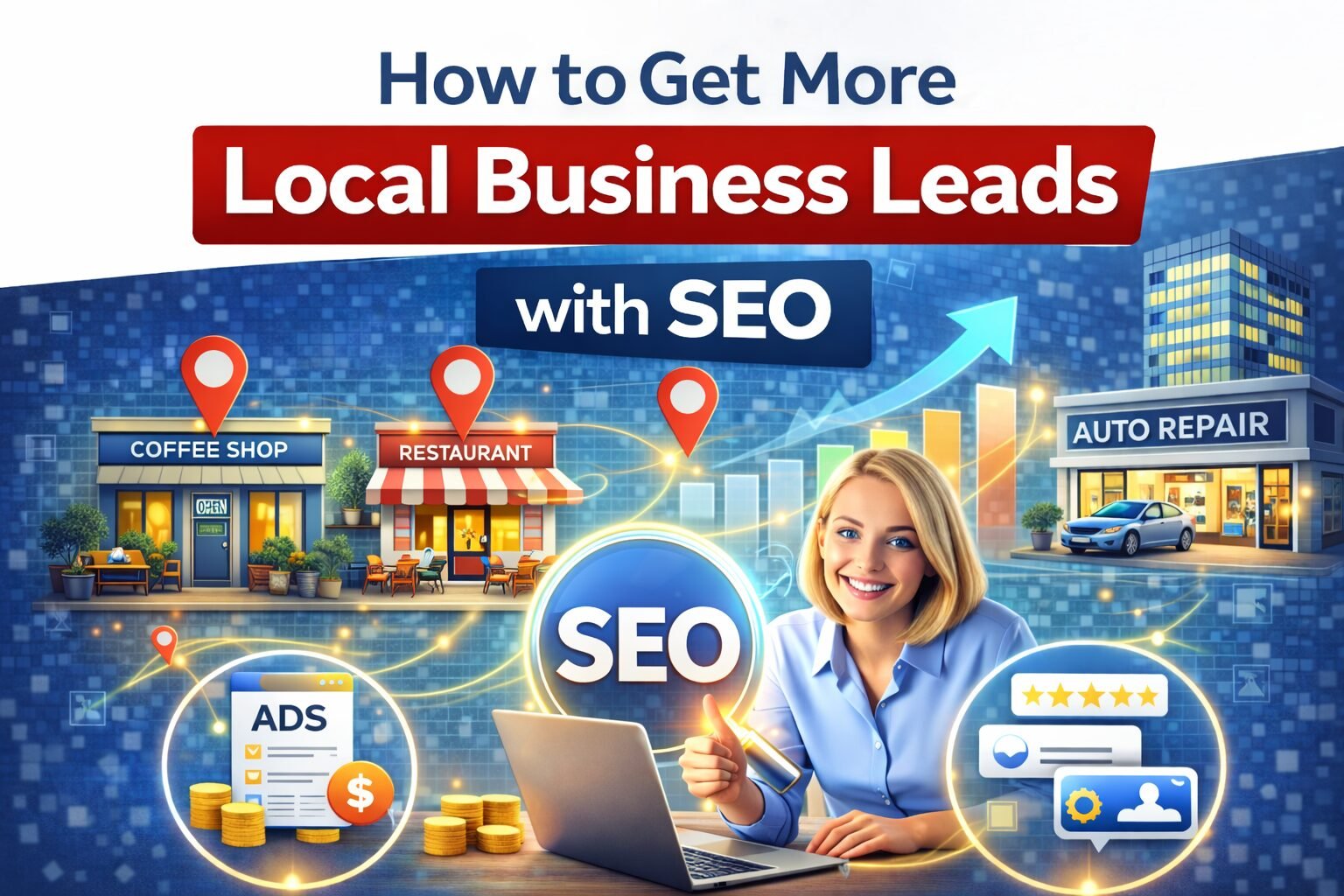
A potential customer pulls out their phone, types “best plumber near me” into Google, and within seconds decides which business to call. Is your name on that shortlist? In today’s digital world, that scenario plays out millions of times daily. According to Google Consumer Insights, a staggering 78% of local mobile searches result in offline purchases. Think about that someone searches on their phone, and within hours (sometimes minutes), they’re walking into a store or calling a business. But here’s the catch: If your business isn’t showing up in those local searches, you’re invisible to ready-to-buy customers.
This is where local business leads with SEO become your secret weapon. Unlike traditional advertising, where you interrupt people, local SEO puts you in front of customers exactly when they’re raising their hands saying, “I need this now”. Let’s walk through exactly how to capture those high-intent local searchers and turn them into paying customers.
Understanding Why Local Business Leads with SEO Matter More Than Every
How Local Search Behavior Has Changed
Remember when finding a local business meant flipping through a phone book or asking a neighbor for a recommendation? Those days are long gone. Today, 46% of all Google searches seek local information that’s confirmed across multiple studies in our research. Whether someone needs a digital marketing agency in Hisar, a restaurant in Varanasi, or an emergency plumber anywhere, the journey starts the same way: a search engine. Mobile devices have accelerated this shift. People search while commuting, during lunch breaks, or even while standing outside your business checking hours and reviews. Your digital presence must meet them where they are.
The High Intent Behind Local Searches
Here’s what makes local business leads with SEO so valuable: intent.
When someone searches for “digital marketing agency in Delhi” or “salon near me,” they aren’t casually browsing. They have a problem to solve and are ready to take action. They might call, visit, or book immediately. This is fundamentally different from traditional advertising, where you broadcast messages hoping someone might be interested. Local SEO captures demand that already exists. For small and medium businesses, this is game-changing. You don’t need a massive marketing budget to compete; you just need to show up when local customers are searching.
Step 1: Optimize Your Google Business Profile for Maximum Visibility
Your Google Business Profile (GBP) formerly Google My Business is the single most powerful tool for generating local business leads with SEO. When someone searches for services in your area, the Local Map Pack (those top three results with a map) gets the majority of clicks.
Complete Every Section of Your Profile
Start with the basics, but don’t stop there. Your GBP needs:
- Business name, address, and phone number (NAP): exactly as they appear everywhere else online
- Primary and secondary categories: that accurately describe what you do
- Service menu: listing everything you offer
- Business hours: including holidays and special hours
- Attributes: like “wheelchair accessible, ” “free Wi-Fi,” or “appointments required”
Incomplete profiles signal to Google that you might not be operational, and they certainly don’t inspire customer trust.
Add Photos, Videos, and Virtual Tours
Businesses with photos on their GBP receive more direction requests and website clicks. Show off your:
- Storefront (so customers can recognize it)
- Team members (builds human connection)
- Work examples (proves your quality)
- Behind-the-scenes content (adds authenticity)
Use Google Posts to Share Updates and Offers
Google Posts appear directly in your business profile and stay live for 7 days (or longer for offers).
Use them to announce:
- New services or products
- Special promotions
- Events or workshops
- Holiday hours changes
Regular posting signals to Google that your business is active and engaged.
Enable Messaging and Q&A Features
Make it effortless for customers to reach you. The messaging feature lets potential leads text you directly from search results. For Q&A, proactively add frequently asked questions and answers; this saves time and shows you’re responsive.
The Review Factor Encourage and Respond to Reviews
Reviews are social proof that influences both rankings and customer decisions. According to our research, businesses that actively manage reviews see significant improvements. One case study showed GBP interactions growing 46.8% in a single quarter through consistent posting, review management, and optimization. That’s nearly 50% more potential customers engaging with the business.
Pro tip: Always respond to reviews, both positive and negative. Thank customers for praise, and address concerns professionally when things go wrong. This shows future customers you care.
Step 2: Conduct Local Keyword Research That Targets Real Customers
Generic keywords won’t cut it for local business leads with SEO. You need to think like your customers.
Focus on Service + Location Keyword Combinations
The most valuable searches combine what you do with where you do it:
- “Digital marketing agency in Delhi”
- “Best salon near me”
- “Emergency plumber in Delhi”
- “Affordable wedding photographer [neighborhood name]”
These phrases indicate someone with purchase intent. They’re not just learning they’re looking to buy.
Use Micro-Location Phrases for Hyper-Targeting
Cities are one thing, but neighborhoods, districts, and even landmarks matter. Someone might search for:
- “Coffee shop near Connaught Place”
- “Gym in Delhi”
- “Restaurant with parking in Delhi”
If you serve specific areas, optimize for these micro-locations to capture hyper-local traffic.
Find Problem-Oriented Keywords Your Audience Uses
Think about the problems your customers need solved:
- “How to fix a leaking tap in [city]”
- “Where to get emergency dental work on Sunday”
- “Best digital marketing course for beginners in Hisar”
These long-tail keywords often convert better because they match specific needs.
Tools and Methods for Local Keyword Discovery
- Type your service into Google and see autocomplete suggestions
- Check the “People also ask” boxes for question-based keywords
- Look at competitors’ websites and see what location pages they’ve created
- Use Google’s Keyword Planner with location filters
Step 3: Create Location-Specific Landing Pages That Convert
If you serve multiple areas, generic “Contact Us” pages won’t capture local business leads with SEO effectively. You need dedicated location pages.
Build Dedicated Pages for Each Service Area
Each location deserves its own page with:
- Each location deserves its own page with:
- Service descriptions tailored to that area
- Local contact information
- Embedded Google Map showing your service radius
- Testimonials from customers in that location
Don’t just swap city names and call it done. Each page should feel genuinely local.
Include Localized Content on Every Page
Show you understand each community by mentioning:
- Local landmarks or neighborhoods you serve
- Community events you’ve participated in
- Local regulations or requirements specific to that area
- Partnerships with other local businesses
Add Clear Calls-to-Action with Location Context
Generic “Contact Us” buttons underperform. Try these instead:
- “Call our Hisar team today”
- “Visit our Koramangala location”
- “Schedule a consultation with our Varanasi experts”
- “Get a free quote for [city] residents”
For mobile users, click-to-call buttons are essential, they reduce friction and capture leads instantly.
Feature Local Case Studies and Testimonials
Nothing builds trust like seeing results from people in your own community. Feature:
- Before-and-after photos from local projects
- Video testimonials from recognizable local customers
- Case studies mentioning specific neighborhoods or challenges unique to your area
Step 4: Strengthen On-Page SEO for Local Relevance
Your website must clearly communicate to Google who you are, what you do, and where you serve.
Optimize Title Tags, Meta Descriptions, and Headers
Every page should include location + service in:
- Title tags (the clickable headline in search results)
- Meta descriptions (the summary under the title)
- H1, H2, H3 headers throughout your content
Keep titles compelling, they affect whether people click through to your site.
Use Schema Markup (Local Business Schema)
Schema markup is code that helps search engines understand your business details.
Local Business Schema can display:
- Your hours (showing “Open now” or “Closed”)
- Reviews and ratings directly in search results
- Your location and service area
- Accepted payment methods
This structured data can trigger rich results that stand out from competitors.
Internal Linking to Location Pages
Connect your content strategically:
- Link from blog posts to relevant service pages
- Link between location pages (e.g., “We also serve [nearby city]”)
- Link from your homepage to your main service areas
This helps search engines discover all your local content and passes authority between pages.
Mobile Optimization Is Non-Negotiable
With most local searches happening on smartphones, your site must:
- Be easy to navigate on small screens
- Have tappable phone numbers
- Display addresses clearly with map links
- Avoid pop-ups that frustrate mobile users
Step 5: Build Local Citations and Quality Backlinks
Search engines verify your business through mentions across the web.
What Are Local Citations and Why Do They Matter?
A local citation is any online mention of your business name, address, and phone number. Consistent citations across reputable platforms tell Google you’re legitimate and where you’re located.
Top Directories to List Your Business
Start with these essentials:
- Google Business Profile (already covered)
- Bing Places for Business
- Apple Maps
- Industry-specific directories (e.g., JustDial in India, Yelp in US, Yellow Pages)
- Local chamber of commerce websites
- Local business associations
Earn Backlinks From Local Sources
Backlinks (links from other websites to yours) remain one of Google’s top-ranking factors.
For local business leads with SEO, focus on local sources:
- Partner with local bloggers for features or guest posts
- Sponsor community events and get listed on event websites
- Join your local chamber of commerce (often includes a directory link)
- Collaborate with complementary local businesses (e.g., a wedding photographer linking to venues, caterers, and florists)
Quality Over Quantity in Link Building
A single link from your local newspaper or a respected community organization is worth more than dozens of spammy directory links. Focus on relevance and authority.
Step 6: Publish Localized Content That Builds Authority
Content marketing helps you capture local business leads with SEO by answering questions and demonstrating expertise.
Blog About Local Topics and Events
Write about:
- “Best parks for family photos in [city]”
- “How [local festival] affects traffic and parking”
- “Local regulations every [your industry] should know”
- “Neighborhood guide to [area] for newcomers”
This content may not directly sell, but it establishes you as a local authority and attracts visitors who might need your services later.
Create “Best Of” Lists and Local Resources
People love recommendations. Create:
- “Top 10 coffee shops in [neighborhood]” (even if you’re not a coffee shop—it shows community involvement)
- “Complete guide to [activity] in [city]”
- “Local resources for new homeowners”
Share Customer Success Stories and Case Studies
Feature real projects with:
- Before and after photos
- Specific challenges solved
- Quotes from satisfied customers
- Location details (with permission)
These build trust and provide social proof that you deliver results.
Address Local Regulations, Trends, or Challenges
Show you understand the local market deeply:
- How recent zoning changes affect homeowners
- Local business trends specific to your city
- Seasonal considerations for your industry in your climate
This positions you as a trusted advisor, not just another vendor.
Step 7: Leverage Social Media for Local Visibility
While social media doesn’t directly impact search rankings, it supports your local business leads with SEO efforts indirectly.
How Social Media Indirectly Supports Local SEO
Social platforms:
- Drive traffic to your website and GBP
- Increase brand awareness in your community
- Generate engagement signals that build authority
- Create opportunities for local backlinks and mentions
Engage With Local Audiences on Platforms
Choose platforms where your local customers spend time:
- Share local news and events relevant to your industry
- Post about your team’s community involvement
- Use location tags in every post
- Engage with other local businesses’ content
Encourage Customers to Tag Your Business
When customers tag your location in their posts:
- Their followers see your business
- You can repost user-generated content (with permission)
- Location tags reinforce your local presence
Cross-Promote Your Local Content
Share your blog posts, guides, and offers across social channels. Each share is another chance to drive traffic and potentially earn backlinks.
Step 8: Track, Measure, and Refine Your Local SEO Strategy
SEO isn’t a “set it and forget it” activity. To consistently generate local business leads with SEO, you must track what works and adjust accordingly.
Key Metrics to Monitor
Watch these numbers closely:
- GBP insights: How many people viewed your profile? Searched for you? Requested directions? Called?
- Local keyword rankings: Where do you appear in map pack and organic results?
- Website traffic from local searches: Are people finding your site?
- Conversions: Phone calls, form submissions, direction requests, WhatsApp clicks
Tools for Tracking Local SEO Performance
Several free and paid tools can help:
- Google Analytics 4: Track website traffic and conversions
- Google Search Console: See which queries bring visitors
- GBP Insights Dashboard: Native analytics for your profile
- Local rank trackers: Tools like Bright Local or SEMrush for detailed position tracking
Analyze What’s Working and What Isn’t
Regularly review:
- Which keywords drive the most traffic and conversions
- Which location pages perform best (and worst)
- Where your traffic comes from (search, direct, social, referrals)
- How mobile users behave compared to desktop
Continuously Optimize Based on Data
Use insights to guide your next moves:
- Update underperforming content with fresh information
- Build more citations in areas where you’re weak
- Adjust keyword targeting based on what’s converting
- Refresh old blog posts with current data
Local SEO is an ongoing process, not a one-time setup. The businesses that win are those that consistently optimize.
Common Local SEO Mistakes to Avoid
1. Inconsistent NAP Information
Your business name, address, and phone number must match everywhere your website, GBP, directories, social media. Even small variations (like “St.” vs. “Street”) can confuse search engines.
2. Ignoring Google Business Profile
According to our research, 56% of local retailers still haven’t claimed their Google Business Profile. That means more than half of potential competitors are leaving money on the table. Don’t be one of them.
3. Targeting Keywords That Are Too Broad
“Digital marketing” might get more searches, but “digital marketing agency in Hisar” gets the right searches. Broad terms attract irrelevant traffic that won’t convert.
4. Neglecting Mobile Users
If your site loads slowly or looks broken on phones, local searchers will bounce to competitors. Mobile friendliness is both a ranking factor and a user experience necessity.
5. Buying Fake Reviews or Links
Google’s algorithms are sophisticated enough to detect fake activity. Buying reviews or participating in link schemes can result in penalties that destroy your visibility. Build everything authentically.
Conclusion
Generating local business leads with SEO requires consistent effort across several areas, including optimizing your Google Business Profile, targeting the right local keywords, creating location-specific pages, improving on-page SEO, building citations, and publishing localized content. When these strategies work together, they help businesses appear in search results exactly when nearby customers are looking for their services. The opportunity for local business leads with SEO is huge—around 78% of local mobile searches lead to offline purchases and 46% of Google searches have local intent. Unlike paid ads, SEO continues delivering long-term results and builds stronger visibility over time. Start with small improvements today, stay consistent, and your business can steadily attract more local customers.
How Dizispark Can Help You Generate More Local Business Leads with SEO
If managing every aspect of local SEO feels overwhelming, you don’t have to handle it alone. At Dizispark, we help businesses generate more local business leads with SEO through proven strategies designed for local markets. Our team optimizes your Google Business Profile, conducts in-depth local keyword research, builds high-converting location pages, manages citations across directories, and creates localized content that improves visibility and trust. We also track performance and continuously refine the strategy to ensure your business attracts more local customers. Ready to turn local searchers into paying customers? Contact Dizispark today for a free local SEO consultation and let our experts create a customized plan to help your business generate consistent local business leads with SEO.
FAQs
1. How long does it take to see results from local SEO?
Most businesses see improvements in 3 to 6 months, depending on competition and your current optimization level. Results may come faster if you already have an active Google Business Profile and existing reviews. Some businesses see initial movement in weeks, but sustainable local business leads with SEO typically require consistent effort over several months.
2. Do I need a website for local SEO lead generation?
While not strictly mandatory (you can generate leads through your GBP alone), having a website significantly improves your results. A website increases trust, gives you space to publish local content, helps you rank for more keywords, and provides tools to track and convert visitors. Businesses with websites consistently outperform those relying solely on their profile.
3. What's the difference between local SEO and traditional SEO?
Traditional SEO targets visibility at a national or global level, competing for broad keywords with high search volume. Local SEO focuses on specific geographic areas cities, neighborhoods, or service radiuses. Local SEO relies heavily on Google Business Profile, local keywords, map pack rankings, reviews, and citations. Both are valuable, but for businesses serving specific communities, local SEO delivers more relevant traffic.
4. Can small businesses compete with larger companies in local search?
Absolutely. Local SEO levels the playing field because proximity and relevance matter more than company size. A small, well-optimized business with great reviews and local content can easily outrank a national chain in local results. Google prioritizes showing the most relevant local options not necessarily the biggest brands.
5. How important are online reviews for local SEO?
Reviews are critically important. They influence both where you rank and whether customers choose you. Positive reviews build trust, provide fresh content (each review adds keywords), and signal to Google that customers value your business. Responding to reviews both positive and negative shows engagement and further improves your standing.
6. Should I create content for every city I serve?
Yes, if you serve multiple distinct locations. Dedicated location pages and localized content help you rank in each specific area. Just ensure each page offers unique value don’t simply duplicate content with different city names. Include local information, testimonials from that area, and specific details that show genuine local presence.
7. What is a local citation?
A local citation is any online mention of your business name, address, and phone number. Citations can appear on directories, social media, local blogs, or association websites. Consistent citations across reputable platforms help search engines verify your business information and improve your local rankings.
8. Is social media part of local SEO?
Social media doesn’t directly impact search rankings, but it plays a supporting role. Strong local social media presence drives traffic to your website and GBP, increases brand awareness, creates opportunities for engagement, and can lead to local backlinks and mentions. Think of social media as complementary to your core SEO efforts.