Digital marketing for travel agency in India is no longer a competitive advantage reserved for large OTAs and national brands. In 2026, it is the operating baseline for every travel business that wants consistent bookings. More than 80 percent of travel planning in India now happens online, according to Black Marlin Technologies’ travel marketing guide, and that number is rising every quarter as Tier-2 and Tier-3 cities gain deeper smartphone penetration and affordable data access.
Whether you run a honeymoon planning agency in Delhi, an adventure travel company in Pune, or a full-service tour operator in Mumbai, this guide covers every core pillar of digital marketing for travel agency in India that actually generates bookings in 2026. You will find practical, source-backed strategies for SEO, paid ads, social media, content, and email, along with the common mistakes that quietly drain marketing budgets without delivering results.
Table of Contents
ToggleWhy Digital Marketing for Travel Agency in India Is Essential in 2026
The Indian travel market is one of the fastest-recovering and fastest-growing in the world. Post-pandemic demand for domestic tourism, honeymoon travel, group tours, and religious pilgrimages has surged, and international holiday packages are seeing consistent demand from urban professionals and aspirational middle-class families alike. But this growth comes with intensified competition: hundreds of agencies offer nearly identical packages, and the ones that win the bookings are the ones with stronger digital visibility, not necessarily better itineraries.
Digital marketing for travel agency in India is what separates agencies that grow year on year from those that rely on word of mouth alone and plateau. According to Tantrash Technologies’ travel marketing framework, today’s Indian traveller researches, compares, and revisits multiple agencies online before making a booking decision. If your agency is not visible during that research phase, you simply do not exist in their decision-making process.
1. How Indian Travellers Plan and Book in 2026
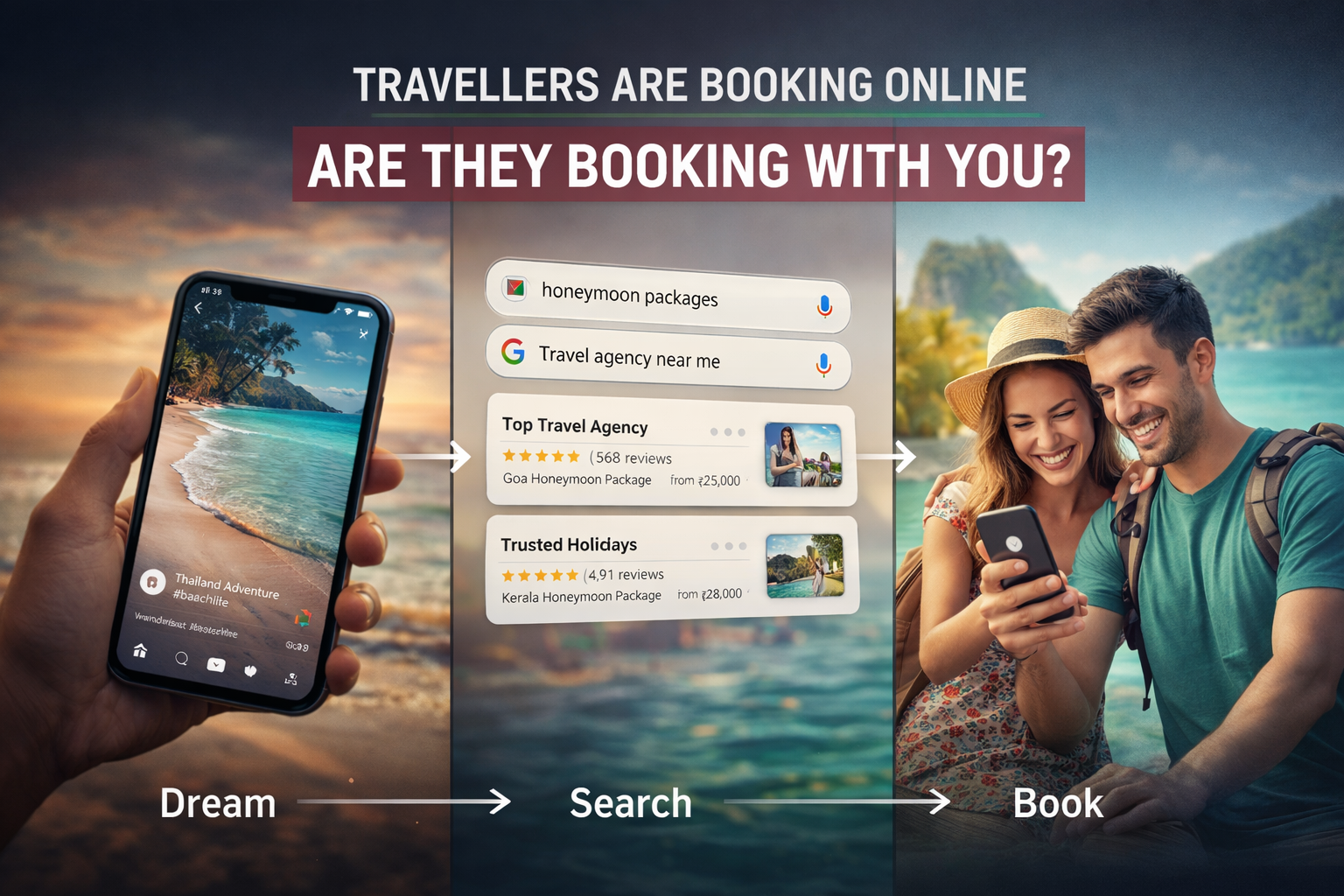
Indian travelers in 2026 follow a multi-touch research journey before confirming any package. They discover destinations on Instagram Reels and YouTube Shorts, compare package prices and inclusions on Google, read agency reviews on Google Maps and travel forums, save shortlisted options, and then return days or even weeks later to book. Spenta Digital’s travel and tourism marketing guide highlights that travelers are no longer looking for the cheapest option, they are looking for the most trustworthy and visually inspiring one. Agencies that show up consistently at every stage of this journey, from discovery to comparison to conversion, consistently win more bookings than those that appear only at the final search stage.
Key Takeaway:
The Indian travel booking journey is multi-touch and multi-platform. Effective digital marketing for travel agency in India means being visible on Google when travelers search, on Instagram when they dream, and in the inbox when they are ready to commit.
2. The Competitive Reality for Travel Agencies Online
The number one reason most travel agency websites generate fewer enquiries than they should is not that the packages are unattractive. It is that the website is invisible. Agencies without proper SEO, an optimised Google Business Profile, and active social media presence are competing against agencies that have all three, and losing that competition before a single phone call is made. OMR Digital’s travel booking marketing research reinforces this: the travel industry requires a consistently strong online presence to build the familiarity and credibility that drive enquiry conversion.
Fix
Search ‘travel agency in Delhi (you city)’ on Google right now. If your agency is not in the top 3 map results or on the first page of organic results, your digital marketing for travel agency in India needs to start with local SEO and Google Business Profile optimization this week.
Build a High-Converting Travel Website That Closes Bookings
Every other channel of digital marketing for travel agency in India sends traffic to your website. If your website does not convert that traffic into enquiries and bookings, every rupee you spend on ads, SEO, and social media is partially wasted. Your travel website is your highest-leverage asset. It should look like a travel brand, load fast on mobile, answer every question a potential traveller has, and make the process of enquiring or booking as frictionless as possible.
Spinta Digital’s guide on digital marketing for travel and tourism notes that modern travellers expect seamless experiences across all devices. More than half of all travel searches now happen on mobile, and a website that loads slowly or is difficult to navigate on a smartphone loses those visitors within seconds, before they ever see your packages.
1. Fast, Mobile-First Design for Travelers on the Go
A mobile-first travel website loads in under three seconds, displays your top packages clearly above the fold, has a tap-to-call button visible on every page, and keeps enquiry forms to three fields: name, phone, and the destination they are interested in. High-quality destination photography is not optional, it is the primary reason a traveller either stays on your page or bounces. Every package page should include an itinerary overview, inclusions and exclusions, price indication or starting-from price, and a clearly visible booking or enquiry button.
Action
Test your website today on Google PageSpeed Insights. A mobile score below 65 is actively costing you bookings. For a travel agency where each booking is worth INR 20,000 to INR 2,00,000 or more, a one-time website speed fix delivers one of the highest ROI investments in your entire digital marketing for travel agency in India strategy.
2. Destination Landing Pages That Rank and Convert
Generic homepage content does not rank for specific travel searches. To capture high-intent organic traffic, your website needs dedicated landing pages for every major destination and package type you offer. Examples include pages titled ‘Manali Honeymoon Packages from Delhi 2026’, ‘Thailand Tour from Mumbai with Flights’, and ‘Rajasthan Heritage Tour 7 Nights’. Each page should contain a full itinerary, day-by-day activities, hotel options, pricing, and genuine customer testimonials. These pages are what digital marketing for travel agency in India requires to compete against larger platforms for specific high-intent searches that convert at significantly higher rates than general traffic.
Action
Identify your top 10 selling destinations and create or improve a dedicated landing page for each. Include ‘from Delhi (your city)’ in the page title and URL to capture the most valuable local search intent.
Travel Agency SEO India: Rank Where Travelers Are Searching
SEO is the most cost-effective long-term pillar of digital marketing for travel agency in India. While Google Ads produces bookings immediately but stops when the budget stops, SEO builds compounding visibility that drives free, high-quality organic traffic month after month. The first result on Google receives ten times more clicks than the tenth result, according to Black Marlin Technologies, which makes ranking on page one for your key destination searches a transformative business asset.
Travel SEO in India requires three things working together: the right keywords on well-structured pages, a fully optimized Google Business Profile for local searches, and quality backlinks from travel blogs and directories that build your domain authority. Miss any one of these and your rankings will plateau regardless of how much content you publish.
1. Keyword Strategy for Tour and Holiday Packages
The highest-converting travel keywords are specific and intent-rich. Someone searching ‘travel agency India’ is browsing. Someone searching ‘Bali honeymoon package from Hyderabad 5 nights’ is ready to book. Your digital marketing for travel agency in India keyword strategy should prioritize these long-tail, destination-specific phrases that signal strong booking intent. Spinta Digital’s guide notes that integrating these keywords strategically across landing pages, blog posts, meta descriptions, and image alt text creates compounding SEO value over time. Use Google Keyword Planner and search auto-suggest to find the exact phrases your target customers are typing.
| Keyword Pattern | Search Intent | Booking Conversion |
|---|---|---|
| Honeymoon package [destination] from [city] | Very High | High |
| [Destination] tour package [number] nights | High | High |
| Best travel agency in [city] | High | Medium-High |
| International tour packages from India | Medium | High |
| Group tour packages India 2026 | Medium | Medium |
| Family tour package [destination] | Medium | High |
| Religious tour packages India | Medium | High |
| [Destination] visa on arrival Indians | Low | Medium |
Action
Target one long-tail destination keyword per landing page. Never try to rank a single page for five different destinations. Google rewards specificity, and specific pages convert at a much higher rate because they exactly match what the traveler searched for.
2. Google Business Profile and Local SEO for Travel Agencies
Your Google Business Profile (GBP) is the most immediate local SEO asset in your digital marketing for travel agency in India toolkit. A fully optimised GBP places your agency in the Google Maps 3-pack when travellers in your city search for nearby agencies, which is where the majority of local enquiry calls originate. Claim your profile, choose the correct primary category, add every service category you offer from honeymoon packages to international tours, upload 15 to 20 high-quality office and team photos, and post weekly updates showcasing new packages or seasonal deals. Collect Google reviews consistently from every happy client and respond to each review, whether positive or negative.
Simple Definition – Local SEO vs National SEO:
Local SEO targets search with geographic intent, like ‘travel agency in Jaipur’ or ‘tour operator near me’. It uses Google Business Profile, local citations, and location-specific landing pages. National SEO targets broader searches without a location, like ‘Bali honeymoon package’. Both are essential for a travel agency serving both walk-in and online enquiries.
Google Ads for Travel Agencies India: Get Bookings Immediately
Google Ads is the paid accelerator in digital marketing for travel agency in India. Where SEO builds long-term organic visibility over months, Google Ads puts your agency at the top of search results within 24 to 48 hours of launching a campaign. This makes it essential during peak booking seasons like summer holidays, Diwali, Christmas, and Valentine’s week, when urgency is high and competition for organic rankings intensifies. It is also the fastest way to drive enquiries for new packages you have not yet built SEO rankings for.
Tantrash Technologies’ travel marketing approach emphasizes that in the travel industry, timing is everything. When a traveller searches for a honeymoon package or international tour at 10 PM on a Sunday, your Google Ad ensures they find you at that exact moment of high intent, rather than finding a competitor who happened to rank higher organically. Effective digital marketing for travel agency in India uses paid ads and SEO in tandem, not as alternatives.
1. Best Campaign Types for Tour Packages
Travel agencies in India get the best results from three Google Ads campaign types: Search campaigns targeting high-intent keywords like ‘Europe tour package from Delhi’, Performance Max campaigns that use AI to reach potential travellers across Google Search, YouTube, Gmail, and Display, and Seasonal campaigns timed to peak booking periods. Spinta Digital’s travel marketing guide notes that PPC is especially effective for promoting time-limited offers, new destination launches, and packages that have not yet built organic rankings. Every travel ad campaign must link to a dedicated landing page for that specific package, not to the homepage, to achieve a strong conversion rate.
Action
Run your first Google Ads campaign for your single best-selling package with a budget of INR 10,000 to INR 20,000 per month. Set geographic targeting to your source city only, not all of India. Once you validate the cost per lead, scale the budget and add additional package campaigns.
2. Retargeting Campaigns That Recover Lost Bookings
Most travellers who visit your website the first time leave without enquiring. They are comparing options and will return to book with the agency they remember most clearly. Retargeting campaigns, run through Google Display Network or Meta Ads, show your agency’s ads to visitors who already viewed your website or specific package pages. These campaigns are a critical but often overlooked component of digital marketing for travel agency in India because they target warm audiences who have already shown interest, typically delivering a cost per lead significantly lower than cold audience campaigns. OMR Digital’s travel marketing research highlights that conversion-focused retargeting is one of the highest-ROI strategies available to travel booking businesses.
Fix
Install the Google Ads remarketing tag and Meta Pixel on your website today if they are not already in place. Even if you are not running retargeting campaigns yet, these pixels are building your remarketing audiences from every visitor right now. When you are ready to launch, those audiences will already be populated.
Social Media Marketing for Travel Agencies
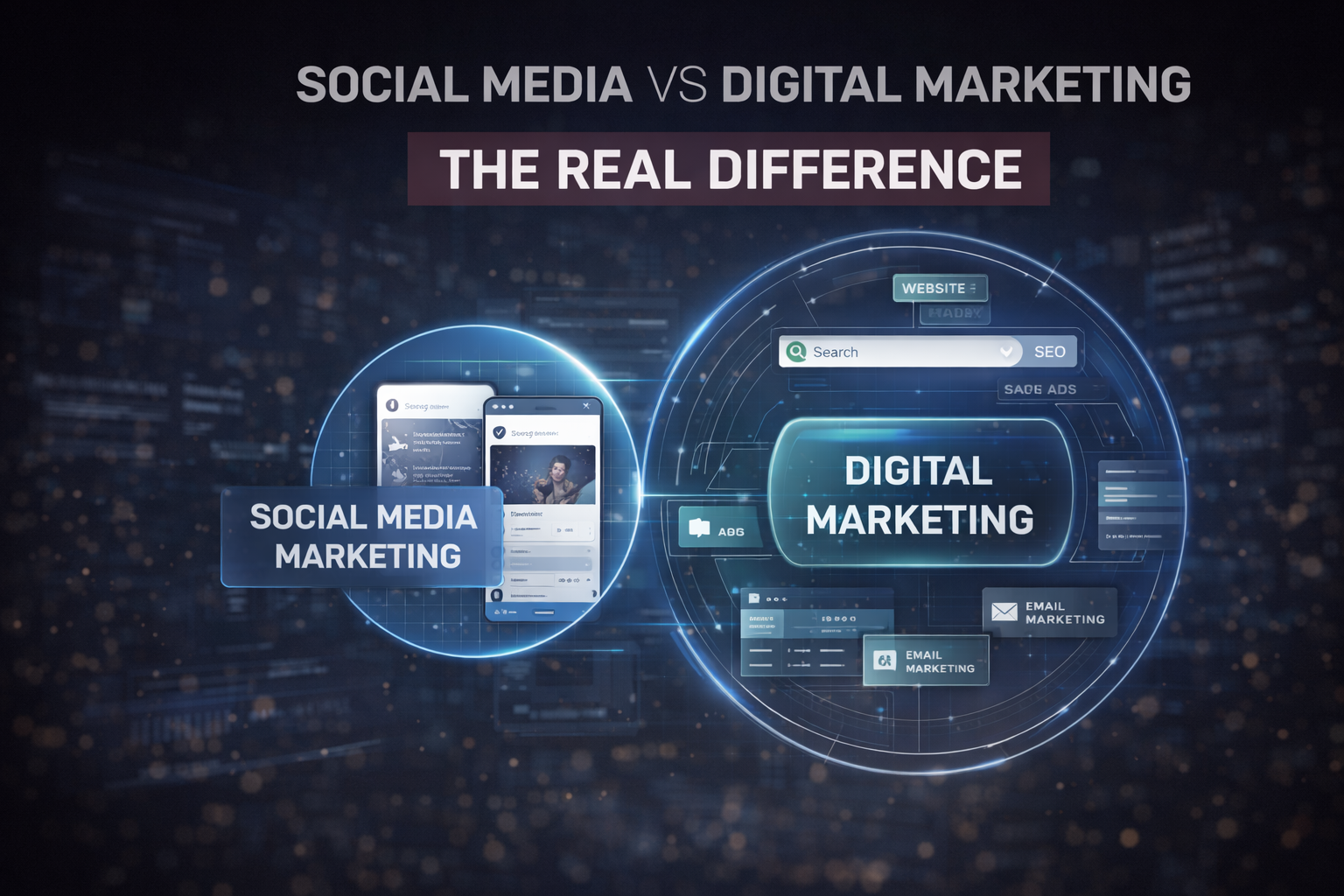
Social media is the brand-building and dreaming engine in digital marketing for travel agency in India. Travel is fundamentally visual and emotional, which makes it one of the most naturally shareable content categories on Instagram, Facebook, and YouTube. The role of social media in your strategy is not primarily to generate immediate bookings; it is to build the audience, trust, and brand recall that makes your agency the first name a traveller thinks of when they are ready to book.
Black Marlin Technologies notes that Facebook leads overall social media use for travel marketing at 44 percent of marketers, while Instagram has the highest engagement rate due to high-quality visual content. For travel agencies in India in 2026, the optimal combination is Instagram for visual inspiration and discovery, Facebook for community and targeted paid campaigns, and YouTube for destination walkthroughs and customer testimonial videos.
1. Visual Content and Reels That Inspire Bookings
Short-form video is the single most effective organic content format for travel agencies in 2026. A 30 to 60 second Instagram Reel or YouTube Short showing a destination highlight, a customer’s on-trip moment, or a behind-the-scenes glimpse of your team planning an itinerary consistently outperforms static posts in reach, saves, and enquiry generation. Post three to five times per week with at least one video per week. Use location tags, destination hashtags, and captions that end with a clear action: ‘DM us your travel dates for a free custom itinerary’.
Action
Film five pieces of social content this week using only a smartphone: a 30-second destination highlight Reel, a ‘what is included in our Bali package’ explanation video, a client testimonial, a team introduction, and one post showing your office and the enquiry process. These five posts will drive more meaningful engagement than a month of static graphics.
2. Influencer Collaborations and User-Generated Content
Influencer marketing has become a mainstream pillar of digital marketing for travel agency in India, and it is accessible to agencies of all sizes. Spenta Digital reports that 69 percent of consumers trust recommendations from influencers they follow. Micro-influencers with 10,000 to 50,000 followers in your target audience demographic typically deliver stronger engagement rates and better booking conversions than macro-influencers with millions of followers, at a fraction of the cost. Partner with travel influencers for sponsored itinerary posts, fam trips on your best-selling packages, or co-created content around seasonal offers.
User-generated content from your own customers, photos and videos they post during their trips, is equally powerful and can be actively encouraged by running a simple hashtag campaign with a small prize or recognition reward.
Fix
Identify five micro-influencers in your city whose audience matches your target traveler profile. Approach them with a free or subsidized trip on one of your packages in exchange for two Reels and three Stories. Track enquiries using a unique promo code. This is often the fastest way to generate a surge of new social followers and enquiries for an agency starting from a low base.
Content Marketing and Email Campaigns for Long-Term Growth
Content marketing and email are the patience-and-profit channels in digital marketing for travel agency in India. They work more slowly than Google Ads and social media, but they compound in value over time, building assets that continue generating bookings for years. A well-ranked travel blog post published today will still be driving enquiries in 2028. An email list of 5,000 engaged past and prospective clients is a recurring revenue channel that costs almost nothing to activate with each new package launch.
Spinta Digital’s travel marketing framework categorises content as the fuel that powers every other channel. SEO needs content to rank. Social media needs content to share. Email needs content to engage. Agencies that invest consistently in quality content spend less over time on paid acquisition because organic channels do an increasingly large share of the work.
1. Travel Blogs That Drive Organic Traffic Year-Round
A strategic travel blog targets the specific questions your potential customers are typing into Google at the research and dreaming stages of their planning journey. Topics like ‘best time to visit Maldives from India’, ‘complete Europe trip cost from India 2026’, and ‘Manali in December weather and packing guide’ attract high-quality organic traffic from travelers in the early stages of planning, who are exactly the audience a travel agency needs to capture before they go directly to an OTA. Publish two keyword-optimized blog posts per month consistently, and each one should end with a clear CTA linking to the relevant package page or enquiry form.
Action
Plan your next six blog topics by searching your top five destinations on Google and noting what the ‘People Also Ask’ box shows. Each of those questions is a real search your potential customers are making and answering them comprehensively builds both SEO rankings and trust in your agency’s expertise.
2. Email Automation for Lead Nurturing and Repeat Bookings
Email marketing delivers the highest ROI of any digital channel in travel, according to Spenta Digital, because it reaches people who have already expressed interest in your agency.
Build your email list through every touchpoint: website enquiry forms, package brochure downloads, social media lead ads, and post-trip follow-up messages. Segment your list into cold leads, warm enquiries, and past customers, and send genuinely useful content to each group: destination guides and seasonal deals to cold leads, personalized package follow-ups to warm enquiries, and loyalty offers and new destination previews to past customers who are your highest-converting audience.
Fix
Set up three automated email sequences today: a welcome series for new website enquiries that delivers your top three packages over three emails, a follow-up series for unconverted enquiries at 3, 7, and 14 days, and a post-trip thank you with a referral request. These three automations alone can recover 20 to 30 percent of leads that would otherwise go cold without any additional ad spend.
Common Digital Marketing Mistakes Travel Agencies Make in India
Even agencies that invest meaningfully in digital marketing for travel agency in India often undermine their results through predictable and avoidable mistakes. The most common is sending all paid traffic to the homepage instead of package-specific landing pages, which dramatically reduces conversion rates. A close second is running Google Ads without conversion tracking installed, which means there is no data to determine which campaigns are generating actual enquiries versus which are just generating clicks.
Other frequent errors include ignoring seasonality in campaign planning, which means ad budgets are flat when they should spike before peak booking windows like summer, Diwali, and New Year. Posting inconsistently on social media destroys algorithmic reach, and many agencies post actively for two weeks and then go silent for a month. Not collecting Google reviews systematically is another costly gap: Tantras Technologies’ marketing framework identifies review volume and recency as a primary factor in local search ranking for travel agencies. And perhaps most damaging of all is treating digital marketing for travel agency in India as a campaign rather than an ongoing system that requires monthly review, optimization, and content refresh.
Action
Cost Per Lead (CPL) = Total ad spends divided by total enquiries received. Useful for measuring ad efficiency.
Cost Per Booking (CPB) = Total marketing spends divided by confirmed bookings. This is the number that actually tells you if your marketing is profitable.
Always track both. A low CPL with a poor CPB usually means the leads are not qualified. Improve targeting and landing page messaging to fix the gap.
Conclusion
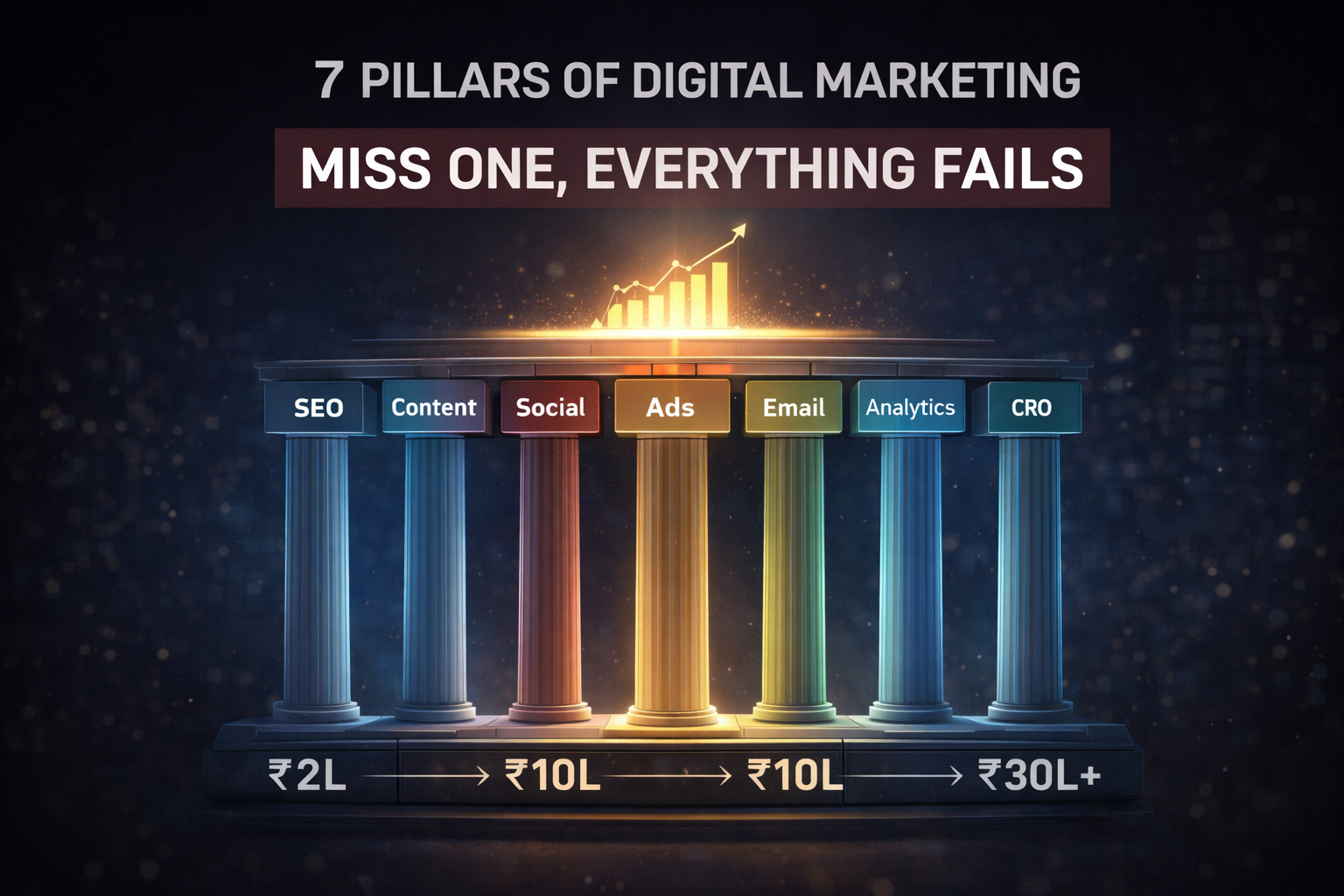
Digital marketing for travel agency in India in 2026 is not a single tactic or a one-time campaign. It is a system where website, SEO, paid ads, social media, content, and email work together to capture travellers at every stage of their planning journey and convert their interest into confirmed bookings. Agencies that build this system consistently, even at a modest scale, outperform larger competitors that run expensive ads without the supporting infrastructure of optimised pages, strong reviews, and trust-building content.
Start with the highest-impact basics: a fast mobile-friendly website, a fully optimized Google Business Profile, and a consistent process for collecting Google reviews. Layer in Google Ads for your best-selling packages once your tracking is set up. Build social presence with regular video content. And invest in at least two quality blog posts per month to grow organic traffic over time. Done consistently, digital marketing for travel agency in India is the most reliable path to filling your enquiry pipeline and growing bookings year after year.
How Dizispark Can Help
Dizispark is a digital marketing agency that works specifically with travel agencies and tour operators across India to build the kind of consistent online presence that generates daily enquiries and predictable monthly bookings. We understand the Indian travel market from the inside out: the seasonal booking patterns, the specific search behaviour of Indian travellers researching destinations, and the trust signals that convert a browsing comparison shopper into a confirmed client.
Our work for travel agencies covers the full digital marketing ecosystem. We build and optimise destination-specific landing pages that rank for high-intent search queries and convert the traffic they attract. We manage Google Ads campaigns that target the right audiences at the right times with package-specific ads that link to pages designed to close enquiries. We produce and manage social media content that builds your brand’s visual authority and attracts followers who become clients, and we set up email automation workflows that nurture every lead from first enquiry to confirmed booking and beyond.
Whether your agency is just beginning to build its digital presence or you are scaling an established operation and looking to reduce your cost per booking, Dizispark builds a strategy that is tailored to your specific destinations, budget, and growth objectives. Get your free digital marketing audit today and discover exactly what is preventing your travel agency from filling its enquiry pipeline every single month.
Frequently Asked Questions
What is digital marketing for travel agency in India and why does it matter in 2026?
Digital marketing for travel agency in India refers to the use of online channels including SEO, Google Ads, social media, content marketing, and email to attract, nurture, and convert travellers into paying clients. It matters in 2026 because more than 80 percent of travel planning in India happens online, and agencies without a strong digital presence consistently lose bookings to competitors who are more visible on Google, social media, and review platforms.
Which digital marketing channel gives a travel agency the fastest results in India?
Google Ads delivers the fastest results, typically generating enquiries within 24 to 48 hours of launching a well-structured campaign. Local SEO and Google Business Profile optimisation deliver strong results within 30 to 60 days for local searches. Social media builds brand awareness more slowly but is essential for the dreaming and discovery phase of the traveller journey. A complete digital marketing for travel agency in India strategy uses all three in combination.
How much should a travel agency in India budget for digital marketing?
A realistic starting budget for digital marketing for travel agency in India is INR 20,000 to INR 40,000 per month, covering Google Ads spend of INR 15,000 to INR 25,000 plus basic management and content creation costs. Agencies in competitive metro markets or those promoting high-value international packages typically invest INR 50,000 to INR 1,00,000 per month for meaningful results. Remember to include 18 percent GST on all Google ads spend.
Is SEO or Google Ads more important for a travel agency?
Both serve different and equally important roles. Google Ads provides immediate visibility and is essential for seasonal promotions and new package launches. SEO builds long-term organic traffic that compounds over time and does not require ongoing ad spend to maintain. Digital marketing for travel agency in India works best when SEO and paid ads complement each other: ads drive immediate bookings while SEO builds the organic foundation.
What social media platforms work best for travel agencies in India?
Instagram and Facebook are the highest-priority platforms for most travel agencies in India. Instagram is ideal for destination visuals, Reels, and inspiring content that drives discovery. Facebook works well for targeted paid campaigns, travel groups, and community building. YouTube is growing fast for destination walkthrough videos and customer testimonials. Start with two platforms and build consistency before expanding to additional channels.
How important are online reviews for a travel agency’s digital marketing?
Online reviews are critical to digital marketing for travel agency in India because they directly influence both search rankings and booking conversion rates. Agencies with consistent, recent, and detailed Google reviews rank higher in local search results and convert a significantly higher percentage of website visitors into enquiries. Make collecting Google reviews a standard part of every post-trip follow-up process.
How long does it take for digital marketing to increase travel bookings?
Google Ads can generate enquiries within a few days of launching. Local SEO improvements typically show measurable results within 30 to 60 days. Content marketing and email nurturing build cumulative results over three to six months. A comprehensive digital marketing for travel agency in India strategy, combining paid, organic, and social channels, typically shows strong and consistent growth within 90 to 120 days of implementation.
Can a small local travel agency in a Tier-2 city benefit from digital marketing in India?
Absolutely. Tier-2 cities often have significantly less local digital competition than metros, which means even a modest investment in Google Business Profile optimization and local SEO can place a small agency at the top of local searches very quickly. Digital marketing for travel agency in India scales effectively for agencies of all sizes, and smaller cities frequently offer a better return on marketing investment than highly competitive metro markets.